IDENTIFYING CHILD MOLESTERS-CHAPTER 9

In Identifying Child Molesters Chapter 9 Setting Boundaries to Help Prevent Child Abuse, Dr. Van Dam follows up her excellent profile with some advice on what to do when a concerning person has been identified. This is her last substantive chapter. Chapter 10 is a summary, and I won’t go over that.

So you’ve used the profile provided in Chapter 8, and have identified a person you suspect is a narcissistic sociopath who might be preying on children. Now what? Fret not. Dr. Van Dam provides ideas for each part of the profile, so you can put a strategy for the area of the profile specified by the observed behavior.

A person utilizing grooming behaviors:
– Is exceptionally charming and/or helpful
with
– Engages in peerlike play
– Prefers the company of children
– Roughhouses with and tickles children
– Obtains immediate insider status
and
– Fails to honor clear boundaries
– Goes on the offensive

In response, Dr. Van Dam wants us to remember the following:
Overview of Intervening with a Potential Child Molester
1. Listen to the content. Do not be mesmerized by the delivery.
2. If something looks too good to be true, the price tag is hidden.
3. Children need adult involvement, guidance, direction—not a big playmate.
4. Look out for adults who primarily interact with children, not peers.
5. Do not tolerate wrestling, tickling, massaging, and touching games.
6. Worry when someone is instantly accorded family/insider status.
7. Run when “NO” is ignored.
8. Stand firm. Do not be intimidated.

Gavin de Becker is one of the world’s foremost experts in personal protection. His book The Gift of Fear is a must-read, and Dr. Van Dam uses his advice extensively in this chapter.

Listen to the content. Do not be mesmerized by the delivery.
Overcoming someone’s charm can be difficult, especially when it is being used as a tool to get what the user wants. To counter this, Gavin de Becker tells us, “Think of charm as a verb, not as a trait. It has a motive—to control by attraction. If you tell yourself ‘This person is trying to charm me,’ as opposed to ‘This person is charming,’ you can see around it. Most often you’ll see nothing sinister, but other times you’ll be glad you looked” (de Becker, 1999, p. 67). (Van Dam, Carla. Identifying Child Molesters (pp. 162-163). Taylor and Francis. Kindle Edition.)

That’s a simple one. When you catch yourself thinking of a person being charming, change that to, “I am being charmed,” and you’ll be able to take a more objective view of the person’s behavior. It’s akin to dealing with a car salesman. Good salespeople treat you the way you wish people would treat you. The one issue is that they don’t really mean it. Their behavior is goal-oriented, just like child molester’s. Molesters appear attractive, interesting, and exciting, which can distract from noticing discrepancies.

I used the phrase narcissistic sociopath earlier. Groomers were described by one psychologist as “closet narcissists”. These personality types have little empathy, are interpersonally exploitative, have a sense of entitlement and believe others adore and worship them. (Van Dam, Carla. Identifying Child Molesters (p. 168). Taylor and Francis. Kindle Edition.) Sound like anyone you know? They are hyper-vigilant, and use their personal intensity, smiles and an invasive inquisitiveness to ensnare others.

Dr. Van Dam recommends listening to such a person without looking at them. This removes the use of body language, often used to confound their mark, and can reveal the shallow nature of their interaction. This reduces the groomer’s charm, and they will determine quickly that you are not open to being swayed, and they will move on.

If something looks too good to be true, the price tag is hidden.
DO NOT ACCEPT HELP FROM THOSE WHO SEEMINGLY DO NOT WANT ANYTHING IN RETURN! Our relationships are, normally, transactional in nature. We appreciate thoughtfulness and helpfulness, but true friendships are reciprocal. Thus a relationship in which a person seemingly does not get anything in return for their helpfulness should be thoughtfully considered.

A person who repeatedly offers favor without accepting anything in return is blurring boundaries. It creates an unspoken debt that creates pressure later. Pressure to overlook small discrepancies and signs that invariably pop up in a dishonest relationship. It is hard to establish clear boundaries and expectations after someone has been helpful. This is a type of foot-in-the-door technique used by door-to-door salesmen.

Adults should interact with children as an adult. They’ll correct misbehavior, not participate in it. This interaction should be enriching, not exploitative. If this behavior is noticed, curtail the person’s interactions with children.

Children need adult involvement, guidance, direction—not a big playmate.
All the child groomers described themselves as “being on the child’s wavelength.” (Van Dam, Carla. Identifying Child Molesters (p. 174). Taylor and Francis. Kindle Edition.) Most of them agreed that this behavior should be concerning to adults. For many pedophiles, childhood represents the best off the world, while the adult world represents the worst. Pedophilia isn’t just about sex. It’s about a world where the person was loved, wanted and the world was simpler.

Look out for adults who primarily interact with children, not peers.
In conjunction with the above, groomers prefer the company of their target age over adults. As Dr. Van Dam writes, “Molesters deliberately spend their time in places that provide them with access to their targets.” (Van Dam, Carla. Identifying Child Molesters (p. 180). Taylor and Francis. Kindle Edition.) That means it is up to us to pay attention to the adults that spend time with our children. Do those adults spend time with other adults? What is the nature of their relationships? Do they maintain an adult-child relationship? Do they maintain their professionalism?
Do not tolerate wrestling, tickling, massaging, and touching games.
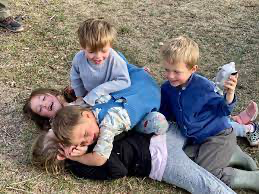
This was an emphasis of Dr. Van Dam’s. All of the child molesters interviewed by her roughhoused or tickled their victims. Every one. No non-family member, or employee,should roughhouse or tickle children. It opens an employer to liability should the child be injured, and it serves no pedogogical purpose. Look for children sitting on an adult’s lap, especially if it’s numerous children. If a child is sitting on an adult’s lap, even Santa’s, it’s OK to keep an eye on the hands.

Dr. Van Dam writes, “Much of this touching, aimed at blurring the boundaries, was clearly visible to adults and has been reported again and again by molesters, their victims, and the adults who blindly observed this behavior.” (Van Dam, Carla. Identifying Child Molesters (p. 182). Taylor and Francis. Kindle Edition.) All of the child molesters interviewed said it only takes one touch to desensitize a child. Doing this, often in the presence of the adults, serves to show the child that the touching is approved by the adults.

Worry when someone is instantly accorded family/insider status.
Child groomers are so accomplished with lying that others think their behaviors must be acceptable. Their charm and friendliness allows them rapid access to family situations. Gavin de Becker wrote, “Every type of con relies upon distracting us from the obvious. That’s how a conversation evolves into a crime without the victim knowing until it’s too late” (de Becker, 1999, p. 69). (Van Dam, Carla. Identifying Child Molesters (p. 183). Taylor and Francis. Kindle Edition.) Groomers are very adept at making themselves seen as old friends. De Becker warns us to maintain a bigger picture. The groomer is a stranger who approached you.

Another technique used by groomers is to do things for the adults in charge of their prey. They may buy things, or provide things the parent cannot. This creates a feeling of obligation that the groomer exploits. The parent will have to either accept their error in allowing the groomer access to the child, or they’ll accept the new relationship as is. De Becker describes this technique as “forced teaming”. The groomers will us “we” to get the adults to feel as if they were all in the same boat. De Becker writes, “This forced teaming, one of the most sophisticated manipulations, is the projection of a shared purpose or experience where none exists” (p. 53).” (Van Dam, Carla. Identifying Child Molesters (p. 184). Taylor and Francis. Kindle Edition.)

The bottom line is, when you find someone who has miraculously gained insider status, the relationship should be more closely scrutinized.

Run when “NO” is ignored.
Groomers are good at blurring boundaries. One of the ways you can see this sociopathic behavior is when they ignore attempts to establish boundaries. We set boundaries by using the word ‘NO’. They blur the boundaries by ignoring ‘NO’.

Groomers invade personal space, violate personal rights, and fail to respect other people. This behavior should not be tolerated. Dr. Van Dam writes, “Setting clear boundaries and expecting them to be honored is the very foundation for creating a safe environment for children.” (Van Dam, Carla. Identifying Child Molesters (p. 186). Taylor and Francis. Kindle Edition.) Even if there is a feeling of obligation, or an acceptance of blurred boundaries, it is never too late to go back to normally adhered to boundaries.

If a person does not, or cannot, abide by the rules, then a large red flag has been raised. As de Becker writes, “Declining to hear “no” is a signal that someone is either seeking control or refusing to relinquish it…. The worst response when someone fails to accept “no” is to give ever weakening refusals and then give in. Never relent on “no”… even [with] someone who seems to have the best intentions. And never let him think you’re open to negotiation. (de Becker, 1997, p. 54)” (Van Dam, Carla. Identifying Child Molesters (p. 186). Taylor and Francis. Kindle Edition.) Many of the child molesters interviewed for the book told Dr. Van Dam they purposely violated boundaries to see what the adults would do. If the adults were not tolerant of this, they moved on to another adult.

Stand firm. Do not be intimidated.
Most, if not all, groomers are narcissists. Therefore it can be predicted that when they are thwarted in their efforts, they will go on the offensive. They are master manipulators, and this can become even more pronounced when they are opposed. Sometimes this may involve others. The groomer’s charm can lead others to oppose you, and even blame the victim.

In the case where you are attempting to report the behavior to an authority, it may become necessary to use a “broken record” approach to get them to take your reports seriously. Respectfully, but firmly, reiterate your required principles. Do not be confused by minimization, intimidation, or justification.

What Dr. Van Dam has done with her book is to provide clarity to child molestation, and the efforts of groomers who seek to prey on children. This clarity should be used to build the confidence needed to set and maintain appropriate boundaries. This prevents others from setting agendas, controlling the situation, and ignoring established norms. Your ability to do this models a valuable life skill for your children.

So there it is. Dr. Van Dam has written an excellent work, with usable information for those who seek to protect children from those who, increasingly, seek to prey on our children. Children look to adults to protect and guide them, not see them as sexual objects. Children need wholesome hugs and touches, not sexual caresses. Child sex abuse should not be tolerated. Supporting, minimizing or ignoring grooming behavior that harms the innocent hurts everyone. Stand firm, stay strong, and keep an eye out for groomers!

NEWS DESK
Kandiyohi County Man Pleads Guilty to Producing Child Pornography
Columbia County Man Pleads Guilty to Receiving Child Pornography
Interaction with Undercover Agent in an Online Chatroom for Kids Leads to Prison Sentence for Canton Man
Omaha Man Convicted of Attempted Coercion and Enticement of a Minor
Buffalo Man Pleads Guilty To Possession Of Child Pornography
Local man sentenced for trading child porn via Kik
Illinois Man Sentenced to 14 Years in Prison For Distributing Child Pornography
Muskogee County Resident Sentenced For Death Of Toddler
Martin County Man Sentenced to 60 Years in Prison for Producing and Distributing Child Pornography
Bartlesville Teenager sentenced for Murder(of a toddler)
Tse Bonito Man Pleads Guilty to Sexual Abuse of a Minor
Recidivist Sex Offender Sentenced to 10 Years for Possession of Child Pornography
Former FBI Contractor Charged with Child Exploitation Offenses
Albuquerque Man Sentenced to 30 Years in Prison for Enticement of a Minor
Albion Man Going To Prison For 10 Years For Possession Of Child Pornography
Lafayette Man Sentenced to 84 Months in Prison for Child Pornography
Fayette County Man Sentenced to 18 Years in Prison for Child Exploitation Crimes
Amesbury Man Pleads Guilty to Child Pornography Offenses
Essex County Man Indicted for Sex Trafficking Minor and Transportation to Engage in Prostitution Offenses
Shiprock Man Pleads Guilty to Assault Against a Child
Fort Jennings Man Sentenced for Child Exploitation
Former tribal councilmember and police officer sentenced to 34 years in prison for sexual abuse of minors
Former Texas Police Lieutenant Pleads Guilty To Attempting To Entice An 11-Year-Old Child To Engage In Sexual Activity In Florida
Former Nurse Pleads Guilty to Possession of Child Pornography and Conspiracy to Acquire Controlled Substances
Baltimore Man Facing Federal Indictment for Sexual Exploitation of a Minor to Produce Child Pornography and for Possession of Child Pornography
Russell Springs Man Sentenced to 30 Years for Production of Child Pornography
Gulfport Man Sentenced to 30 Years in Prison for Production of Child Pornography
Married teacher sexually preyed on student after posting PSA about consent: prosecutors
Chicago teacher charged with attempted production of child porn after he was found with minor at Miami airport
German judge sets Afghan refugee who raped, assaulted multiple girls free with no prison time
Tennessee school’s ‘teacher of the month’ charged in student sex case

IDENTIFYING CHILD MOLESTERS – CHAPTER 8

In Chapter 8 Visible Grooming, Dr. Van Dam provides, in the words of Criminal Minds, the profile. Before we get into that profile, there are some things to consider. A profile is not predictive. That means that a person who fits the profile is not necessarily a child molester. As you go through the parts of the profile you might think, “Wow, that describes me!” One of the descriptors is a child-like mentality. Most wives would use that to describe their husbands, but that doesn’t mean their husbands are child molesters. The profile provides a way for us to know if there is something to pay attention to.

A profile is a list of behavioral and/or demographic descriptors held in common by perpetrators. In Dr. Van Dam’s case, she focuses on behavioral traits. She interviewed numerous child molesters to identify these traits. The more traits a person exhibits, the more concern there should be. Keep in mind, the goal here is to NOT establish legal criteria. We’re not looking to provide evidence for trial. The goal is to protect children. A person who meets the profile should have their contact with children curtailed, and certainly be given more consideration. Groomers are manipulative sociopaths. We want to identify manipulative, sociopathic behavior and thereby protect children. We want to keep the wolves away from the lambs, not just teach the lambs to bleat when the wolf is around.

The profile was developed by child molesters, using their own words to describe the behaviors in which they engaged. Relying on children to report abuse is problematic. The onus of protecting children should be on the adults who care for them, so while it may be worthwhile to teach children what to do if an adult touches them, we as adults need to focus on identifying the molester before they get to that point. This process should not be used to label anyone as a molester, or even a suspected molester. A person meeting these criteria should be watched more closely, and their interactions with children should be viewed with a more critical eye.

So, as Hotch would say, “let’s present the profile.”
A child molester/adult groomer is:
– Exceptionally charming and/or helpful
with
– Engages in child-like play
– Prefers the company of children
– Roughhouses with and tickles children
– Obtains immediate insider status
and
– Fails to honor clear boundaries
– Goes on the offensive

Exceptionally charming and/or helpful
Being exceptionally charming and/or helpful is how the groomer grooms the adult, and thereby access to the children. Here we’re are looking at the “if it’s too good to be true, it is” adage. A groomer will appear out of nowhere, offering help without asking for anything in return. This is a specific strategy employed by child molesters. You have what they want. Access to the children is their reward for the good deeds they do. As Dr. Van Dam warns, “The helpfulness is not part of an obviously reciprocal relationship.” (Van Dam, Carla. Identifying Child Molesters (p. 151). Taylor and Francis. Kindle Edition.) People don’t want to look a gift horse in the mouth, so they’ll accept the help.

Engages in child-like play
Child molesters engage in child-like play. This allows the groomer to begin grooming the intended victim, and has a two-fold purpose. It gets the child used to the attentions of the groomer, and continues to strengthen the bond between the groomer and the adults. Groomers get increasingly personal with their touches, gauge the reactions of the victim, as well as those around them, and then continue the process.

The difference between a child molester and a normal adult playing with children is that an adult will maintain an adult orientation. Adults will stop or redirect hurtful behavior, and they won’t initiate hurtful taunting or possibly dangerous behavior. Child molesters play like children, often because they are emotionally arrested at the level of a child. If you see adults playing with children, look for these cues.

This applies to educational relationships as well. Teachers will not necessarily be playing with children, but consider their interpersonal relationships. Do they maintain an adult orientation? Do they maintain a professional decorum? The key is the setting of boundaries.

Prefers the company of children
Child molesters prefer the company of children over other adults. They actually have less interaction with adult peers than they do with children. Older teens who prefer babysitting to social activities of other teens may be of concern. Adults who prefer being around children more than their peers are an even greater concern. If there are parties with adults and children, adults who would rather be with the children than the adults should be a warning sign.

Roughhouses with and tickles children
One of the major identifiers of grooming is roughhousing and tickling, especially when this happens with children that are not your own, or in inappropriate places, like at school. Each of the molesters interviewed by Dr. Van Dam engaged in this physical interaction. This behavior has a dual purpose. It desensitizes the children to the groomer’s touch, and helps confer adult approval on subsequent interactions. Many of the molesters interviewed by Dr. Van Dam molested the children during these interactions, often in full view of the parents.

Obtains immediate insider status
Normal social interactions require time for a person to go though the stages of familiarity to be accepted in a group. A groomer, due to their charm and helpfulness, will gain almost immediate status. This is a warning sign. If you are having a social function with children and a strange person shows up being helpful with the children. Treat them like a stranger, no matter how helpful they are being with the children.

Fails to honor clear boundaries
A clear sign something is not right is a person who fails to honor clear boundaries. If a person is engaging in a behavior with someone else’s child, is asked to stop and doesn’t, that’s a clear sign that something is amiss. A normal person would readily acknowledge the authority of the parent, and would not want to overstep their bounds. Yet, if the over-stepper was providing a useful service like baby-sitting, and ignores the reasonable request, most would want to continue to receive the service, and so would not make an issue of the non-compliance. This is the trap.

Goes on the offensive
Frequently, those who bring to light questionable behaviors find themselves on the defensive. Remember that the groomer is charming and helpful. A parent that wants to call out a groomer’s questionable behavior may find themselves on the short end of the stick when it comes to people having their benefit threatened. Dr. Van Dam lists numerous examples of people who have supported groomers even after the behavior has been adjudicated. This seems puzzling until you consider that the person who supports the groomer does not want to face their own failings. There is tremendous power in denial.

So there it is. Dr. Van Dam has given you a working profile of a child molester. Remember, you’re not a member of the BAU. You don’t need to worry about evidence, civil rights or anything other than the safety of your children. A person who fits the profile may not necessarily be a child molester, but there is no harm done in heightening your perceptions of the situation. It’s about your kids, not about them!

NEWS DESK
Las Vegas Man Sentenced To Over 12 Years in Prison For Sex Trafficking Children While Visiting Metro-Detroit
Two Winner Residents Charged with Sex Trafficking of Children and Production of Child Pornography
North Tonawanda Man Pleads Guilty To Receipt Of Child Pornography
Cecil County Man Sentenced to 50 Years in Federal Prison for His Repeated Sexual Abuse of a Child
Browning man sentenced to more than eight years in prison for raping girl on Blackfeet Indian Reservation
Convicted Sex Offender Sentenced To 10 Years For Possessing Child Sexual Abuse Images And Videos
Shiprock Man Sentenced to 12 Years in Prison for Abusive Sexual Contact of a Minor and Possession of Child Pornography
Thurmont Man Pleads Guilty to Sexual Exploitation of a Child
St. Louis Man Sentenced to 120 Years in Prison for Producing Child Pornography
Money Mule Scheme Targets Teenagers and Young Adults
Tehama County Man Returned to the United States to Face Federal Charges
Vermont Resident Pleads Guilty to Traveling to Lake George for Sexual Contact with Minor
Federal Grand Jury Indicts Anchorage Man on Child Pornography, Attempted Enticement Charges
Bath Man With Prior Sex Offense Conviction Going To Prison On Child Pornography Charge
Madison County Man Receives 7-Year Federal Sentence for Possession of Child Sexual Abuse Material
Spencer Iowa Man Pleads Guilty to Possession of Child Pornography
Wesley Chapel Man Sentenced To Life In Prison For Exploiting And Producing Sexual Abuse Material Depicting Children

IDENTIFYING CHILD MOLESTERS- CHAPTER 7

In Chapter 7 The Social Climate That Fosters It: Turning a Blind Eye, Dr. Van Dam explains why people can see what is going on, yet not see what is going on. In this chapter, she looks into: Attitudes toward children, attitudes toward women, societal denial and molester denial.

Attitudes toward Children
Our society does not prioritize children. Pipher, in 1994, stated in their study:
Time is a problem. Studies show the average couple talks to each other twenty-nine
minutes per week; the average mother talks seven minutes a day to her teenager,
while the average father talks only five minutes. Supervision is a problem. The small,
tight-knit communities that helped families rear children are increasingly extinct.
Instead television is the babysitter in many homes. (Pipher, 1994, p. 80) (Van Dam,
Carla. Identifying Child Molesters (p. 115). Taylor and Francis. Kindle Edition.)
A society that prioritized children would create ways for parents to spend more meaningful time with their children. Instead we get caught up in work, sports, or anything else.

Schools have before- and after-school care that allows parents to drop their children off around 7:00am, and pick them up by 6:00pm. Parents then spend the bulk of their time dealing with home and family issues, and not spending time with their children. It is into this high-stress environment that child predators enter, and offer their babysitting services. Pipher notes, “In this last half of the twentieth century, families are under siege. Parents are more likely to be overworked, overcommitted, tired and poor. They are less likely to have outside support” (Pipher, 1994, p. 80). (Van Dam, Carla. Identifying Child Molesters (p. 116). Taylor and Francis. Kindle Edition.)

How prevalent is this? A 1995 study found that 48% of molesters interviewed obtained access by offering their assistance with babysitting. Single-parent families are especially vulnerable to this. The child predator will befriend the family, working their way into the family dynamic, wait until the parents are frazzled, then offer themselves as a babysitter, to give the parent(s) a much-needed break. One molester described spending six months befriending a family before being given the opportunity to molest.

Attitudes Toward Women
Dr. Van Dam writes that our society created subservient roles for women, and objectifies women. These make it difficult to clearly identify predators and intervene in the grooming process. There are those that would use these societal norms to put the blame for male sexual behavior on women. “If they would make themselves available, I wouldn’t have to find other outlets.”

Ophelia

Women are typically taught that they have to cater to the man’s needs. This is known as the Ophelia Syndrome. Ophelia was a woman in Shakespeare‘s play Hamlet. Polonius reduces Ophelia to the status of a baby. In Hamlet, Ophelia is worse than naive. She is ignorant, dependent and submissive. She submits to Polonius, and ends up devolving into madness, and suicide.

Young girls in our society are told to not be assertive, to be demure, lest they be labeled as ‘bitchy’. They are taught to make themselves look attractive. They focus on makeup, hair styles, and clothing, all designed to make them beautiful, not for their own sake, but to attract a boy. This societal concept hits during the middle school, years. Girls, who are learning to socialize at that age, want to fit in. Older women shave their legs, use facial cremes to reduce wrinkles, and hair products to hide their grey hair, all to look younger. Dr. Van Dam describes this as “infantilizing women”.

This infantilization helps blur the lines between women and children. Older women dress to look younger, younger women dress to look older. Take a look at young girls’ fashion trends. One predator, who abused 6-8 year old girls, was quoted as saying, “I was buying pornography… there was a league of pornography with pictures of women with shaved pubic hairs, hair in braids, young slim bodies, which is basically an approximation of a child.” (Van Dam, Carla. Identifying Child Molesters (p. 120). Taylor and Francis. Kindle Edition.) He didn’t buy child pornography, as adult pornography was a good facsimile. There is a whole type of pornography called “Lolita“, based on women dressing like little girls.

Pornography dehumanizes women and children. There are those who think that pornography provides an outlet for men. Dr. Van Dam thinks pornography is actually a training opportunity, training men to link their arousal to fantasized material. Many of the molesters interviewed by Dr. Van Dam told her that masturbating to pornography developed their appetites, lowered their resistance, and they ultimately acted on their continuously rehearsed fantasies.

Societal Denial
Researchers have delved into child sexual abuse at various times in the past. After each period of ‘enlightenment’, a veil of silence would return. In the late 1800s, Sigmund Freud theorized the hysteria and neurosis he observed in women was the direct result of their sexual abuse. Due to peer pressure, he altered his theory to state that children fantasized sex with their opposite sex parent, the Oedipal and Electra complexes. This placed the blame for child sex abuse on the victim. Subsequently, patients describing their sexual abuse were told they could not differentiate fact from fantasy, while this who denied being abused were told they weren’t acknowledging their fantasies.

Rates of sexual abuse in the 1920’s and 1930’s were similar to those of today, as were the rates in the 1960’s. Each of these time periods showed a sex abuse rate of around 25%. In the 1960’s the social researchers were more focused on relaxing societal sexual mores, so these numbers were not disseminated. The researchers felt that the numbers would have alarmed the public, and impeded their social agenda.

Dr. Albert Kinsey

The famous researcher Dr. Albert Kinsey concluded that sexual abuse was more in the imagination of therapists than in the lives of the patient. He further concluded that, even though his research showed that 80% of sexual abuse victims reported being upset or troubled by the experience, there was no logical reason for children to disturbed by the experience.

A researcher in 1989 used a new term, nescience, in his research. This researcher wrote,“The word for deliberate, beatific ignorance is nescience. In our historic failure to grasp the importance of sexual abuse and our reluctance to embrace it now, we might acknowledge that we are not naively innocent. We seem to be willfully ignorant, nescient” (p. 418). (Van Dam, Carla. Identifying Child Molesters (p. 123). Taylor and Francis. Kindle Edition.). This willful ignorance is not special to the field of research. The recent issues in the Roman Catholic Church are a prime example of nescience, and it also explains the complacency in the field of education.

School districts around the country know there is marked evidence of child predators in education, yet how many districts provide training for their staff in identification of grooming procedures? Most states have mandatory reporting laws in place, but the results of scenario assessments across the country show that many staff members will not list reporting as one of the major first steps to take in a suspected grooming scenario. Nescience.

Two other terms used in the research are lacunas and discounting. Lacunas refers to how widely held societal beliefs can interfere with recognition and/or acknowledgment of events. Another term for this, used by psychologists, is denial. Parenting experts refer to this process as discounting. However it is described, this behavior leads to evidence being ignored at best, or even trivialized.

These societal tendencies lead to victim blaming. Rape and abuse victims are often told that it was because of their manner of dress, or their behavior. Pipher documented a case where a group of high school boys raped a ten-year old girl. Some parents used the “boys will be boys” approach, and a parent was quoted as saying, “there wouldn’t be enough jails in America if boys were imprisoned for doing what he has done” (Pipher, 1994, p. 70). (Van Dam, Carla. Identifying Child Molesters (p. 125). Taylor and Francis. Kindle Edition.) Pipher noted the ten-year old was called a “slut”, which led the boys to feel that she deserved the rape.

Hollywood often reinforces this, with allegedly romantic scenes where the hero forcefully grabs the love interest and kisses her, and she willingly submits. Think Gone with the Wind. This conveys the message that “No” means “Yes”, which Gavin De Becker says leads to further victimization.

Our legal systems don’t always help. A Canadian judge said “no may mean maybe” when acquitting a man of sexual assault. (Halliday, 1995, p. 5) (Van Dam, Carla. Identifying Child Molesters (p. 125). Taylor and Francis. Kindle Edition.) The Chicago Board of Education held a nine-year old responsible for the sexual assault by a twelve-year old, in the presence of a teacher. (Associated Press, 1995). (Van Dam, Carla. Identifying Child Molesters (p. 125). Taylor and Francis. Kindle Edition.). Another judge acquitted a charged molester because “any man entering a room full of 14-year-old girls is like putting your hand in a bag full of weasels” (Halliday, 1995, p. 6). (Van Dam, Carla. Identifying Child Molesters (p. 125). Taylor and Francis. Kindle Edition.)

In the music industry, songs, lyrics and videos reinforce the objectification of women and children, and the aggressive approaches of sexual interest. The Police had a #1 hit in the 1980’s called Don’t Stand So Close to Me, detailing the affair between a teacher and his student. That song referenced a book by Vladimir Nabokov, Lolita, written in 1955. This novel made Time’s List of the 100 Best Novels, and was adapted to film by Stanley Kubrick in 1962, with another version in 1997 by Adrian Lyne. Rap and Hip Hop music abounds with misogyny and sexually assaultive behavior.

Roberts Noyes, a teacher in British Columbia, was convicted of sexually abusing hundreds of boys. Yes, hundreds. He taught at numerous school districts throughout out the province. Throughout a 20-year period, he was transferred from district to district. His activities would be discovered, he would seek treatment, then he would go to a new district. A young victim who went to the police rather than the school, ended his illegal behavior. British Columbia had mandatory reporting laws in place.

Officials and colleagues were quoted as saying, “His wife failed to be available to him,” “He was under a great deal of stress,” “He didn’t mean anything by it,” and, “it would be a shame to damage such a fine man’s reputation.” (Van Dam, Carla. Identifying Child Molesters (pp. 126-127). Taylor and Francis. Kindle Edition.)

Molester Denial
LTC Dave Grossman, in his landmark book On Killing, describes the universal inhibition human beings have to killing other human beings. Dr. Van Dam describes a similar inhibition against committing crimes against children. She writes that the molester overcomes this inhibition using Orwellian Newspeak, used in 1984. Newspeak is used to reinterpret activities into a different and more acceptable context. It can be used to deny the event, call the event different things like ‘social work’, blaming the victim, calling their event an ‘accident’, or blaming the rest of society. Some molesters consider this process as “grooming themselves.”

Denial in the molester is similar to denial by society. Molesters will often admit to the behavior, but blame the victim. Some comments include that the victim “was only getting what she deserved for walking on the street without a man at night”, or “this behavior isn’t immoral you know, it’s just illegal”, or the common “if she’s old enough to bleed, she’s old enough to breed.” (Van Dam, Carla. Identifying Child Molesters (p. 127). Taylor and Francis. Kindle Edition.) The rationales used by molesters can make people shake their heads, yet they are sincerely held beliefs by the molesters.

One molester told a judge, “I just rolled over and tried to make love to the wrong girl,” (Van Dam, Carla. Identifying Child Molesters (p. 128). Taylor and Francis. Kindle Edition.) Fantastically enough, the molester was acquitted. Dr. Van Dam writes that this line was used, verbatim, by many of the molesters she interviewed for the book.

A study in 1983 described the molester’s behavior as “addictive”. Their molester starts with a flawed belief system based on faulty assumptions, myths and beliefs, which lead to impaired thinking. They are described was passive-aggressive personalities whose dominant-dependent wives are not sexually available in the relationship. This ties back in to societal denial, as this places the blame on someone other than the perpetrator. In reality, molesters are often sexually involved with their spouses and children at the same time.

Ultimately, the molester’s denial leads to the belief that their deviance is a sexual orientation, and that their behavior provides benefits to their victims. They formed groups like NAMBLA, the Rene Guyon Society, the Childhood Sexuality Circle. These organizations provide normalization, and leads to political activities like the Pedophile Information Exchange (PIE), the Norwegian Pedophile Group, Amnesty for Child Sexuality, Wergrupp Pedophilie, and Studiegroep Pedofilie. (Van Dam, Carla. Identifying Child Molesters (p. 135). Taylor and Francis. Kindle Edition.) These groups classify their behaviors as “consenting” sex between adults and children, and lobby to abolish laws against pedophilia.

Dr. Van Dam ends the chapter with a discussion about consent. She wrote about a Canadian judge who acquitted a 37-year old of sex abuse charges against a 13-year old boy based on age discrimination. She opined that the adult should be treated as any other peer playing doctor. The perpetrator said the child gave consent, and the defense attorney stated that “young children have full knowledge and capacity to consent to sexual activities”, and the judge agreed. (Van Dam, Carla. Identifying Child Molesters (p. 135). Taylor and Francis. Kindle Edition.)

Here I’ll end with a bit of my own commentary. Consent is not as convoluted as the predators want it to be. It requires a voluntary and willful agreement to another person’s proposition. It requires that the person consenting be fully able to understand to what they are consenting. Children lack the mental capabilities for that understanding. The age of consent exists for that reason. We don’t let children drive, purchase weapons or drink alcohol, but they can consent to sex? No, they can’t. They convoluted reasoning used by predators shows they know this.

What this reasoning does is give us a means of identifying when child predation is taking place. This reasoning leads to visible signs of grooming, and that will be the focus in Chapter 8.

NEWS DESK


Las Vegas Resident Sentenced To 10 Years In Prison For Child Sex Trafficking
Vermont Man Pleads Guilty to Attempted Online Enticement of a Minor
Schoharie County Sex Offender Admits Possessing Child Pornography
California man pleads guilty to sexually exploiting minor, possessing child pornography after traveling to Ohio to engage in sex acts with a 14-year-old
Warwick, ND, Man Charged with Sexual Abuse and Materials Involving Sexual Exploitation
Ashland Man Sentenced to 20 Years for Distribution and Possession of Child Pornography
Former City of Miami Aide Sentenced to Six Years in Prison for Child Pornography Crime
Two Nigerian Men Extradited To The United States After Being Indicted For International Sexual Extortion Ring
Grand Rapids Man Accused Of Human Trafficking
Kalamazoo Man Indicted For Sexual Exploitation Of A Child
Former South Carolina Priest Pleads Guilty in Federal Court to Child Sexual Exploitation 
Anton “Tony” Lazzaro Sentenced to 21 Years in Prison for Child Sex Trafficking
MS-13 Gang Leader Convicted of Racketeering Charges Including the Murder of 16-Year-Victim in Alley Pond Park in Queens
Two Charged In Drug-Related Shooting On Bronx Street That Hit An 11-Month-Old Baby In The Face
Syracuse Man Sentenced to 40 Months for Violating His Sex Offender Registration Obligations and the Conditions of His Federal Supervised Release
Spencerport Teacher Arrested, Charged With Production, Receipt, And Possession Of Child Pornography
Cheektowaga Man Pleads Guilty To Possession Of 200,000 Images Of Child Pornography
Ohio Man Convicted by Jury of Crimes Against Children Offense
Anchorage Man Charged with Child Exploitation Offenses 
Maryland Man Sentenced to 10 Years in Prison For Coercing and Enticing a Minor
Man Admits Transporting Child Pornography, Fleeing St. Louis
Ocean County Man Charged With Sexually Exploiting Minors
Boston Man Pleads Guilty to Child Exploitation Charges
Rochester Man Indicted For Possession of Child Sexual Abuse Material
Navajo Man Sentenced to 20 Years in Prison for Sexual Abuse of a Minor
Federal Jury Convicts Knoxville Man Of Child Exploitation Offenses
ISP: Munster man charged with several counts of child porn possession after months-long investigation
Transgender man accused of molesting children at Greenwood therapy center found dead in jail
Teacher and church volunteer accused of sending pornographic photos to 9-year-old boy
Miami mayor’s former top aide to spend 6 years in federal prison for child pornography

IDENTIFYING CHILD MOLESTERS – CHAPTER 6

Dr. Van Dam takes the reader into the heart of her book in Chapter 6 The Grooming Process: How Do They Do It? By describing the grooming process, she seeks to cut through the minimization, excuses, justifications and assumptions people use to protect themselves from the reality of the idea that an adult sees a child as a sexual object. This concept is so abhorrent, so vile, that normal people protect themselves from in in various ways.

I was an assistant principal at a middle school. There was a P.E. teacher who sexually molested one of my students in the boy’s locker room. He had similarly molested a student in a nearby town years ago. That victim came forward and filed a complaint, then my student came forward. Everything I read from Dr. Van Dam explained how he was able to be a prominent figure in the school community, and used that status to hide his predation.

I think back over my time there, to try to think of where I messed up. What did I miss? I certainly didn’t know then what I know now. I was without the benefit of experience and what little wisdom I’ve been able to accrue. Yet I was a guardian, a protector. I was naturally predisposed to notice something amiss. What did I miss?

I was missing knowledge. Without that knowledge, I was missing the signs of grooming. It is easy to be caught up in the everyday relationships and miss those signs, especially when you are not expecting it. Dr. Van Dam explains that there are concrete things that all groomers do to gain access to children. A process of grooming the predator uses to gain the trust of those around them, and then to molest.

Dr. Van Dam describes the four elements of this grooming process: Sexual attraction to children, justification of interest, grooming of adults and grooming of children. (Van Dam, Carla. Identifying Child Molesters (p. 89). Taylor and Francis. Kindle Edition.) Each of these elements are present in any of these situations. We’ll take a look at the mechanics of each, and how they come together to create the process predators use to groom their prey, and the adults around them.

The previous chapter covered the various research into the sexual attraction to children. Some research indicates that incest occurs because the father or step-father is sexually unsatisfied in their other relationships. “With almost no exceptions the patient, shortly before the incestuous relationship begins, finds himself barred from sexual intercourse with his own wife.” (Van Dam, Carla. Identifying Child Molesters (p. 90). Taylor and Francis. Kindle Edition.) So the hapless father or step-father turns to their defenseless child to alleviate this frustration.

A different study found that all men are aroused by children, but most are in too much denial to act on those urges. There are studies that point to the historical existence of such relationships, which were encouraged and even lauded, in parts of Ancient Greece, for example. The conclusion, of course, “…sexual attraction to youthful individuals of his own sex is present to a greater or lesser degree in every human male, and this makes it possible for every man to have sex with a handsome boy.” (Van Dam, Carla. Identifying Child Molesters (p. 90). Taylor and Francis. Kindle Edition.)

A third of child molesters were victims themselves. A study in 1980 suggested that an adverse incident could be reversed, and lead to addictive behavior. The emotions associated with the adverse event caused a release of endorphins, and the person became addicted to the endorphin release. A study in 1990 suggested that the trauma of sexual abuse as a child could be expressed in deviant sexual behavior as an adult. Regardless of the theory, a predator finds a child sexually attractive, and seeks to find a way to satisfy the urges that go with the attraction.

The second phase in the grooming process is justifying their interest. To do this, a person engages in a process of neutralization. Neutralization involves denial of injury, denial of victimization, condemnation of dissension and a more enlightened viewpoint. In the denial of injury, a person will seek to replace the empirical evidence of the harm done to a child with anecdotal evidence, and often even fantasy. The Rene Guyon Society assert that children who are denied sex with adults suffer drug abuse, suicide and obesity. The North America Man-Boy Love Association (NAMBLA) had published materials with supposed letters from children talking about the benefits they’ve received from their sexual relationships with adults.

Denial of victimization refers to the concept that the victim deserved the abuse, or brought on the offending behavior. This puts the child as a willing partner. This is an elaborate way to blame the victim. This usually revolves around consent. Groups like NAMBLA and the Rene Guyon Society assert that children are capable of consenting to sex.

Condemnation of dissension is what it sounds like. The predator condemns the protectors. The protectors are the ones who are damaging the children by making a big deal out of the adult-child sexual relationship. Thus the protectors are the real abusers by inserting their morality, guilt and shame into the situation.

A more enlightened viewpoint is what the predator has. They are providing sexual liberalization of children, to free them from the oppression of a sexually repressed society. This has come with the increased accessibility to pornography, and an accompanying decline of social norms and standards. People with sexual deviancies are able to normalize their deviance by interacting with others who think, and act, as they do. Add in the sexualization of children in movies, television and streaming services (Cuties, anyone?), and it’s small wonder that child predators feel normalized.

Prior to preying on children, the child molester will groom the adult community. The predator actively engages in “image management”, whereby they create an image of themselves they want to project, and then work to establish that image in the community. This aspect of the process is consistent among groomers. As one child molester noted,
I would obviously have met his family several times…. I would have been invited to
supper at his home and would have charmed the hell out of his parent(s) and they
would be pleased the way their son responded to me and so obviously liked me. I am
clean cut, very intelligent and personable and the parent(s) would feel that I was a
“good” influence on their boy. (Cook, 1989, p. 7) (Van Dam, Carla. Identifying Child
Molesters (pp. 96-97). Taylor and Francis. Kindle Edition.)

Child molesters gain two things from this practice; victims, and protection. Once they have gained the trust of the adults, the predator is given unfettered access to children, and the time to molest. An established predator is shielded from innuendos and accusations due to their standing in the community. Who are you going to believe, a twelve-year old victim, or a well-respected youth minister?

One example Dr. Van Dam used really stuck out in my mind. She wrote about a woman whose boyfriend admitted to her that he was a sexual predator, but he “seemed safe”. In her own words,
I’d been sexually molested when I was a kid, and what my boyfriend did, is he told
me right up front “We can’t see each other anymore unless you go to this group
therapy thing because I’m a sex offender.” I thought, “How safe can you get?” If he
was going to molest my kids, he wouldn’t have told me he was a sex offender. Right?
I mean, this has got to be the safest guy on the block. (Van Dam, Carla. Identifying
Child Molesters (p. 99). Taylor and Francis. Kindle Edition.)
It’s easy to read this and render justice for her thinking, but this is similar to the thinking most people used when a child predator begins the grooming process. Groomers are teachers, babysitters, youth ministers, anyplace where they can have access to their victims.

Child predators participate in the development of name recognition, just like artists, politicians, comedians and other public figures. This is an advertising technique, and can be quite effective. They use a technique called ‘foot-in-the-door’. Her example was of a man who showed up, uninvited, at a birthday party, and began passing out candy. Asking the person, who the children are enthusiastically crowding around, to leave is socially difficult. Once that small concession is made, it is the basis for larger concessions.

The self-perception theory is a psychological theory that asserts that people infer their attitudes by their behavior. The parents at the party, seeing themselves accepting the stranger at their party, helps them establish the idea that he is acceptable. This is followed by cognitive dissonance (the discomfort a person feels when their behavior does not align with their values or beliefs), leads the parents to accept the stranger’s behaviors. This acceptance by the parents also sends a powerful message to the child. They seed that their parents accepted the stranger, who is now no longer a stranger.

Human beings tend to conform. They often “go along to get along”, and find it difficult to go against public opinion by speaking out. A predator uses this to their advantage. The grooming of adults creates a public opinion, that will quell the minor complaints parents might have about the predator’s behaviors. Once an attitude has been formed, human beings find it difficult to change. They engage in confirmation bias, only seeing information that confirms their existing view. We can see this being played out in real time in our politic discussions today.

The last part of the process is grooming the child. There are five stages of the grooming process: Identifying a vulnerable child, engage with the child in peer-like involvement, desensitizing the child to touching, isolating the child and making the child feel responsible. It is here where the matter is critical. Failure to recognize this process results in the victimization of the child. It is crunch-time.

Predators usually go after the easiest prey. Wolves, lion, cheetahs, etc. will go after the young or sick. Child predators are no different. Not only is it easier to manipulate and prey on vulnerable children, they are less likely to report the abuse, or to be believed if they report. A child predator testified to the U.S. Senate in 1985,
I showed them affection and the attention they thought they were not getting
anywhere else. Almost without exception, every child I have molested was lonely and
longing for attention…. Their desire to be loved, their trust of adults, their normal
sexual playfulness and their inquisitive minds made them perfect victims. (West
Vancouver Policemen’s Association [WVPA], 1986, p. 131) (Van Dam, Carla. Identifying
Child Molesters (p. 104). Taylor and Francis. Kindle Edition.)

Children who are pre-verbal, are unable to speak, are especially susceptible, as are children in single-parent families. Children have a desire to be noticed, valued, loved and cherished. Predators use this to manipulate the child. This leads to peer-like involvement.

Sexual predators will be observed engaging with children as a peer, not as an adult. This can take the form of wrestling, tickling, having sleepovers and playing video games. Here observant adults can see adults acting child-like or preferring to be around children rather than other adults. It is not normal for an adult to prefer children over other adults.

Once the prey has been identified, and the predator has engaged in peer-like involvement, then the predator can begin desensitizing the victim to touching. The predator seeks to blur the line between appropriate and inappropriate touching. This is a gradual process that often has very visible signs. These can include tickling, wrestling and rough-housing.

With the victim, they will often begin with an apparent accidental touch. They gauge the child’s reaction to the touch, and may often accompany the touch with increasingly sexual talk and/or sexual imagery. Some predators will even see if they can do this in view of other adults.

Isolating the child helps to ensure secrecy for the predator. This can be done with a simple, “This is our little secret,” or it can be as complex as having the child lie about the incident. Having told the first lie, the child is now under pressure to tell other lies to support the first one. This helps create a sense of isolation, where the only contact in which the child can be open and themselves is with the predator.

Making the child feel responsible is the culmination of this cruel process. Victims will often blame themselves for the abuse, and the predator certainly uses this to their advantage. The predator plays up the feelings of shame and guilt felt by the victim.

This has been a fairly long blog post, but it is an important one. We’ve gone over the four elements of the grooming process; Sexual attraction to children, justification of interest, grooming of adults and grooming of children. In justification of interest, we went over neutralization, which involves denial of injury, denial of victimization, condemnation of dissension and a more enlightened viewpoint. There are five steps to the grooming process: Identifying a vulnerable child, Engage with the child in peer-like involvement, desensitizing the child to touching, isolating the child and making the child feel responsible.

As I think back on the situation I personally faced, there were things I heard about the teacher, that should have given me pause. If I had access to this information then, the outcome might have been different. Sometimes, even people who think behavior is wrong may not say anything. In the next chapter, Dr. Van Dam will describe how people can turn a blind eye to the behaviors they are noticing.

NEWSDESK
Former Coach from Pecos Sentenced to 30 Years in Prison for Sextortion Scheme
St. Charles County Man Sentenced to 12 Years on Child Pornography Charges
Heron man sentenced to three years in prison for kidnapping son, fleeing to Costa Rica
Federal jury convicts Anaconda man of attempted coercion, possession of child pornography
Farley Man Sentenced for Sexually Assaulting Minor Victim to Produce, Distribute Child Pornography
Federal Judge Sentences Belleville Man to 21+ Years in Prison for Producing, Distributing Explicit Images of Minors
Félix Verdejo-Sánchez Found Guilty of Kidnapping Resulting in Death, and Intentionally Killing an Unborn Child
Monmouth County Man Sentenced to 20 Years in Prison for Producing Child Pornography
30 Years for Coercion and Enticement of a Minor
Operation Cross Country XIII Leads to Identification/Location of Adolescent Victims
Mount Pleasant Man Sentenced To Federal Prison For Child Exploitation Charges
Norwalk Man Pleads Guilty to Child Pornography Offense
Schenectady Man Pleads Guilty to Sexual Exploitation of a Child
Johnstown Resident Indicted on Child Sexual Exploitation Charges
Carlsbad Woman Sentenced to 30 Years in Prison for Production of Child Porn
New Haven Man Sentenced to 10 Years for Child Pornography Offense
Greensburg Man Sentenced to 25 Years in Federal Prison for Sexually Exploiting an 11-Year-Old Girl Via Kik and Snapchat
Former Omaha Police Officer Sentenced to 36 Years for Production and Possession of Child Pornography
Sisseton Man Convicted of Abusive Sexual Contact
Retired pastor kidnapped, killed another pastor’s young daughter on walk to Bible camp: DA
Maryland dad arrested after six-week-old baby found with broken bones: police
Michigan man allegedly preyed on young girls on amusement park pool: police
Nevada private school teacher accused of having 4-year sexual relationship with student: report

IDENTIFYING CHILD MOLESTERS-CHAPTER 5

In Chapter 5 Characteristics of the Child Molester: Who Does It?, Dr. Van Dam describes the characteristics of child predators. To put it bluntly, you can’t tell by looking. Dr. Van Dam starts by writing about “stranger danger“, and how people assumed the child molester looked the part. They would be unkempt, unwashed, and would be easy to spot. Oh, and they would always be male.

Thus parents thought that teaching their children about “stranger danger” would protect them. Child molesters were like lions. Teach the children to look for lions, and warn them about where the lions hang out, and the children would be OK. That assumption has led to us being unprepared to address child molestation, and if we are unprepared, how can we expect our child to be prepared? As described in one study,
“Realistically, the sex offender may be a close relative, a friend, or
acquaintance, rather than a stranger; an older person or a youth; wealthy
or poor; a Caucasian or a person of color; gay or straight; literate or
illiterate; able or disabled; religious or non-religious; a professional,
white or blue collar, or unemployed worker; a person with an extensive
criminal record or one with no offense history at all” (Lloyd, 1987, p. 56).
(Van Dam, Carla. Identifying Child Molesters (p. 82). Taylor and Francis.
Kindle Edition.)

In one study, the average age of a molester was around 31 years old, they were predominately Christian, male, and Caucasian. They were of high economic status, and well-educated. One-fourth were married, In another study they looked at the intelligence levels of child molesters. they found that, “…over one-third had an IQ in the average range, one-third in the bright average and superior range, and 10 percent in the very superior range of intellectual functioning.” (Van Dam, Carla. Identifying Child Molesters (p. 82). Taylor and Francis. Kindle Edition.). The one thing they found in various studies was that the methods they used to charm adults and then groom children did not vary much.

Another consideration is victimology, specifically the relationship between the offender and the victim. In one study mentioned by Dr. Van Dam, 13% of the cases involved strangers, 57% were committed by family members, and 28% were committed by friends. 21% of molestations were committed by natural fathers, whereas step-fathers committed 12%. Brothers and uncles each committed 10% of the molestations. Children in step-families were more likely to be molested, mainly because the two (or more) families added more people in the child’s lives. The studies examined up to this point were done on victims.

There were studies done looking on the offender side. This study found that, “Of the 38,671 victims of child molestation involving touching, 99.1% of all victims were victims of non-incest, whereas 0.9% of the total victims were family members who were molested numerous times.” (Van Dam, Carla. Identifying Child Molesters (p. 84). Taylor and Francis. Kindle Edition.). The molestations by family members often were longer-lasting, and thus created more psychological and emotional issues for the victim.

Dr. Van Dam found a study that showed only 2% of molestations within the family were reported, with 6% of molestations outside of the family being reported. She distilled the studies down to two main findings. One: “stranger danger” is not as big of an issue for children, and the molester is much more likely to live in their home, or be within their social network. Two: the number of molestations are greatly under-reported.

The type of molestation various greatly. In one study, 23% of convicted molesters committed rape, 24% committed statutory rape, 33% committed indecent liberties, 3% committed indecent exposure, 6% committed incest, and 11% committed other type offenses. In another study, 59% of offenders committed indecent liberties, followed by rape at 23%, indecent exposure at 11%, and other “hands off” offenses at 7%.

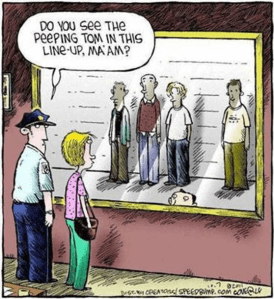
It is important to know that Dr. Van Dam indicated that many offenders begin committing offenses as children themselves. She also had a lot to say about “Peeping Toms“. There are those who think this is a passive type of incident, and thus relatively harmless. The data, however, says otherwise. One study showed “evidence of progression from nonviolent sex crimes during adolescence to more serious sexual assaults as adults”(Van Dam, Carla. Identifying Child Molesters (p. 86). Taylor and Francis. Kindle Edition.) Dr. Van Dam notes that child molesters often “revert” back to these types of crimes. She notes that, “Excusing, denying, or interfering with the reporting of seemingly less invasive sexual abuse provides for those committing the non-contact offenses with opportunities to also commit direct contact molestations. (Van Dam, Carla. Identifying Child Molesters (p. 86). Taylor and Francis. Kindle Edition.) So passive or not, sexual deviancy needs to be noted and addressed.

Women have also been convicted as child molesters. Dr. Van Dam lists many reasons why women may not be reported for their abuses. Women tend to be assigned to child care and child hygiene, abuse can be more easily hidden by their caretaker role. Societal attitudes can also affect reporting. Juvenile males who are victimized by an adult woman are often considered “lucky”. Younger children who report women are often not believed, or evidence gets ignored. In one strange case in Washington, a woman was convicted of molesting her two children, and the judge returned the boys to her custody saying that “she didn’t really mean anything by it”. (Van Dam, Carla. Identifying Child Molesters (p. 87). Taylor and Francis. Kindle Edition.) The fact that this is not an isolated incident should concern you. Mary Kay Letourneau was married with four children before she sexually abused a 6th grade male student, whom she eventually married. The mother of the male student became one of Mrs. Letourneau’s most ardent defenders.

Most child molesters do not meet the criteria for psychopathy. Child predators meet the criteria of psychopathy, in that they lack empathy, impulsive behavior, and poor behavioral control. Psychopaths, however, commit multiple criminal offenses. Child molesters, apart from their sexual deviancy, are otherwise law-abiding people. Their behavior, however, is very similar to the behaviors of psychopaths. They can con people into giving their support and cooperation. The methods they use are deliberately disorienting, such as staring at a person with a blank stare.

The author of one study into psychopaths provides advice for dealing with them that would also apply to dealing with a child molester. This author wrote,
The next time you find yourself dealing with an individual with
nonverbal mannerisms or gimmicks whose riveting eye contact, dramatic
hand movements, “stage scenery” and so on, tend to overwhelm you,
close your eyes or look away and carefully listen to what the person is
saying. (Van Dam, Carla. Identifying Child Molesters (p. 88). Taylor and
Francis. Kindle Edition.”
This will be a factor in future chapters. An adage used to help people avoid scams applies her as well. If it’s seems too good to be true, then it probably isn’t.

It is clear that one cannot identify child molesters by their looks, their gender, or their occupation. What helps us identify child molesters are their behaviors. We need to be able to identify these behaviors, and then have a solid game plan.

That starts with the next chapter.

NEWS DESK (from the past week)
Indiana Man, Anchorage Woman Plead Guilty to Child Pornography Charges
Adair County Man Sentenced to 27 Years in Federal Prison for Child Pornography Offenses
Wisconsin Man Pleads Guilty to Producing Child Pornography
Ferndale Man Sentenced to Over 15 Years in Prison for Sex Trafficking Children
Man Sentenced for Production of Child Pornography That He Shared Across the Internet
Erie Resident Indicted on Sex Trafficking Charges
Recidivist Sex Offender Pleads Guilty to Attempted Coercion and Enticement of Minor
Former Pastor Sentenced To Five Years In Prison For Receipt Of Child Pornography
Six Pennsylvania Residents and One Resident of North Carolina Indicted on Wire Fraud Conspiracy, Computer Fraud, ID Theft and Possession of Child Sex Abuse Material Charges
Defendant on the Run for 12 Years Extradited from Spain to Face Child Pornography Charges in Miami Federal Court
Pine City Man Arrested, Charged in Federal Complaint for Using Social Media to Sexually Exploit Minors
Nye County Resident Sentenced to Prison for Distribution and Receipt of More Than 250,000 Images of Child Sexual Abuse Material
Navajo Man Pleads Guilty to Abusive Sexual Contact
New Mexico State Police Officer Arrested for Possession and Transportation of Child Pornography
Sioux Falls Man Sentenced for Attempted Enticement of a Minor
Virginia Man Pleads Guilty to Sex Offense Against A Minor
Two Indictments Charge International Travel to Engage in Illicit Sexual Activity with Minors
Quincy Man Pleads Guilty to Child Pornography Offense
Rural Alaska Man Sentenced to 12 Years in Prison for Sexually Abusing a Minor
Hardin County Man Sentenced to 40 Years in Federal Prison for Child Pornography Offenses
Federal Inmate Admits Possessing Child Pornography
Camden County Man Admits Possession of Child Pornography
Gladstone Couple Sentenced for Producing, Distributing Child Pornography
Trice Indicted For Kidnapping Resulting In Death And Kidnapping A Minor In Wynter Cole-Smith Case
Hocking County woman sentenced to 40 years in federal prison for sexually exploiting children as young as 3-years-old
Kingston Man Sentenced for Distributing and Possessing Child Pornography
Tucson Man Sentenced to Life in Prison for Child Sexual Abuse

Sex Offender Who Possessed Millions of Child Sex Abuse Images and Videos Sentenced to 12 Years in Federal Prison

Repeat Child Sex Offender Sentenced to 35 Years in Prison
Pennsylvania Man Pleads Guilty to Sex Offense Against A Minor
South Carolina Man Charged with Sex Trafficking of Four Victims, including a Minor
Man Sentenced to Over 21 Years in Federal Prison for Sexually Assaulting a Child on the Menominee Indian Reservation
Repeat Child Sex Offender Sentenced to 35 Years in Prison
Pennsylvania Man Pleads Guilty to Sex Offense Against A Minor

IDENTIFYING CHILD MOLESTERS-CHAPTER 4

Chapter Four Prevalence: How often does it happen? was a relatively short chapter. Dr. Van Dam cites numerous studies that essentially say, we’re not sure how prevalent it is. One thing we know for sure, based on the number of victims we know, it’s a lot, and the dark figure is high.

In criminology, the dark figure is the difference between the reported figures, and the actual figures. Child molestation is clearly under-reported, for many reasons. This is troubling when one of the major themes of the book is clarity. Policy decisions should be based on the numbers. If the dark figure is high, the impact of a policy on the problem would be unknown.

Dr. Van Dam starts Chapter Four by saying that twenty years ago, most psychology programs made no mention of child molestation. This book was published in 2001, so that makes it that 43 years ago, no mention of child molestation was found in psychology programs.

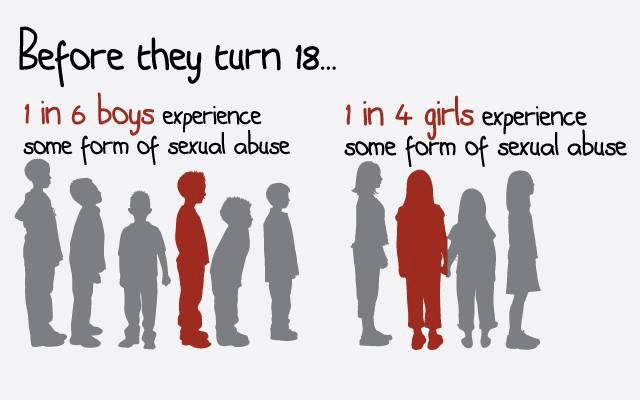
In 1955, a study found the incident of incest to be one per million in English-speaking countries. By 1984, studies were showing that approximately one in four women and one out of six to ten men had been sexually abused during their childhood. So, by 1985, one-third of women, and anywhere from 11% to 47% of men were molested doing childhood.

Dr. Van Dam briefly addressed a controversy in the field, false memories. This is where victims regain access to repressed memories through therapy. Sometimes confessions are obtained through questionable means. All of this causes confusion with the numbers, leading to the afore-mentioned dark figures.

For most victims, the child sexual abuse begins before the age of sixteen, with 48% of the victims being younger than age twelve. Some studies show 50% of the victims were under the age of six.

The number of child sex offenders looks to have a larger dark figure than the number of victims. Many victims are abused by more than one person, further confusing the numbers. In 1999, the U.S. Department of Justice estimated one child molester per square mile, although it is unsure how they arrived at this figure. Offenders do not readily admit what they’ve done, victims don’t always disclose what has happened, and some allegations may be false.

When child sex offenders are guaranteed confidentiality, we might get better numbers. In one such study of 232 child molesters reported “55,250 attempted molestations and 38,727 completed molestations” (Van Dam, Carla. Identifying Child Molesters (p. 77). Taylor and Francis. Kindle Edition.) That’s 106 completed molestations, and 111 attempted molestations per offender. A study in 1986 reported even higher numbers, averaging 470 molestations each.

Studies of college age males indicate that 21-35% of the male population did not think that some sex with children is a problem, and can even imagine, in some circumstances, of making it happen. In another study, “21 percent of male undergraduates reported sexual attraction to children, 9 percent fantasized sex with a child, 5 percent masturbated to fantasies of sex with children, and 7 percent indicated the likelihood of actual sexual involvement with a child if there were no deleterious consequences.” (Van Dam, Carla. Identifying Child Molesters (p. 79). Taylor and Francis. Kindle Edition.)

Looking at some modern numbers, data was compiled by 52 child sex abuse hotlines in 48 countries in a study conducted published by the National Center for Missing and Exploited Children (NCMEC) in 2015. In this study, “80 percent of responding hotlines remarked that they were seeing an increase in the use of social networking for child exploitation – either as a forum for grooming or as a source of self-generated, sexually explicit images of children.”

In the UK, social media was the most-used means of grooming children, at 49%, followed by instant messaging and chat. The largest group of victims were 13 – 14 year olds at 35 percent; 11-12 year olds made up the next largest group at 22 percent. One-fourth of social networking users age 8-11, and one third of users age 12-15, communicate with someone only known to them through the Internet.

The majority of reported child victims were girls (78%) while 13% were boys. The largest category of reported victims were older girls, at 48%. Of the 5,917 offenders named in the reports; the majority were male (82%) while only 9% were female. Of the total reported offenders, 98% were individuals seemingly unknown to the children in real life while only 2% were likely known.

The results showed that offenders seemed to want “sexually explicit images of children (60%); to meet and have sexual contact with children (32%); to engage in sexual conversation/role-play with children online (8%) and; to acquire some type of financial goal (2%).”

NCMEC reports that, in 2020, over 21.7 million reports were made to the Cyber Tipline.

Dr. Van Dam‘s concerns over the dark figures should be kept in mind as we go through the rest of her book. However, it is clear that child sexual predators are a very real problem.

NEWS DESK
Kidnapped Texas teen rescued by Good Samaritans in California after waving ‘help me’ sign
North Carolina man, 69, accused of groping teen on flight
Brandon Man Sentenced to Over 16 Years in Prison on Child Pornography Charges
St. Louis County Sex Offender Sentenced to 10 Years for New Child Pornography Case
Missouri Woman Sentenced to 15 Years in Prison for the Sexual Exploitation of Children

HOMESPUN WISDOM

Paw came to my mind today. Truth be told, he’s on my mind a lot since he passed at the end of 2018. But today something happened that really brought him back to me.

Paw was a guy who really liked to let people think he wasn’t as smart as he was. He was a big fan of Louis L’Amour, and other western authors. He reveled in homespun wisdom, so much so that, when I was an Assistant Principal, I sent out a daily email to my staff that ended with a “Satterlyism”, one of his one-line, homespun wisdom. The staff loved them. They frequently asked, “Did he really say all those things?” Yup, he did. That doesn’t mean he created them all, but he sure did say them. “No matter where you go, there you are,” was one of his all-time favorites. He was a big fan of Lewis Grizzard(Shoot Low, Boys! They’re Riding Shetland Ponies!) and Will Rogers(“Politicians can do more funny things naturally, than I can think of to do purposely.”), so he had that going for him.

The one that pertained to an incident that happened today was, “Don’t go making a mountain for yourself ta climb. Life has got enough mountains fer ya.” The incident not only involved my grandsons, those Scions of Chaos, but the subject matter I’ve been writing about the past few days.

It started when a friend of the Devilish Duo came over. Pretty soon they were doing a Number 6 , all a-whappin’ an a-whompin’ around the house. Mebbe they all thought they was in the town of Rock Ridge. Peepaw was only on his first cup of coffee, so the boys were politely asked to take their play outside, by which I mean I growled, “Git out!” at the top of my lungs.

A bit later, I went into the kitchen to get my second cup of coffee, and happened to look out the window to check on the hellions. I was just in time to see the young friend pull his pants down and wave his little Cigar Store Indian (What is up with those, anyway?) at my grandsons. Well, that right there was something you don’t see everyday.

A guy in my line of work, school safety, will often go straight to worst case scenarios, so I made sure to take breath, and remember what Paw had said. I opened the door and told the young man, “Yeah, we don’t do that here. Let’s not do it again.” I went back in and started on my second cup. I seriously considered adding a lot more bite to the coffee, but even though it was five o’clock somewhere, I needed to stay sober.

When their friend went back home, I called the boys over to me. I thought back on all those episodes of Criminal Minds, and in my best David Rossi imitation I asked, “Has he ever pulled his pants down like that before?” Roman, looked away, “No.” Hmmm. I didn’t have to develop a rapport with Roman. I knew from his response that he was not telling me the truth. “Roman, I need you to be honest with me. Have you boys ever touched each other?” He looked right at me, “Well, when we play Ring around the Rosie, we hit each other down there.” Again, I know Roman, so I asked a clarifying question, “What do you mean, down there.” He pointed to his crotch. Right. I’ll get worried when he starts burying kill kits…

Even seven year olds engage in minimization. I guess it comes naturally. Peepaw had a chat with the boys about not touching other people down there, and not letting other people touch them down there. I shared what happened, and what I said to the boys, with their mother. Next chance she gets, she’ll share with the other mom what happened.

See? No muss, no fuss. Such behavior can be natural, and absent any clues otherwise, this was a naturally occurring thing that children do was they grow up. I am not a big fan of using this phrase as an excuse for bad behavior, but boys will be boys. Even when I was a middle school administrator, I dealt with boys “bag-tagging” each other, purple nurples, and other aspects of stupid boyish behavior.

As Dr. Van Dam wrote, there was no power imbalance, all the boys were operating with the same level of knowledge, so no harm, no foul. That doesn’t mean you don’t address it, but as Paw said, “Don’t go making a mountain for yourself ta climb. Life has got enough mountains fer ya.”

Dr. Van Dam’s theme of clarity applied to this situation as well. Over-reacting to a situation like this can cause some trauma. Children are concrete thinkers, so you need to keep your interactions concrete. Address it, keep all the adults in the loop, and keep an eye out for the next time.

It’s like Paw always said, sometimes, “Good judgment comes from experience, and a lot of that comes from bad judgment.” Now, you might think that Will Rogers done said that, but I know for a fact Paw done said it, so I’ve spoken my piece, and counted to three.

“There are three kinds of men. The one that learns by reading. The few who learn by observation. The rest of them have to pee on the electric fence for themselves.” Will Rogers

“I was raised to think women had babies, stayed at home, and men worked. By the time I got ready to do it, I thought I had all the answers. Only somebody had changed the questions.” Lewis Grizzard

“When I die, remember that what you knew of me is with you always. What is buried is only the shell of what was. Do not regret the shell, but remember the man. Remember the father.” Louis L ‘Amour

IDENTIFYING CHILD MOLESTERS-CHAPTER 3

In Chapter 3 Why it is a problem: What is the harm?, Dr. Van Dam takes a look at the harm that child molestation can cause. This was actually a tough chapter for me to read. My mother was a victim of incest, and my youngest daughter was a victim of a molestation as well. I saw, first-hand, the short-term and long-term harm caused. This chapter has helped me understand some of what I’ve seen.

In keeping with one of her main themes, Dr. Van Dam stressed clarity. Clarity will help us see the impact that child molestation has on the victims, and the “direct and indirect consequences society incurs by tolerating, ignoring or failing to prevent the sexual victimization of children.” (Van Dam, Carla. Identifying Child Molesters (p. 57). Taylor and Francis. Kindle Edition.)

Child molesters would have us think that sexual victimization is harmless or benign. There are organizations like the North American Man-Boy Association (NAMBLA) and the Rene Guyon Society that provide means for child molesters to normalize their behaviors. Groups like these promote the idea that their urges and desires make them a sexual minority, and thus they should be afforded civil rights. The amount of Internet traffic of child pornography would seem to indicate there are a lot of people who might agree with them.

There are those at the opposite end of the spectrum who think that any sexual incident will permanently scar the victim. Dr. Van Dam provides the example of the child who was the recipient of random frottage. In many cases the incident happened so fast that the child may not have noticed, or, if not followed up by any other threatening behavior, would be quickly forgotten.

Still others believe that the harm from child molestations comes from societal attitudes and cultural norms. “One molester pointed out that the taboo against sex with children is Victorian-age hysteria whipped up by feminists who don’t understand male sexuality.” He states “all the harm is done by the taboo. If nobody is getting hurt there is nothing to worry about.” (Van Dam, Carla. Identifying Child Molesters (p. 58). Taylor and Francis. Kindle Edition.) We needed clarity on what child molestation is, as poor understanding may stifle appropriate responses and interventions. We also need clarity on the harm it causes, to properly manage the events preceding the molest.

Dr. Van Dam used as an example Mary Kay Letourneau. She was a sixth-grade teacher who was convicted of second-degree child rape on one of her students. The police found her and the student in her car. The boy was undressed and under a blanket. The police allowed her to call the boys mother and talk to her. The mother told the police to release her son back to Mrs. Letourneau, which they did. This shows how a perpetrator’s charm and competency can lull adults into not protecting children. The police in this situation needed more clarity on the impact child molestation can have, as we all do.

The psychological issues are difficult to define. Many psychological issues are taken in isolation, so underlying causes related to child molestation have been difficult to make. Dr. Van Dam identified some psychological concerns associated with child molestation: Post-traumatic stress disorder, Increased drug and alcohol abuse, Obsessive-compulsive disorder, Panic attacks and anxiety disorders, Depression, Personality disorders, Increased utilization of health services, Increased utilization of social services, Sexual dysfunctions, Suicidal ideation, Greater risk for relationship and parenting problems. (Van Dam, Carla.

Child molestation deprives children of innocent peer exploration, which research shows may interfere with normal development of adult sexual behavior and relationships. The need for secrecy creates severe stress in the child’s as the secrecy may be enforced with direct threats, or more subtle coercion. This secrecy can interfere with the child developing proper intimacy, as the secrecy prevents the closeness needed in healthy personal relationships. The secrecy isolates the child, and maintaining th4 secret takes up more of the child’s time, interfering with the many daily things children do to grow and develop.

Children who are victims of child molestation behave differently, due to the stresses, secrecy, same and pain. This can lead to acting out, which can cause peers to pull away, further isolating the child. When the child molestation comes to light, people can react in negative ways. Sometimes they blame the child, saying “they asked for it”, or other things that place the responsibility on the child.

Just as there are different types of sexual abuse, there are even more types of damage done. Much of what we know of the damage comes from comparing adults who were molested, with adults who were not. What is clear is that the true extent of child molestation may never be known as it is most certainly under-reported.

People who have been sexually abused as children are more likely to enter into, and remain in, abusive relationships. Dr. Van Dam explains this by using studies into “learned helplessness” studies. Laboratory animals were subject to random, electric shocks, from which they could not escape. The researchers would then leave the doors to the cage open, but the animals wouldn’t leave, even when they saw healthy animals leaving. Abused humans exhibit similar behaviors. Learned helplessness explains why abuse victims remain in abusive relationships.

Child sexual abuse victims experience depression at higher rates than the general population. Guilt and shame destroys a person’s self-esteem, as does the constant secrecy. Many adults who suffer from clinical depression were victims of child sexual abuse. As Dr. Van Dam writes,
Looking specifically at clinical samples of adults who were
sexually abused, 92 percent reported mood disturbances, such
as depression, guilt, and low self-esteem. In addition, these
adults were more self-destructive and suicidal than their
nonabused counterparts, or than depressed adults who did not
have a history of child sexual abuse (Ratican, 1992). (Van Dam,
Carla. Identifying Child Molesters (p. 63). Taylor and Francis.
Kindle Edition.)

Self-injury and suicidal ideation is frequently linked to child sexual abuse. A student at one of my schools, who was sexually abused by her youth minister, suffered from anorexia, to the point where the was on a feeding tube. My daughter engaged in cutting, and numerous trips to the hospital for suicidal ideation. Self-injurious behavior is linked with histories of childhood sexual abuse.

Victims of child sexual abuse had sexual delusions, were pre-occupied with sex, were depressed, were more likely to engage in substance abuse, and major medical issues. They sought social contact more than their peers, but this contacts were characterized by hyperarousal, disorganized thinking, agitation and delusions. They were more likely to threaten others, and engage in substance and alcohol abuse.

Many victims, especially victims of incest, feel isolated and rejected. They may think it’s their fault, that they brought it on themselves. Victims of incest have higher rates of running away from home, and this, in turn, leads to higher rates of prostitution.

Child sexual abuse leads to issues in child rearing. One study found 24 percent of abusive mothers had been victims of incest. Another study found that a high percentage of child sexual abuse victims had mothers who were sexually abused. One third of those who sexually abuse children were sexually abused as children.

Child sexual abuse, by definition, violates personal boundaries. Concepts such as differentiation and individuation, in Western culture are equated with mental health. Child sexual abuse blurs those boundaries. It can lead to a cycle of abuse.

Aside from psychological damage, child sexual abuse can cause physical damage. Children can contract sexually transmitted diseases, pregnancy and physiological damage like anal fissures. In some cases, internal damage has caused the death of the child.

The moral damage has to be considered as well. We can see the dangers of a person in authority having sex with with a subordinate. The person in authority is in a position of trust. Having sex with a subordinate violates that trust, even when it is between two adults. As Dr. Van Dam writes, “When adults consider sexual interactions with a child, they automatically enter into an exploitative relationship with the child, meeting their personal needs and agendas, rather than attending to the child’s best interests. By definition, at that point, they are no longer able to advocate for the child. (Van Dam, Carla. Identifying Child Molesters (p. 69). Taylor and Francis. Kindle Edition.).

Despite what some child molesters may say or think, a child cannot consent to a sexual relationship. The relationship between any adult, who is more powerful, and a child, who is powerless, ensures the child cannot act independently. A child also lacks the experience and understanding to provide informed consent. Children are concrete thinkers. They are incapable of abstract thinking necessary for informed consent. We don’t allow children to participate in government, own weapons, or vote. Yet child molesters argue children can give consent to sex. Strange.

Child molesters will often point to Ancient Greek practices as justification for their predations. Numerous Greek poems were written where the adult men extolled the virtues of the young boys they preyed upon. Distinctly missing from the histories are the poems of the boys praising the adults who preyed upon them.

For a person to ensnare another, to have them engage in behaviors that are against their wishes, and against their benefit, is akin to slavery. It is inconceivable that anyone could make a rational, moral argument for slavery. We should not accept such arguments for child predation.

NEWS DESK
Oxford Man Who Filmed Himself Sexually Abusing Two Young Children Sentenced to 25 Years in Federal Prison
Pittsburgh Resident Sentenced to 90 Months Imprisonment for Attempted Receipt of Material Involving the Sexual Exploitation of a Child
FBI Seeking Potential Victims in Eric Jacob Layton Investigation
Alaska Military Servicemember indicted for allegedly molesting teens on flights through Seattle
Former Yonkers Teacher Charged In Connection With Sexual Exploitation Of Minor Student
Licking County man sentenced to 25 years in prison for sexually exploiting minor boys he met through church youth group
Ulster County Sex Offender Sentenced to 10 Years for Child Pornography Possession
Worcester Man Sentenced to 12 Years in Prison for Child Pornography Offenses
Sexual abuse of boy on Crow Indian Reservation sends Crow Agency man to prison for 30 months
New Jersey Man Sentenced To 30 Years In Prison For Production Of Child Pornography
New York Man Sentenced To 10 Years’ Imprisonment For Traveling To Pennsylvania To Have Sex With A Minor
Connecticut Sex Offender Indicted In Jacksonville For Committing Multiple Child Sexual Exploitation Offenses
District Man Sentenced to Seven Years in Prison For Distributing Child Pornography
Cape Coral Man Sentenced To 14 Years In Prison For Attempting To Entice A Minor To Engage In Sexual Activity
Federal Jury Convicts Orlando Man Of Attempting To Entice And Meet A 13-Year-Old Child To Engage In Sexual Activity
Former Portsmouth Police Officer Pleads Guilty to Sexually Assaulting Minor Victim
North Carolina man charged with abusive sexual contact(with minor) on Delta Airlines flight from Atlanta
Suspect with 28-page rap sheet who cops say ‘should not have been on the street’ allegedly just tried to abduct 14-year-old girl from mall
Court docs: Muncie man admits to sex with 12-year-old who tells cops she is pregnant
New Palestine man to serve 50 years in prison for January 2021 rape of teen

STORY TIME

The other day I was mowing the grass. We own a quarter acre of land. Too small for a riding mower, so I make do with a push mower. My typical pattern is I mow outside the perimeter fence around back yard, then the front, saving the back yard for the last. As I came around to the west side gate to the back yard, I hear Roman yell out something. Roman is my 7 1/2 year-old grandson. Stevie, who was named after me, will be five in September.

I was a bit irritated with the interruption as I let go of the safety bar on the mower. It shut off. “What?” I snapped.

Roman pointed at the play set. “Stevie is stuck!”

I turned to look and, sure enough, Stevie was in a pickle. He had climbed up under the canopy, I’m assuming to get onto the swing crossbar, like he’s seen his big brother repeatedly do. He got one leg outside, and froze. He wasn’t stuck, he had just lost his nerve. He sat there, one leg out, one leg in, whimpering.

What he wanted, more than anything, was for Peepaw to grab him, bring him down, hug him, and tell him everything was OK. He don’t know Peepaw too well. Peepaw is Old School. Stevie got himself into this mess, Stevie was going to get himself out. Peepaw would provide assistance and moral support, but he’s too old to be climbing up into children’s play sets. It was bad enough when he had to do it to paint it this past spring.

Now, just in case I have any readers who doubt otherwise, if Stevie had been in any danger, I’d have been up there, back pain be damned, to get that boy to safety. As a matter of fact, part of my back issues resulted from my oldest daughter Jessica, who got near the top of some stairs, and started to fall. I leapt forward, scooped her up, twisted so she was on top and slid down the stairs on my back. When I crashed into the bottom, she popped out, giggling, and wedged herself between two balusters. Lying on my back in pain, with my feet up the stairs, I saw her predicament and jackknifed up, grabbed her, and ended up on the floor. She giggled the whole way, and was undoubtedly learning her first curse words. I ended up in the emergency room.

I’ll sacrifice my body for my family. I know, I’ve seen me do it.

So there I was, standing under Stevie. He’s above me whimpering. I try the simple approach first. “Stevie, Pull your leg in, buddy.”

“I can’t! I’m scared!”

Time for some Peepaw wisdom. “Just because you’re scared, doesn’t mean you can’t.” I felt proud of that one. Thought it up all be myself, right on the spot. And as usual when my head gets a little big, the Good Lord arranges the cure.

Roman, with all the wisdom 7 1/2 years of life experience can bring, says, “I don’t think that’s true.”

“Shut up, Roman.”

I proceeded to coach Stevie on what he needed to do. After a few moments of Stevie whimpering, without responding to my verbal prompts, I began having visions of tipping the play set over. Then I would have to explain that to his mother and father, Meemaw, and Child Protective Services, so I took a deep breath, reached up and tapped the foot that was outside. “Stevie, you’ll need to raise this foot over the bar you’re sitting on. Do you understand?”

Whimpering. No movement. “Buddy? You’re gonna have move this foot over the bar.”

More whimpering. I move his foot up toward the board he was sitting on. The whimpering intensified, getting louder the higher I listed his foot. I suppressed a brief image of me roaring like a monster as I pulled him down, as my daughter and son-in-law did not currently have the means to pay for Stevie’s subsequent therapy.

I placed his foot on top of the board he was sitting on. “Now buddy, all you have to do is bring that foot down, and you’ll be OK.”

More whimpering. He had his arms clamped so tight around the board that it was a wonder hadn’t splintered it yet. “Come on, buddy! Just bring your foot down.”

“I can’t, I’m scared!”

I still had the back yard to mow. It was hot, and my patience had worn thin. I reached up and pushed his knee over the board. His foot followed the knee. The minute his foot hit the floor, he stood up and smiled. I smiled back. “Look at you, buddy! You did it!”

He beamed back at me. “I did it!” Roman echoed his brother, “You did it!”

Stevie climbed down, and he and Roman ran into the house to play Minecraft. I finished mowing the back yard and went into the house. Jessica was in the kitchen, making the boys some lunch. I walked over to her.

“So Stevie got himself stuck on the play set. I’m going to explain what really happened, then I’m going to give you the official story.

Jessica laughed and said, “Alright.”

I explained everything to her, just as described above.

She shook her head. “Typical. So what’s the official story?”

I deadpanned, “Stevie got himself stuck. Peepaw came over to make sure he was ok, and watched as Stevie got his foot back over the board. Stevie was a big boy, overcame his fear and got himself down!”

Jessica laughed, sarcastically. “OK. We’ll go with that.” She went over to Stevie and said, “I heard you got yourself out of trouble! That’s my big boy!”

Honesty is a wonderful thing, but it isn’t always the best thing. Stevie was traumatized. Nothing that would create PTS, but the fear was real. If I had just lifted him up off of the play set, the problem would have been solved, and Stevie’s lesson would be; if he got in trouble, someone would come and help him out. A retooling of the story planted a seed in his head that he could get himself out of trouble, and his family was nearby if he needed them.

A small incident, but hopefully in his future, in a dark moment, he’ll remember that his Peepaw and his mother were impressed that he got himself out of trouble.


Just because you’re scared, doesn’t mean you can’t.


IDENTIFYING CHILD MOLESTERS-CHAPTER TWO

My last blog covered the case studies found in Chapter 1 The Problem. Before beginning Chapter 2 Knowing It Is a Problem: The Need for Clarity, I want to make a point I missed from Chapter 1. Think about some of our current efforts to prevent child molestation. We teach children about safe touching (Good touch, bad touch), saying “no”, and telling a trusted adult when something happens, and to continue telling until an adult listens. Who is primarily responsible for this process? The child. The process implicitly tells children that they are responsible for their own safety. Are there any other areas of criminal justice in which society places the responsibility of protecting themselves on children?

We tell children to tell a trusted adult, and to keep telling them until they are believed. That gives the message to children that their stories will seem unbelievable. We want children to be more persistant than most adults would be in less emotionally-charged situations. In the situations Dr. Van Dam covers in her book, it’s the adults who are groomed by the perpetrator to gain access to the victims. When the adults welcome the molesters with open arms, public praise and increased social standing, how will children respond when they have to make serious charges against such an outstanding citizen?

Let’s keep that in mind as we learn the tools we need to be the protectors. Our children do not need that burden. That’s on us.

In Chapter 2 Dr. Van Dam writes about how many of the problems that society has in addressing this issue are because of the numerous definitions people have for child molestation. When people don’t feel sure about what they are seeing, they are hesitant to act. Predators thrive in the resulting uncertainty. Parents who get told things by their children will often choose erroneous avenues to address the situation. For example, a student that tells their parents that a teacher put their hands down the back of their pants, may address the issue with the school principal rather than the police.

As an educator for 29 years, and as a school safety expert for nearly 15 years, I know educators struggle with this, even after laws that make it clear. For example, under Indiana Code IC 31-33-5 and IC 12-17.2-3.5, child care staff and volunteers are mandated to report suspected child abuse and neglect. Failure to do so is a class B misdemeanor. Most states have similar mandatory reporting laws. Yet in my travels around the country, educators and school administrators struggle with that.

In my work with Safe Havens International, the world’s largest non-profit school safety center, we conduct scenario assessments, in which various school staff are given video or audio scenarios, and asked what they would do to respond to the incidents. We record their responses for the first 30 seconds. One of the scenarios involves a staff member acting inappropriately with a student by saying sexually explicit things, and stroking the student’s hair. This scenario, while disturbing, is not explicit in nature, but I often see the staff member struggle with what to do, and more often than not, reporting the incident to the authorities is not mentioned, even in those states in which doing so would be mandated by law. I think, more often than not, this is due to uncertainty.

This uncertainty exists even among experts in the field. As Dr. Van Dam writes,
There is no consensus among researchers and
practitioners about what sex acts constitute sexual
abuse, what age defines children, nor even when the
concept of child sexual abuse is preferable to others
such as sexual victimization, sexual exploitation, sexual
assault, sexual misuse, child molestation, sexual
maltreatment, or child rape…. Cases in which children are raped or otherwise
sexually abused by their peers, younger children, or children less than five years
older than themselves, are often discounted as instances of child sexual abuse. (p.
133)
(Van Dam, Carla. Identifying Child Molesters (p. 42). Taylor and Francis. Kindle
Edition.)
Perhaps this is a case of the experts getting lost in the weeds. They get caught up in research, of trying to prove a particular point, and they forget why they are doing the research. People who are experiencing the situation first-hand can’t decide what is going on, because the experts can’t agree on what to call it.

The problem we face is that clarity is needed. The lack of clarity assists the molester, and does nothing to help us protect children. Lack of clarity interferes with appropriate treatment. If you don’t know what to call a particular behavior, then a proper treatment cannot be determined. A lack of clarity can interfere with proper educational practices. For example, children require proper physical contact for regular emotional and psychological development, thus going with a “no touch” policy would not be in the child’s best interests.

Dr. Van Dam used a term, nescience, a lack of knowledge or awareness, to explain how some people can see something happen, but not see it. I witnessed this as a school administrator. We had two students in a field after school, conducting field research on the procreative process. They were in an advanced state of undress, when the school’s cross country team, along with their coach, ran by. The two young researchers sprang up, in fragrante delicti (red-handed, so to speak), instantly creating a team full of eye witnesses. Except for the coach, who apparently went situationally blind. In the case of child molesters, they can brazenly fondle a victim, and the sheer cheekiness of the act, along with the confidence of the molester, will prevent witnesses from making a report. They will not believe what they just saw, in what researchers call “shared negative hallucination”. No belief, no report, and a child becomes a victim.

So what’s to be done?  Gavin de Becker is one of the world’s foremost experts on personal protection. His book, The Gift of Fear, is a must read for anyone. He commented on those who deny seeing sexual abuse, “During the beginning of sexual abuse, deniers are unconscious co-conspirators” (de Becker, 1999, p. 15). (Van Dam, Carla. Identifying Child Molesters (p. 49). Taylor and Francis. Kindle Edition.). So when it comes to the safety of our children, would we think that ignorance of violence was an acceptable approach? No. We need to overcome denial, overcome nescience, and see the problem with clarity.

Clarity comes from knowing what outcome you want. We want to keep our children from getting into a situation in which a child predator can victimize a child. That means we don’t need to worry about what definitions researchers, politicians or lawyers use. We want to terminate the problem behavior before harm is done to the child. Thus, Dr. Van Dam uses a psychological definition. According to Dr. Van Dam, sexual abuse has three conditions:
1) It is a violation of a trust relationship with unequal power and/or advanced knowledge, 2) There is a need for secrecy, and
3) Sexual activity. The activity could be talking, to voyeurism to intercourse.

So if the perpetrator uses power and/or coercion, if the perpetrator has advanced knowledge, or if threats are used, then abuse has occurred. Dr. Van Dam used an example of a high school coach who had created a peephole into a locker room. He watched students through the peephole and masturbated while doing so. The coach was in a position of power, the coach attempted to keep the peephole secret, and the voyeurism was a sexual act, even without the masturbation. 

Most of the rest of the chapter was Dr. Van Dam explaining the differences between pedophiles (Pre-pubescent children) and ephebophiles (Post-pubescent children), incest offenders and various orientations of sex offenders. She points out that the research shows that one-third of child molesters are women. 

So child sexual abuse is a violation of a trust relationship with unequal power and/or advanced knowledge, in which there is a need for secrecy, and sexual activity. A child molester is anyone, male or female, whose sexual behaviors meets this definition.

Having provided clarity on what child sexual abuse is, Dr. Van Dam will next write about why it’s a problem in Chapter 3.

NEWS DESK
Trans Teen Found Dead After Online Date
Sheriff issues chilling warning to parents after missing teen girl rescued in ‘routine’ traffic stop
Nickelodeon star Jennette McCurdy claims mom gave her showers until she was 18, made her ‘uncomfortable’
Child rape suspect caught with fly undone, 6 kids in vehicle during traffic stop: video
Yakima Man Sentenced to 300 Months Imprisonment and Lifetime Supervised Release for Production and Attempted Production of Child Pornography and Possession of Child Pornography
Springfield Man Sentenced to 15 Years for Sexual Exploitation of a Child
St. Louis County Man Sentenced to 10 Years in Prison, Ordered to Pay $66,000 to Child Pornography Victims
Ottawa County Man Sentenced To 38 Years In Federal Prison For Distributing Child Pornography
Lame Deer man sentenced to prison for sexually abusing minor

Design a site like this with WordPress.com
Get started