MEMORIAL DAY 5-27-24

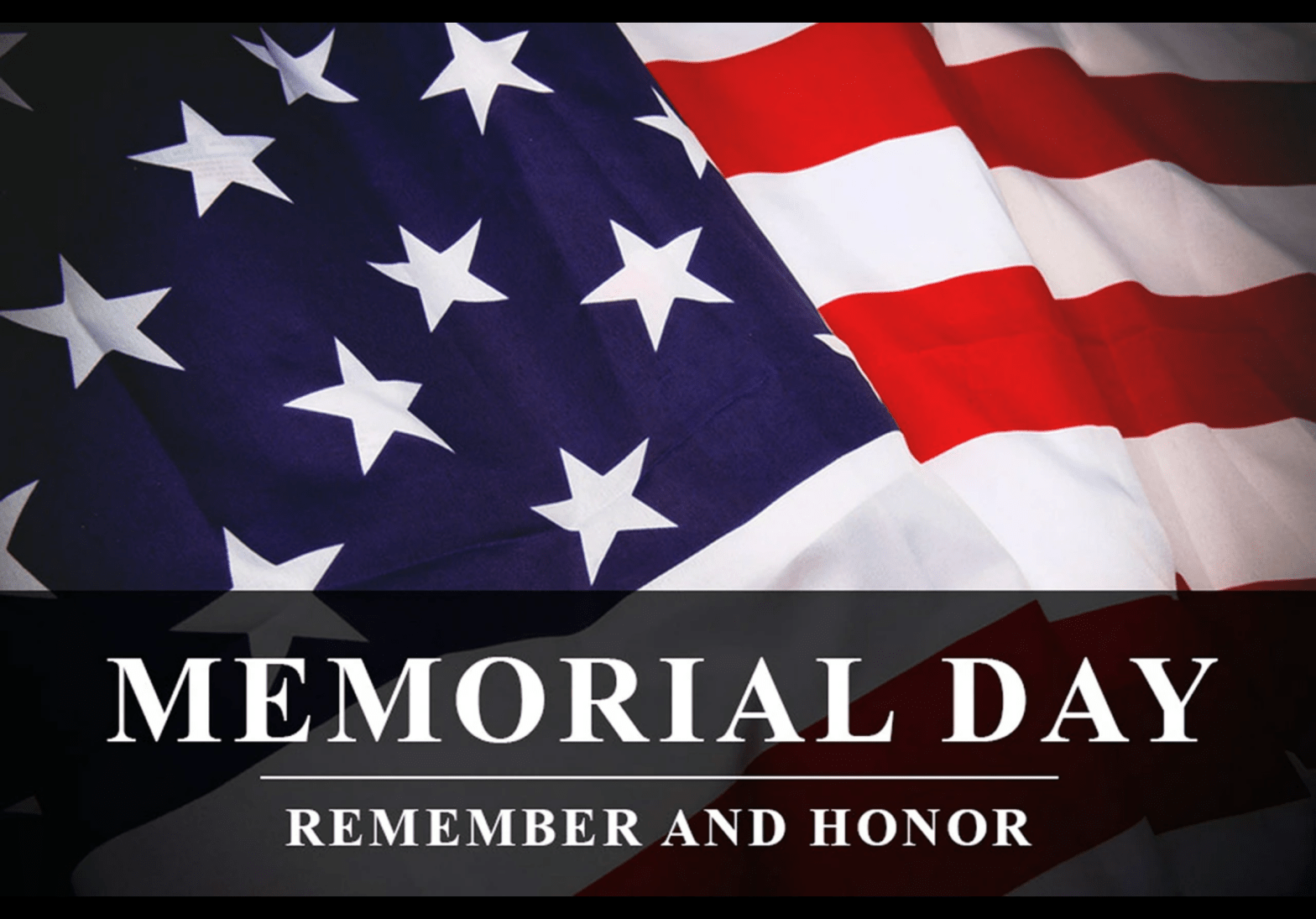
Today is always a subdued day for me. Veterans Day, in November, honors all those who have served. Memorial Day honors those who gave the ultimate sacrifice. Last week Robin and I went to Pearl Harbor for the day. I’ll describe our day there, as well as our visit today to the National Memorial Cemetery of the Pacific in the Punchbowl, Honolulu.
Our day at Pearl Harbor started with checking in, and getting lined up to take the short boat ride to the USS Arizona Memorial. They are pretty strict about what you could, and couldn’t, do on the trip there and back, and on the memorial itself. Basically, no photos or videos on the boat ride. Don’t act like a dick at the memorial. Act like you have some damned common sense. Fortunately, we did not have any a-holes in our group. Well, there was me, but no way I was going to act out on this one.
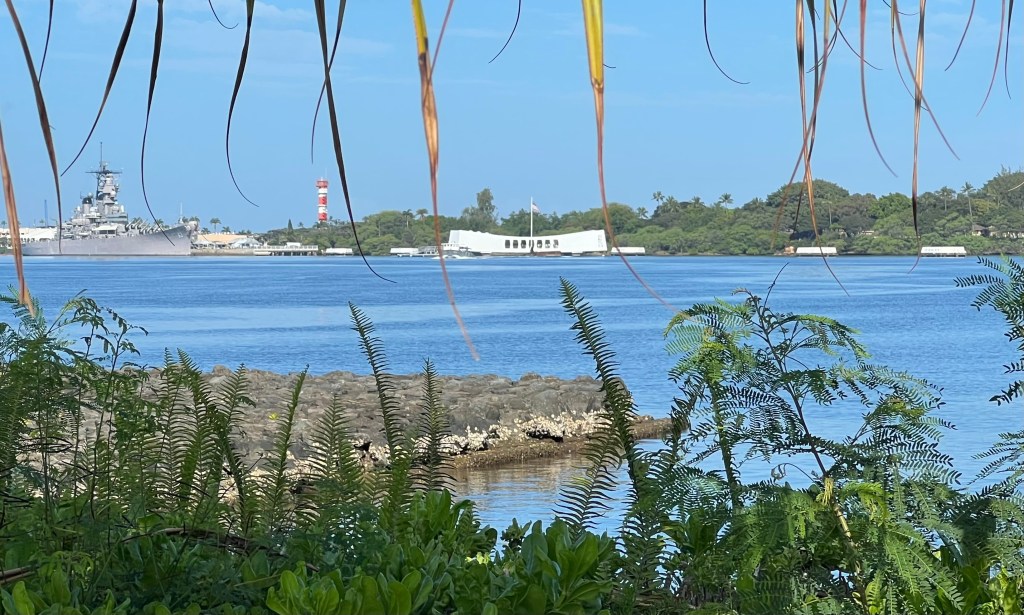
The boat ride over went smoothly. You could see the Memorial ahead of us, as well as the white mooring berths for the USS Nevada and the USS Vestal. A bit further down was the stately shape of the USS Missouri. The pilot expertly brought us alongside the pier for the Memorial, and we ambled on board.

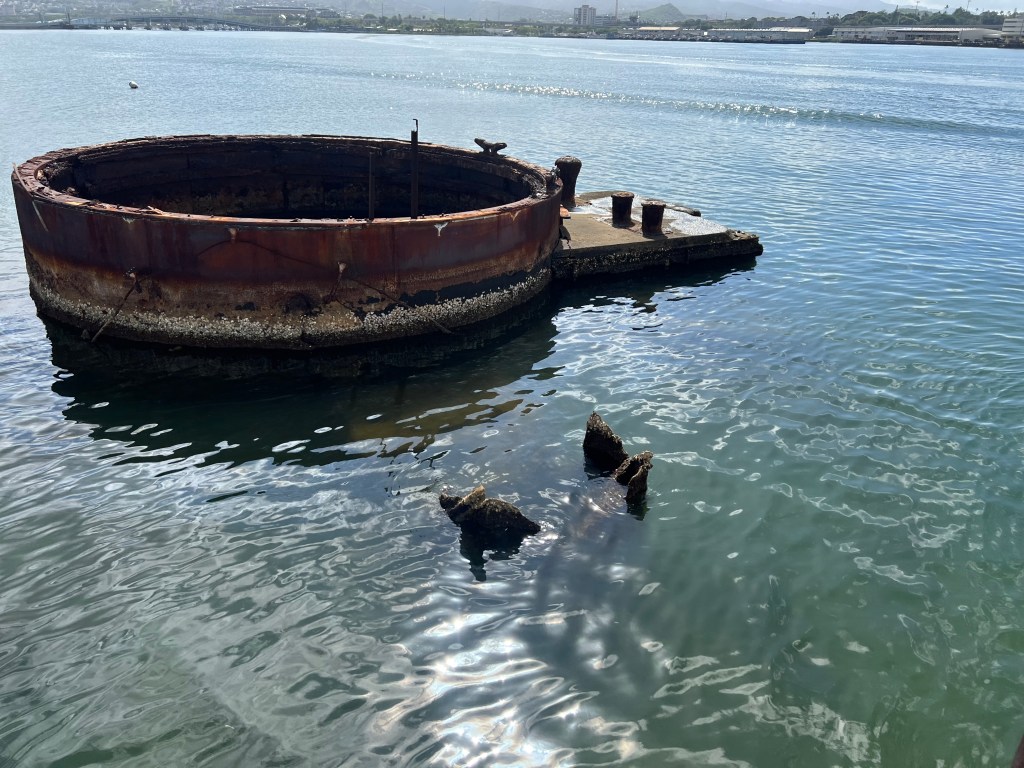
As we boarded, the previous group was leaving. An elderly gentleman, a retired Marine Lieutenant Colonel, instructed us on proper decorum, then answered a few questions. The Memorial sits perpendicular to the sunken ship, amidship. One of the smokestacks is above the water, and it was low tide, so more of the submerged parts of the ship were visible.
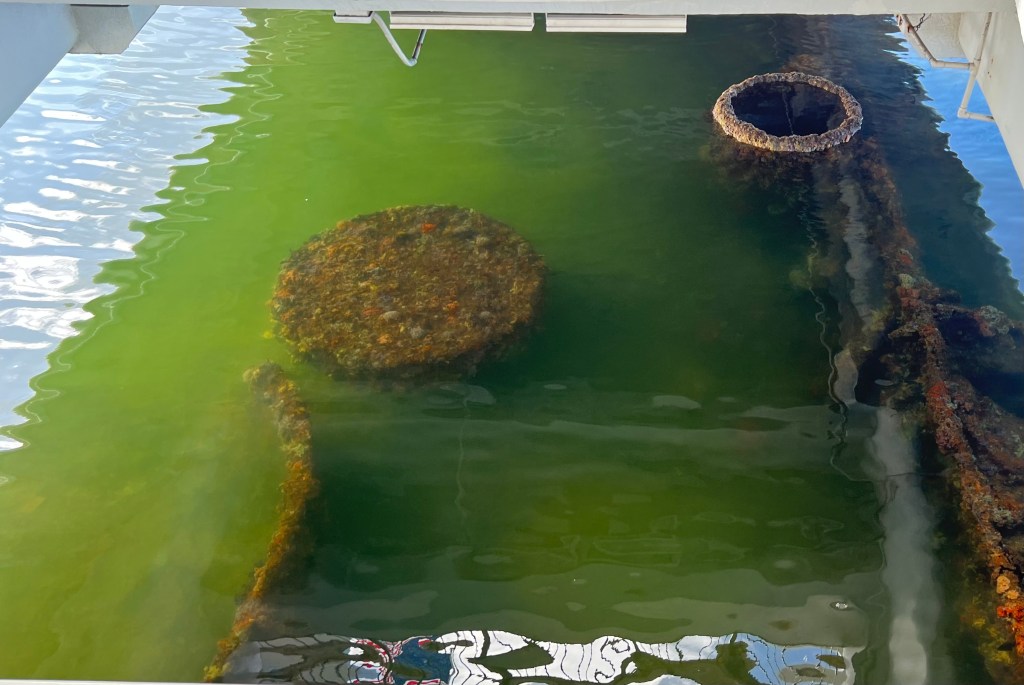
Looking down into the USS Arizona from the Memorial
The rear turret of the USS Arizona

The far end of the Memorial has an entire wall listing the names of the dead entombed below the sea. We learned that survivors, upon their deaths, were having their remains cremated, then lowered into the Arizona so they could be with their shipmates. That seemed very right to me. I’ve never been in combat, thank the Lord, but I know that those who have form a very tight brotherhood with those they were with. So, I get it.

We boarded the boat for our return trip. It was a sober, reflective trip. Thousands of men woke up that December morning looking forward to a calm, peaceful day. The Japanese had other plans. To go from that to the chaos of battle, to the terrifying explosion as the forward magazine exploded, to the horror of being trapped below water, hoping beyond hope that someone would rescue you. For 1,177 sailors and Marines, the rescue never came.
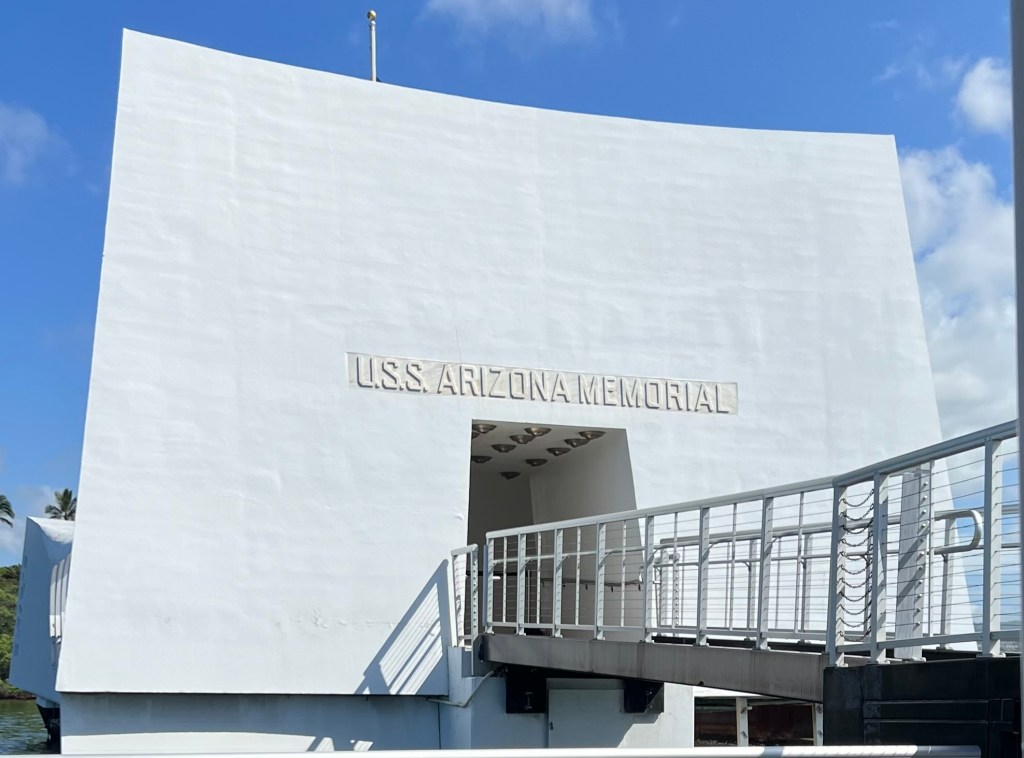
Last night, May 26, Robin and I attended the Mu’aka Warriors Luau. There was a young couple from Ohio sitting with us. At some point I was speaking with the young woman, and I was telling her about Pearl Harbor. She brightly pipes up, “We were there a couple of days ago. I found the Arizona Memorial disappointing!” She then went on into an animated description of the USS Missouri, which she had found fascinating.

I was stunned. The word “disappointing” was the last word I would ever associate with the USS Arizona Memorial. I remember thinking that at least she found the USS Missouri exciting. We also toured the USS Missouri, the Pearl Harbor Aviation Museum, and the Pacific Fleet Submarine Museum. They were all fantastic. But what’s the point?

The young couple seemed very nice, very earnest. But how, as a society, do we produce people who can look at any memorial as boring? Robin and I went to the “Punchbowl”, the National Memorial Cemetery of the Pacific, located in the crater of an extinct volcano. It was Memorial Day, so every gravesite had a small, American flag. So boring. No bells or whistles. No music, no tour guides, just rows and rows of American Heroes.
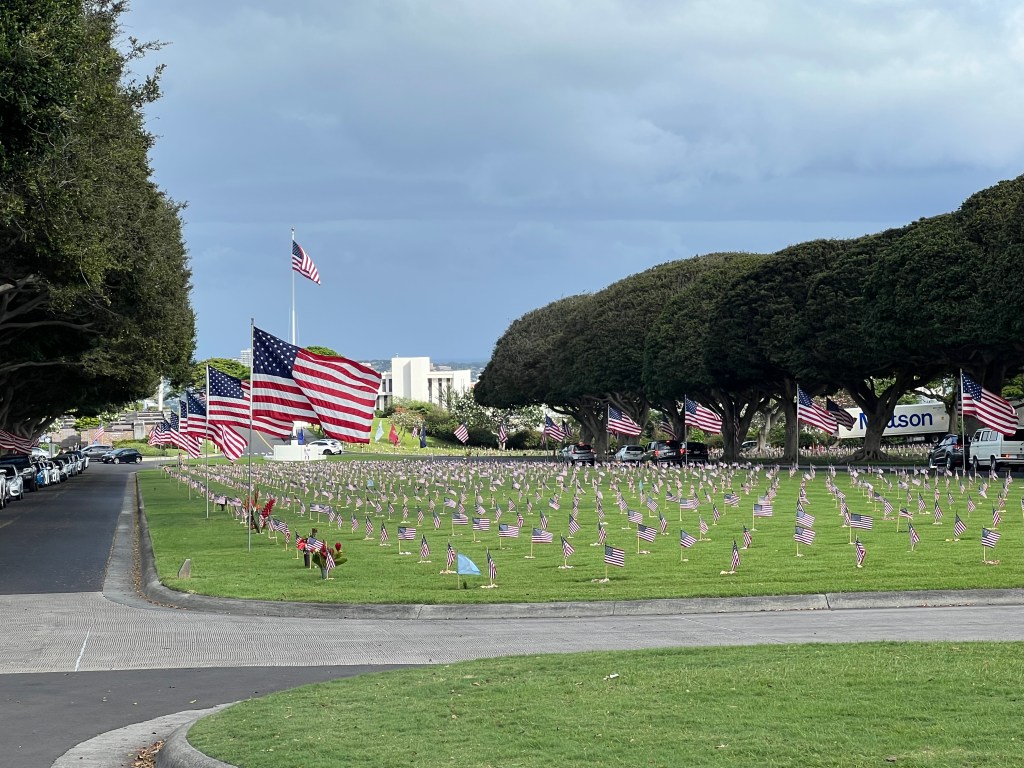
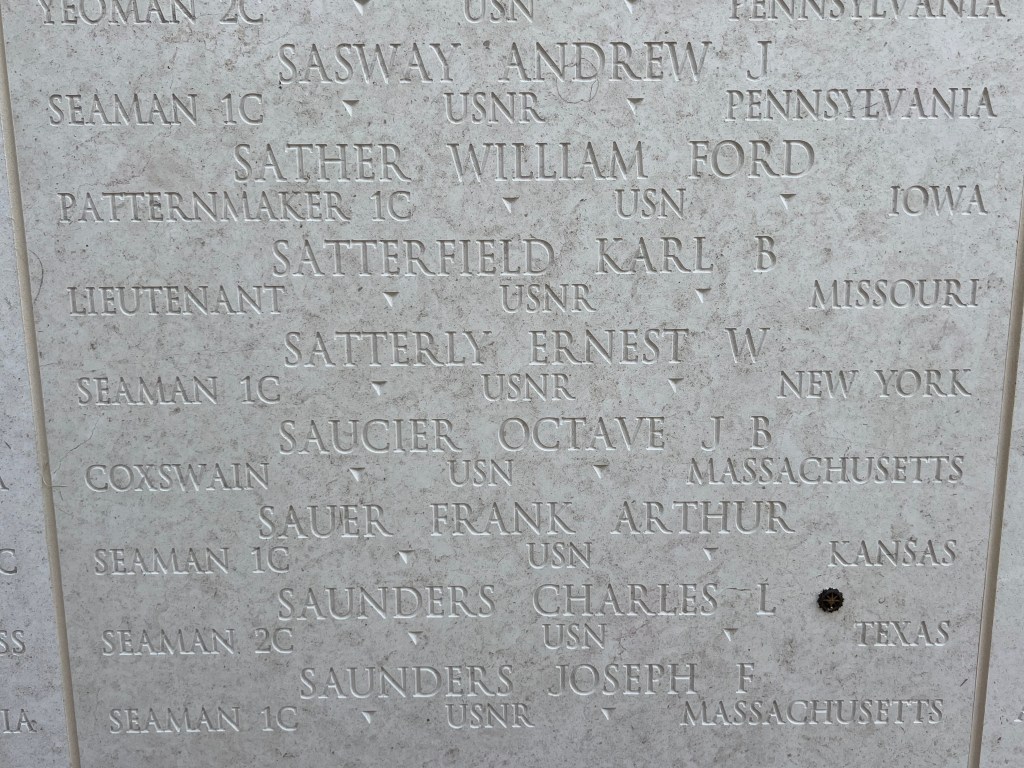
There was a section of the Punchbowl that honored, “…Americans who gave their lives in the service of their country and whose earthly resting place is known only to God.” As we walked through a part of this garden, I found the name of Ernest W. Satterly. Seeing my family name on the wall was a punch in the gut. I hopped on the Interwebs and searched the name. Seaman Satterly was killed off the coast of Okinawa on April 6th, 1945 when a kamikaze flew into his ship, the USS Haynesworth. He was buried at sea. Robin has an uncle and his wife buried in the Punchbowl. Neither of us found that boring.
1941 was 83 years ago. It is hard to find living Americans who remember what it was like on December 7, 1941. From 1939 to 1945, the United States had 407,316 men killed in combat, and 671,278 men wounded. Almost 1,200 of them were from the USS Arizona. How do you “pretty up” 1,200 dead bodies to make it more interesting?

For me, this was a clear sign of the rot in our society. We should be teaching our children WHY we should honor our fallen warriors, and then we should teach them HOW. We shouldn’t need to be told how to act at a memorial. I was at the Tomb of the Unknowns at Arlington National Cemetery a few years ago. A person was talking too loudly at the Tomb, and one of the Guards stopped his walk to address the disrespectful idiot verbally. I feel sure that the retired Marine Lieutenant Colonel would have knife-handed an unruly visitor off the Memorial and into the harbor, but why would it be necessary?

How many of us stand for the Star-Spangled Banner, remove our hats, and put their right hand over their heart? How many of us remind others to do the same? That’s a boring thing to do, right? When was the last time your community had a Veteran’s Day parade? When was the last time you went? We are reaching the last few WWII vets still alive.

Set politics to the side. It doesn’t matter why the country sent their men and women into combat. They go to face unholy chaos, disorder, physical and psychological trauma, and in some cases, death. This isn’t some quiet, peaceful passing on. The human race has developed some of the nastiest implements for inflicting pain and death on our fellow man. Our men and women have been at the spear point of combat where their bodies were subjected to very nasty, horrible methods of creating death and mayhem.

Boring? Not in the least for the recipients.

Our society is infected. Our young people don’t know what is important, or why it is important. That’s on us. We need to do better. I should have explained to that young lady why boring was the wrong word. Sobering. Somber. Awe-inspiring. These work, and there are others. I was too busy with my knickers in a twist because a bright, young woman said something ignorant. I’m the grizzled veteran who should have taken a moment to lovingly explain why what she just said was ignorant and disrespectful. I should have taken a moment to teach her what was important, and WHY it was important.

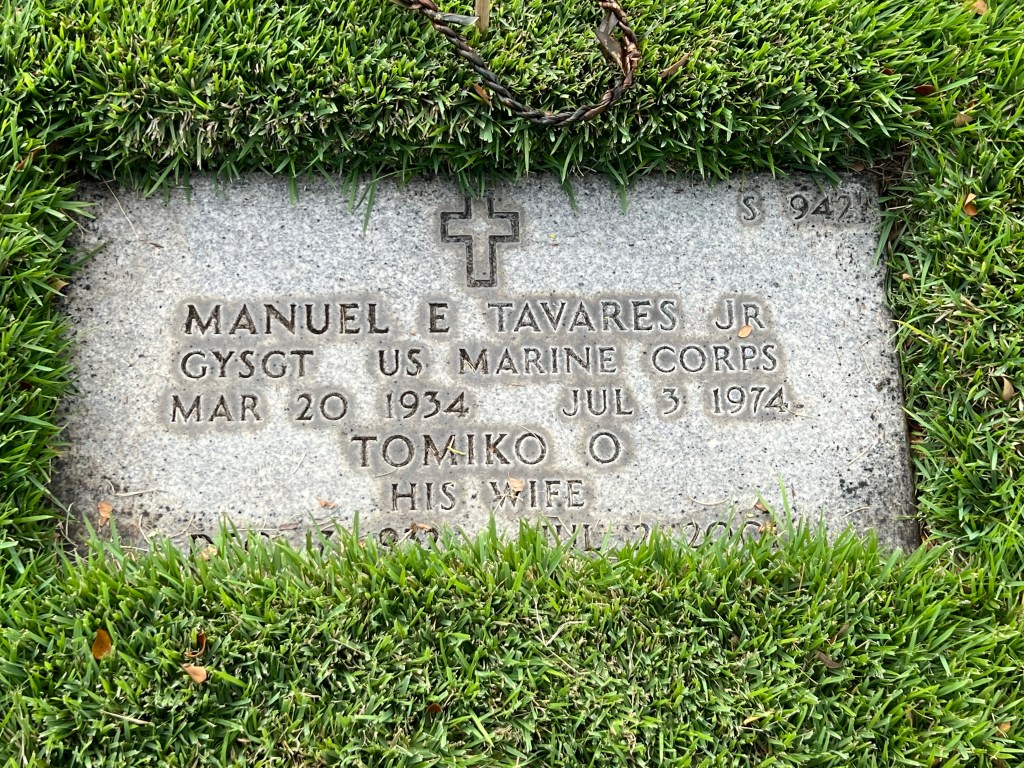
I missed an important teaching moment. I think we all have. Robin’s Uncle Bully, also known as Gunnery Sergeant Manuel Tavares and Seaman Ernest W. Satterly call on us to be better teachers. Not angry teachers, but kind, respectful teachers who know the importance of the young knowing not only why such things are important, but how we can show respect and honor to those who gave their lives so we can have picnics, and buy things at falsely discounted prices.

As Abraham Lincoln said in the Gettysburg Address,
But, in a larger sense, we can not dedicate—we can not consecrate—we can not hallow.
—this ground. The brave men, living and dead, who struggled here, have consecrated it, 
far above our poor power to add or detract. The world will little note, nor long
remember what we say here, but it can never forget what they did here. It is for us the
living, rather, to be dedicated here to the unfinished work which they who fought here
have thus far so nobly advanced. It is rather for us to be here dedicated to the great task
remaining before us—that from these honored dead we take increased devotion to that
cause for which they gave the last full measure of devotion—that we here highly resolve
that these dead shall not have died in vain—that this nation, under God, shall have a
new birth of freedom—and that government of the people, by the people, for the
people, shall not perish from the earth.”
PELE-GODDESS OF CREATION AND DESTRUCTION 5-20-24

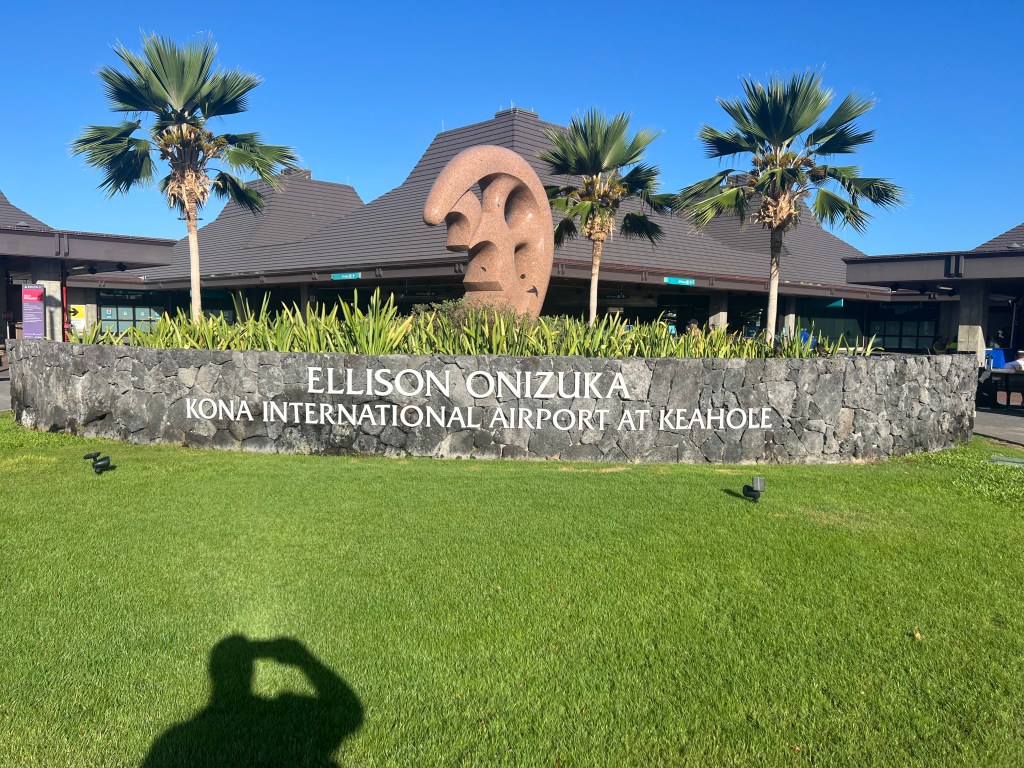
Monday was a great day. One of the main things I wanted to do while in Hawai’i was visit Volcano National Park. This is located on the Big Island, Hawai’i. Robin and I set up a guided tour with Aloha Sunshine Tours. The package we got paid for the flight from Oahu to Kona International Airport on Hawai’i, a guide, entry into the park, and a return flight from Hilo International Airport back to Oahu.

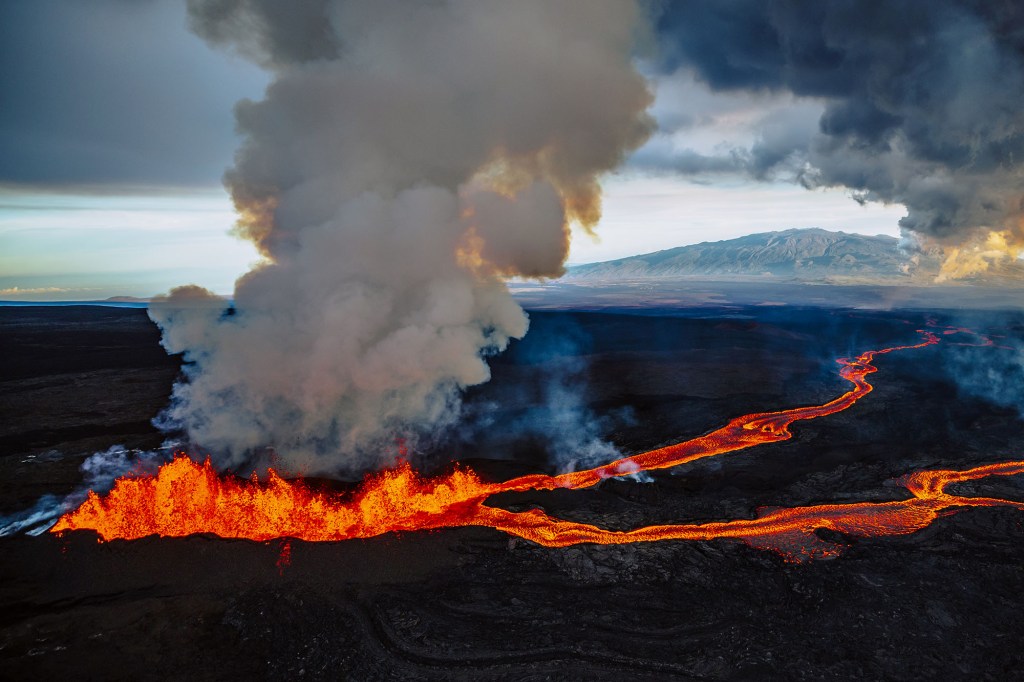
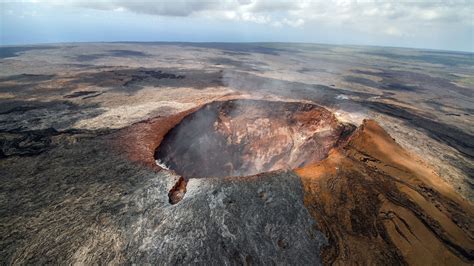
Mauna Loa eruption
New York Post

Volcanos have always fascinated me. I am mesmerized by lava flows, and awed by the destructive forces behind volcanic eruptions, I had never been close to a live volcano before, so of course we had to go! I even brought a virgin along to sacrifice! (Robin’s note: No he didn’t!)

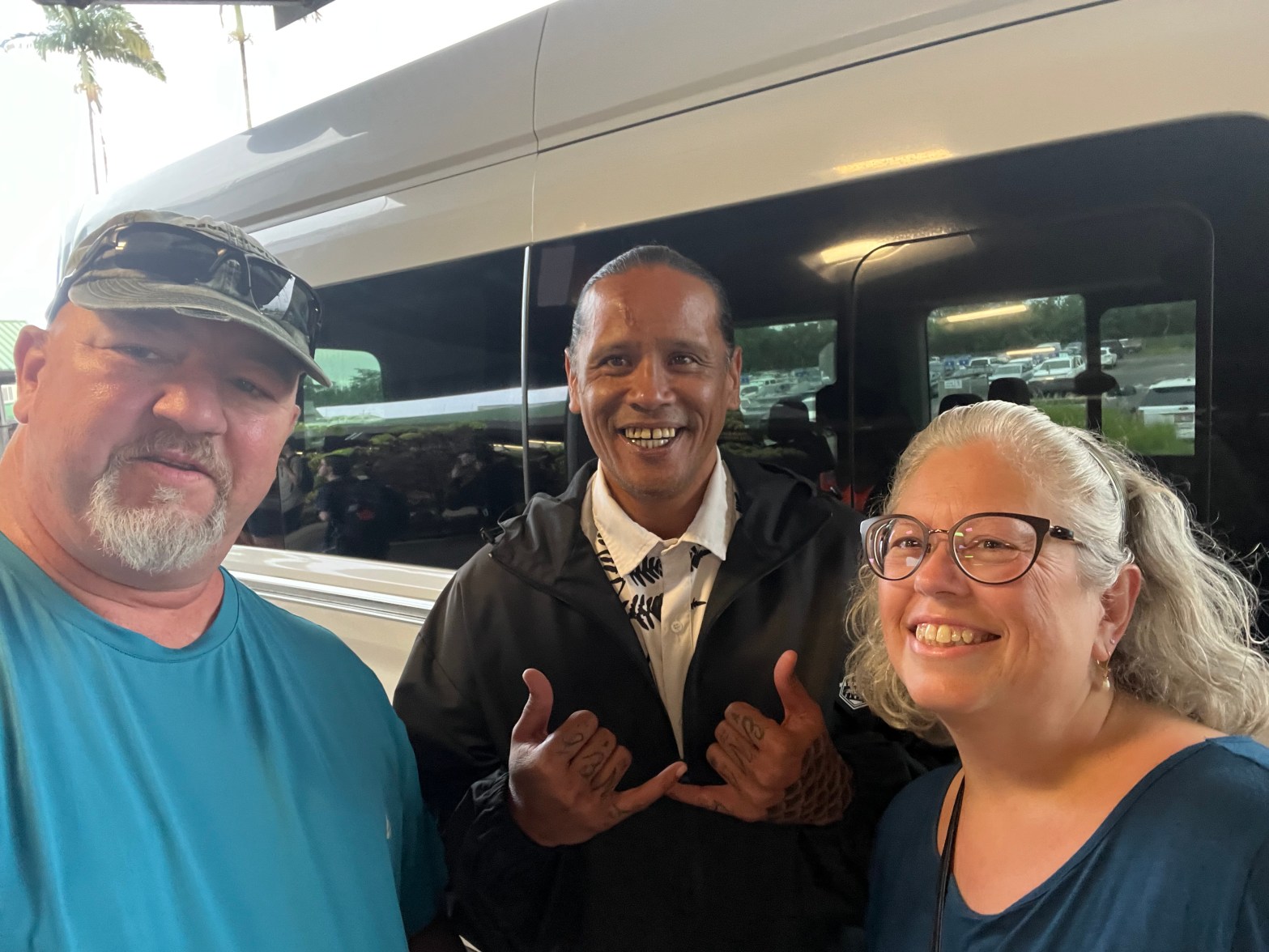
The flight from Honolulu to Kona was under an hour. Kona International Airport was a small and open-air airport, for the most part. We were only going to be there for the day, so we only had a backpack with us. We met our guide, Mel, and he loaded us into his van with two other people, Wayne and Amy.

Kona is on the west side of the island. The plan was to drive down the west coast of the island to Volcano National Park on the south side of the island, then take the short trip from there to Hilo, on the east side of the island. There we would fly back to Honolulu. We were going to visit a coffee farm in the Kona district, see a black-sand beach, and then spend the rest of our time in Volcano National Park.

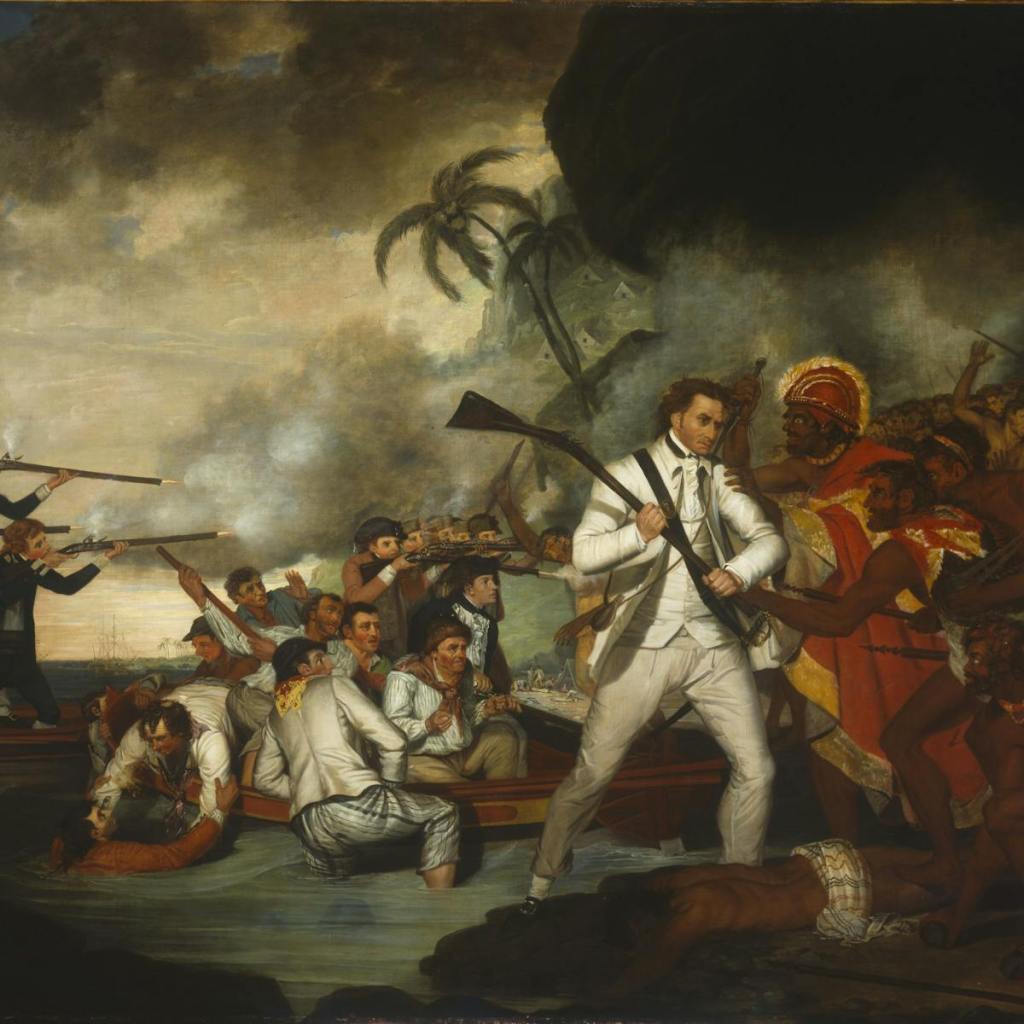
Mel was very knowledgeable about volcanos, and clearly loves his Queen, just like I love my Queen! (Robin’s note: He damn sure better!) He is an aboriginal Hawaiian, and could trace his family back over 200 years. He was constantly talking, explaining what we were seeing whether it pertained to volcanos or the Hawaiian culture and history. He had done a lot of research on Captain Cook, including the events leading to his death at the hands of the Hawaiians. They also killed Captain Crunch, making them cereal…killers. I’ll see myself out later.

Captain Cook apparently needed some remedial weapons training.

Our first stop was at Greenwell Coffee Farm. This is a source of Kona coffee, some of the best coffee in the world (Ka’u is a bit better, IMHO). Mel described the process from plant to store, and how local farmers worked with Greenwell Farm to get their own crops processed and to market. Kona coffee is hand-picked. Using other methods can stunt the growth of the coffee tree. Mel, in describing the roasting process, said that “Charbucks” has to use sugary products in its coffees because they burn the coffee bean. All I know is, if there is a choice, I would pick Kona coffee all day over Charbucks.

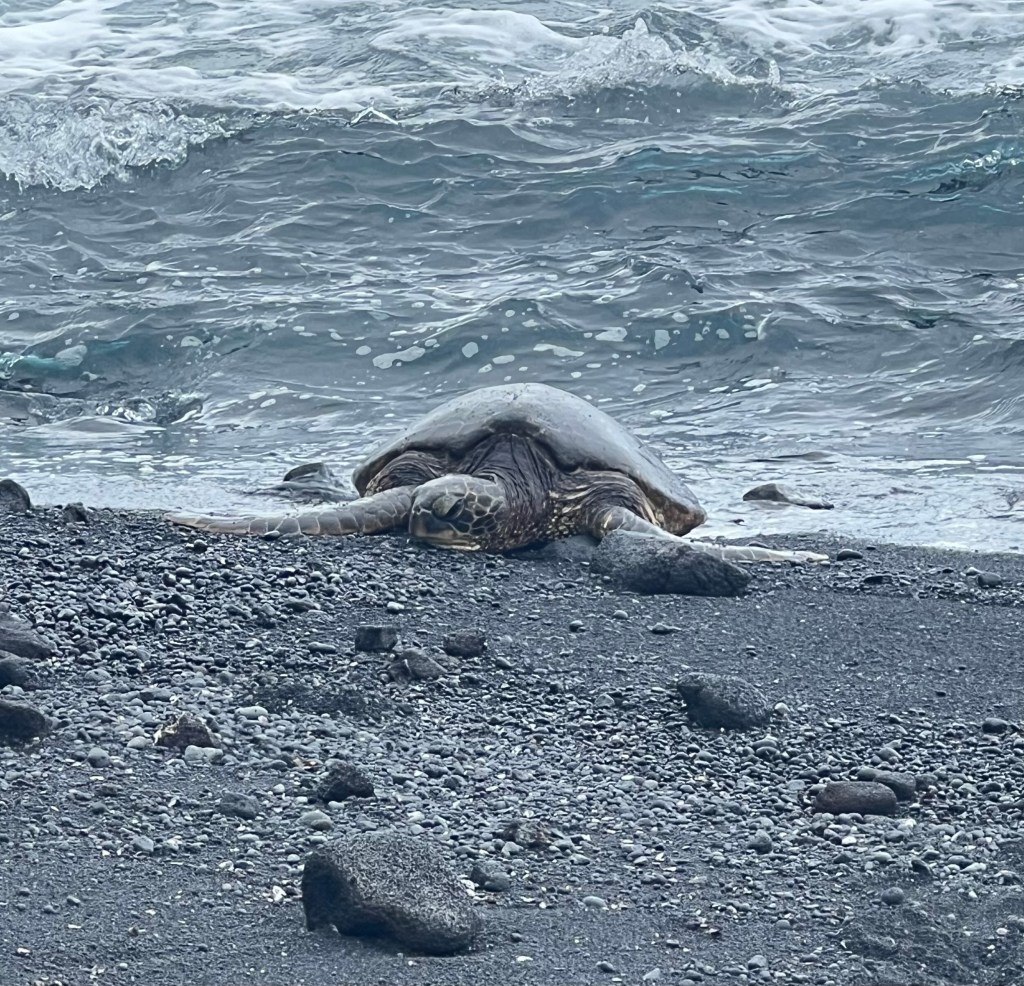
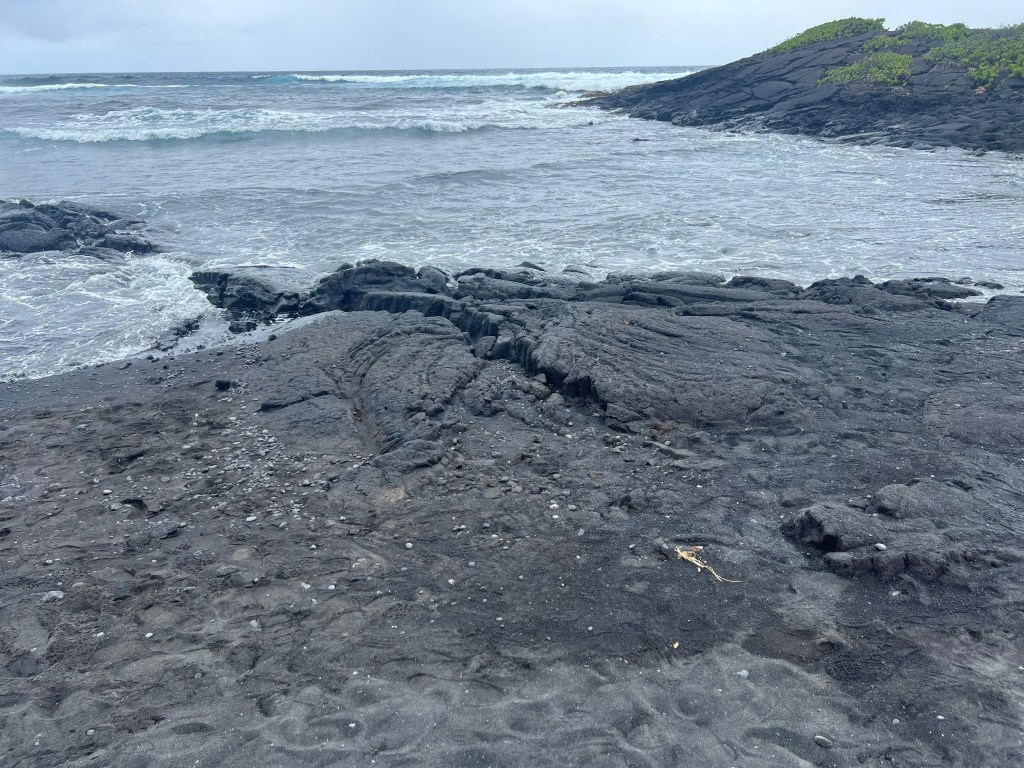
Our next stop was at Punalu’u Black Sand Beach Park. This beach featured, of course, black sand. There is a living reef just offshore, and an area that was walled off to allow Green Sea Turtles to come up on shore to sun themselves, without being accosted by stupid humans. We were fortunate to see one of the turtles, as well as numerous, small, black crabs on the rocks. The sand is course, but soft. There are remnants of lava flows around the beach. It was, all-in-all, pretty damn cool.

Exposed flow-stone on the black sand beach

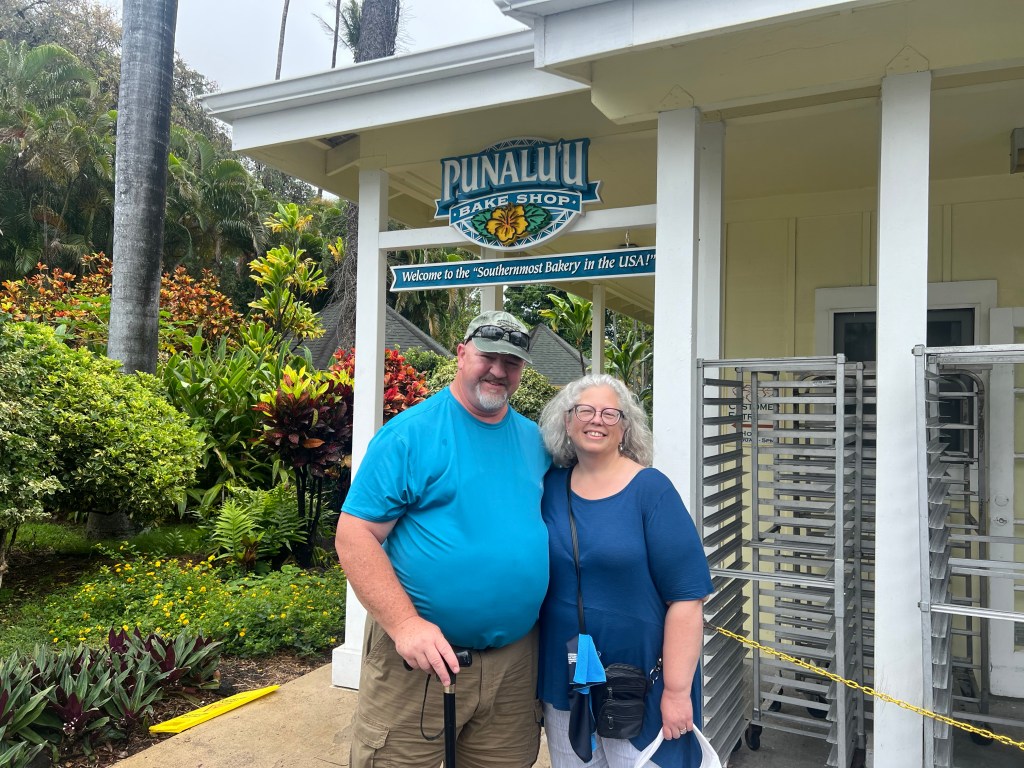
We had lunch in the Punalu’u Bake Shop, the southernmost bakery in the U.S. Their specialty is a Portuguese sweetbread. Think King’s Hawaiian bread, but more tender. With lunch out of the way, it was time to visit the throne of the Hawaiian goddess Pele,

Mauna Kea

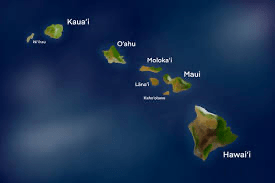
Mel told us that Hawai’i has five active volcanos. Two are dormant, three are active. The largest volcano is Moana Kea. It is, like all the volcanos on the island, a “shield” volcano. Lava pushes up through the caldera, the spreads out, forming a mountain that looks like a shield from a distance. It is 13,803 feet high. However, if you measure from its base on the floor of the ocean, it is 32, 697 feet tall, making it the tallest mountain in the world. It has the distinction of being the only mountain in Hawai’i that gets snow.

The oldest volcano is Kohala. It is on the north side of the island, and is thought by some to be extinct, as it hasn’t erupted in almost 300,000 years.

Hualalai is a “potentially” active volcano on the island’s northwest side. It is 8,270 feet high. It last erupted 200-300 years ago, so vulcanologists believe an eruption will occur within 100 years.

Mauna Loa is in the south-central part of the island, and lies within Volcano National Park. It is 13,678 feet high, and is an active volcano. It makes up 51% of the island’s land mass. It’s so massive that the earth’s crust has been depressed early five miles. Kind of like my side of the mattress. Mauna Loa erupts, on average, once every 6 years.

Then we get to Pele’s home, Kilauea. At 4,091 feet of elevation, it is not as massive as the other volcanos, but it is the youngest. The last eruption was last September, so it is still very active. Mel explained that Kīlauea is part of Mauna Loa, which is part of Mauna Kea. He also told us there is another volcano, Kama’ehuakanaloa, building up from the sea floor 2.5-3 miles off the shore from Kilauea.

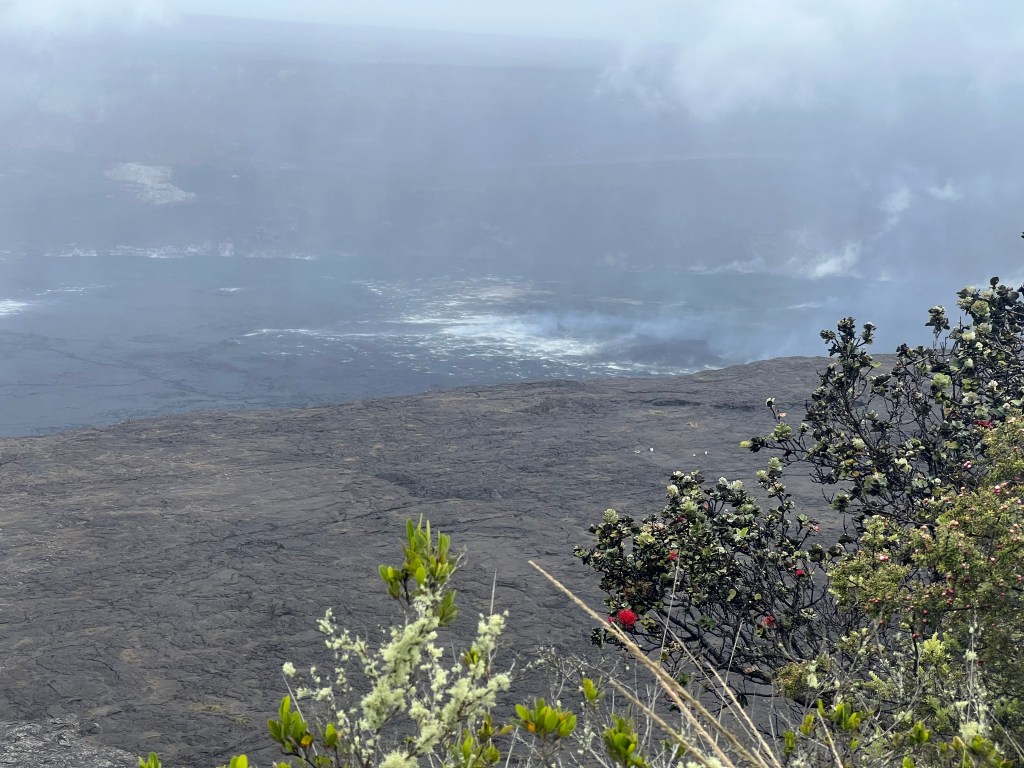
We entered the park near the Visitor Center, which is across the road from the Volcano House, an inn near the rim of the caldera, which is a hollow cauldron-shaped crater left over after the magma chamber empties. The caldera in Kilauea is called Kaluapele. We had a chance to get our first glimpse inside Kaluapele from the Volcano House as the side facing Kaluapele was all glass. There wasn’t much of a view at that moment due to rain in the area. Wayne and Amy pointed us to our first steam vent. Rain and ground water gets into these vents from the magma chamber and gets heated to 160 degrees, and comes out as steam at about 120 degrees. You can see these vents all over the caldera. Seeing all the steam rising up out of the ground is truly eerie.

I am ready for my facial!

Mel got the four of us back into the van, and we entered Kaluapele. There is a trail along the rim of the inner caldera. We were not sure how much we would be able to see, due to the rain, but it began to lift, and we were able to look down into the inner caldera. Wow.

Numerous steam vents sent white clouds up into the sky. A few were colored yellow, indicating the presence of sulfur. Nearby, the Jagger Museum, closed since the 2018 eruption collapsed the caldera, teetered on the edge. Some brave workers were actually in the building removing what could be removed, as they moved the museum to a safer location.

As we walked along the trail on the rim, the clouds began to part, and we could see across Kaluapele, giving us a better grasp of its scale. We got back to the van, and Mel took us on the Chain of Craters road to the sea, a 19-mile journey through eerie, moon-like manscapes and craters.

It is so difficult to put awe-inspiring majesty into mere words. You can look at a picture of the Grand Canyon, and it will never do justice to the awe you feel when you are standing on the rim. You can watch a video of Niagara Falls, but until you stand close enough to feel the spray, you can’t comprehend the power behind those waters. So it is with these lava flows.

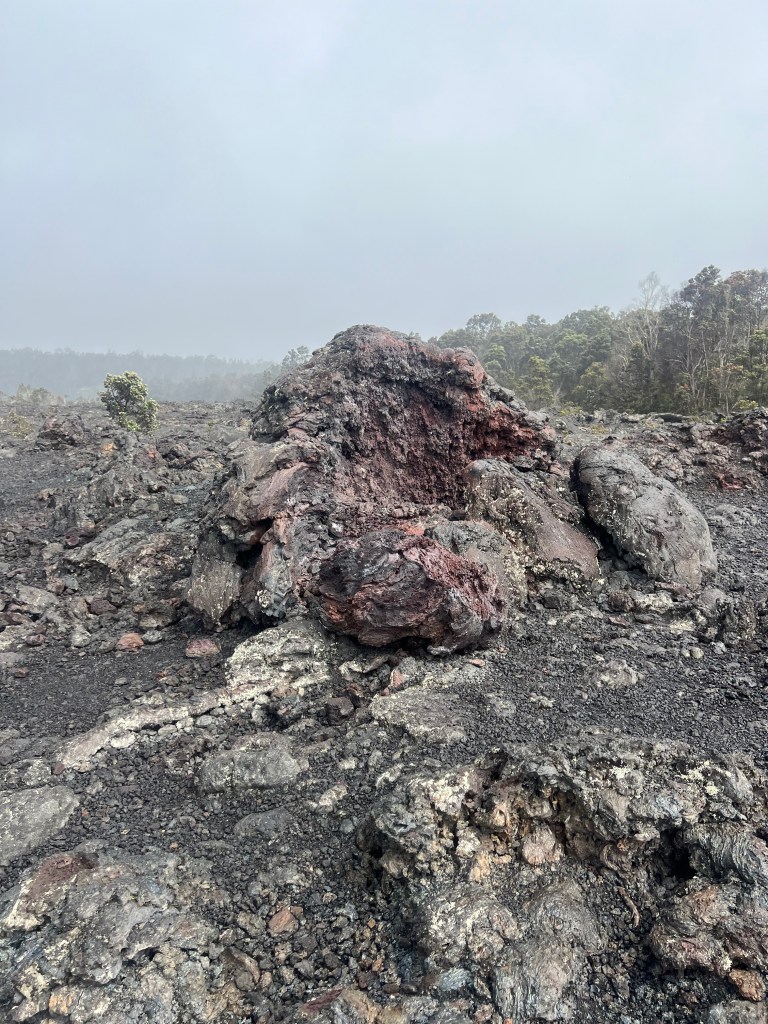
Mel showed us miles upon miles of lava flows. Some were marked with roadside signs, but Mel would show us the different colors of the different flows. Faster lava left smooth lava rock. Slow lava left a crumbly lava flow. He showed us pyroclastic craters, where magma was expelled explosively, and remnants of lava tubes. He told us how the Ōhi’a Lehua tree helps bring life to the lava. We learned about Lava Crickets, the first creatures out on the new lava. Mel told us about, then showed us, where trees had lava fall on them from above. The lava flowed down the tree faster than the tree could burn, cooled quickly, and left strange casts of the remains.

This used to be a tree.

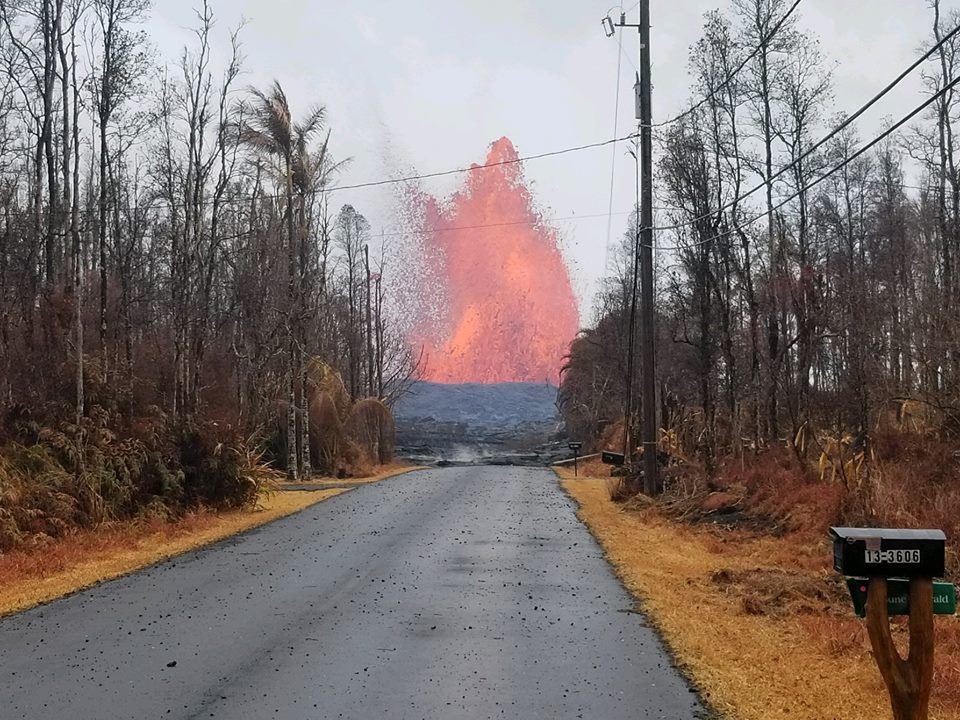
At a couple of spots, he let us out so we could walk on the lava beds. We couldn’t do that too much, as the rains made things slippery, but when we could it was fascinating. There are rocks that seemed denser than their size would indicate, and others in which they were lighter than they appeared. Mel told us this was a product of the heat in which they were created. Rocks in intense heat tend to be heavier, rocks created by cooler temperatures tend to be lighter. Mel also described one eruption that shot a fountain of lava 1,900 feet into the air. The Sears Tower in Chicago is 1,450 feet tall. Yeah.

We found ourselves where the lavas flows meet the sea. The sea there has created cliffs, ranging from 50-100 feet high. The waves smash against these cliffs, and frequently the water made it to the tops of the cliffs. There was an arch at the water line that had been created by the waves. There was a short walk to go see it, but my Crohn’s Disease reared its ugly head, and I spent that time in a toilet.

We headed back up the slopes of Kilauea, and made it to Nāhuku, or the Thurston Lava Tube. A lava tube is created by fast moving lava that hardens around the lava. It empties out, and leaves a tube. Thurston was a volcanologist that studied these tubes. A portion of the tube named after him was open to the public.

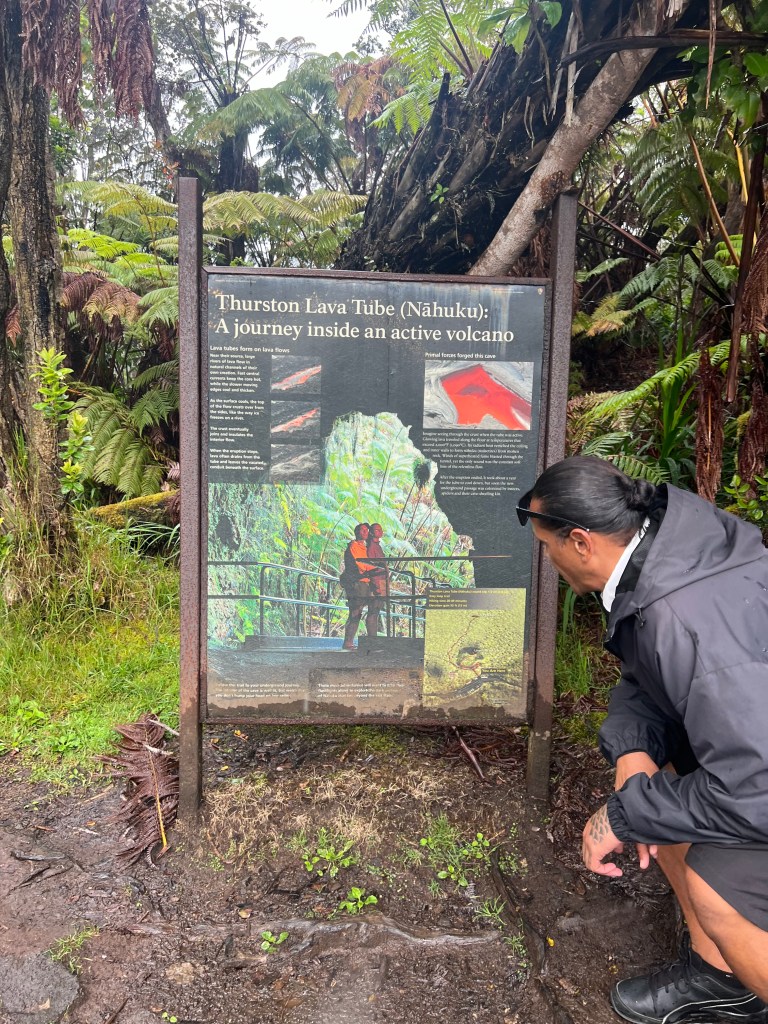
Mel reading the sign outside of Nāhuku.

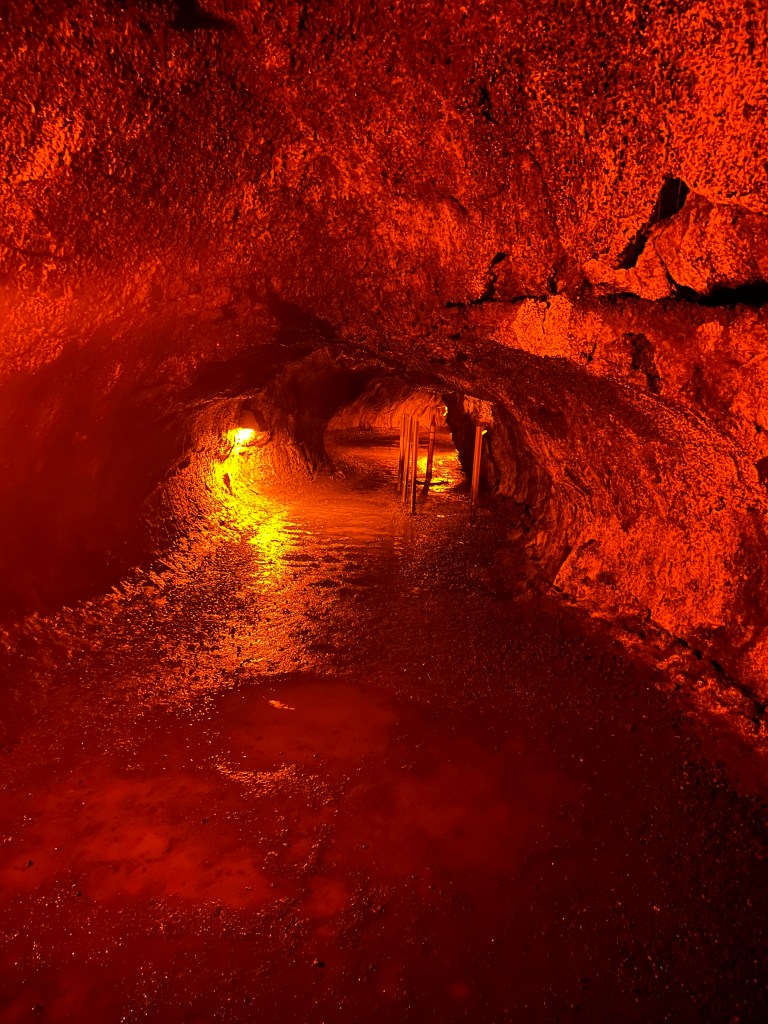
One of the fascinating things about Volcano National Park is the number of different climates. There are deserts, temperate, and rain forest climates all around Mauna Loa and Kilauea. The Thurston Lava Tube is located in a rain forest. There is a short path that descends to the tube, a short bridge, then you are in a freaking lava tube. They had thankfully installed amber-colored lights along the walkway. It made it look like there was still lava in the tube. Mel told us two things after we returned. 1) They have mapped the tube back toward Mauna Loa 25 miles. Let that sink in. 2) It was entirely possible that lava could once again flow down that tube. At least he told us after we got out.

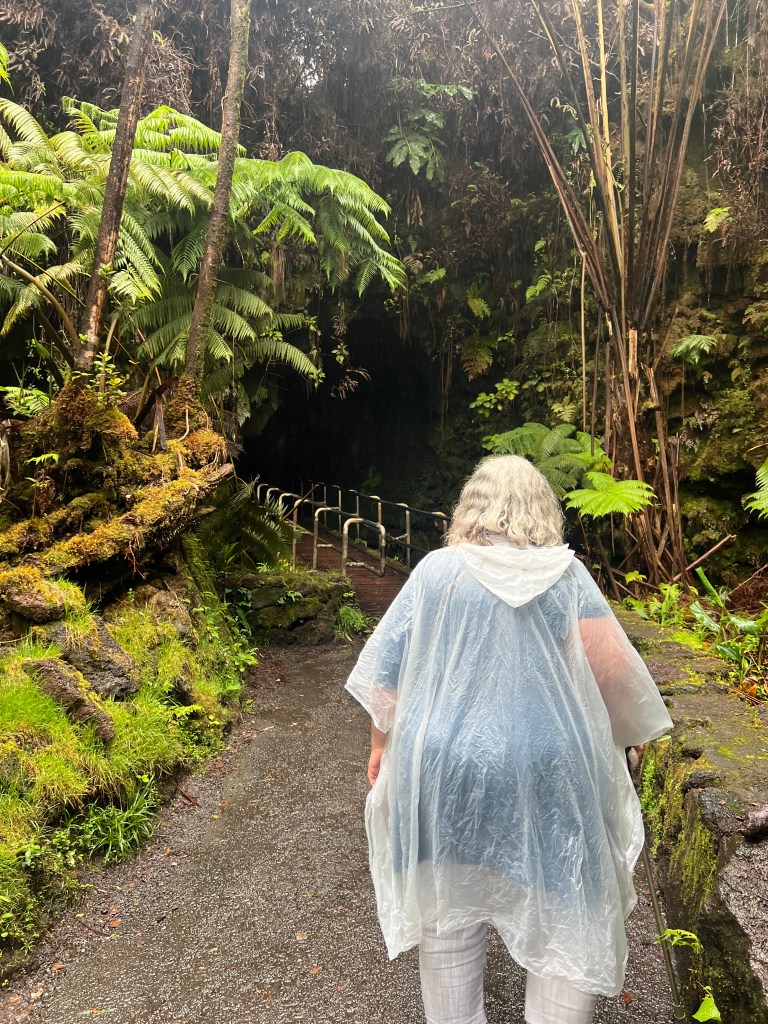
My Queen prepares to enter Nāhuku.
I give to you, a lava tube!

Once out, we got back into the van, and took a short trip to Hilo. There we caught a flight back to Oahu. We slept very well that night.

Mel was fantastic. Not only were we able to see some awesome things, we got to experience some real parts of Hawai’i, we learned a lot about Captain Cook, got to sample some awesome Kona coffee, and see an actual sea turtle. We could have spent more time at the park if we had gone by ourselves, but I enjoyed learning from Mel, and it was nice to leave the driving in someone else’s hands.

Mahalo, Mel!

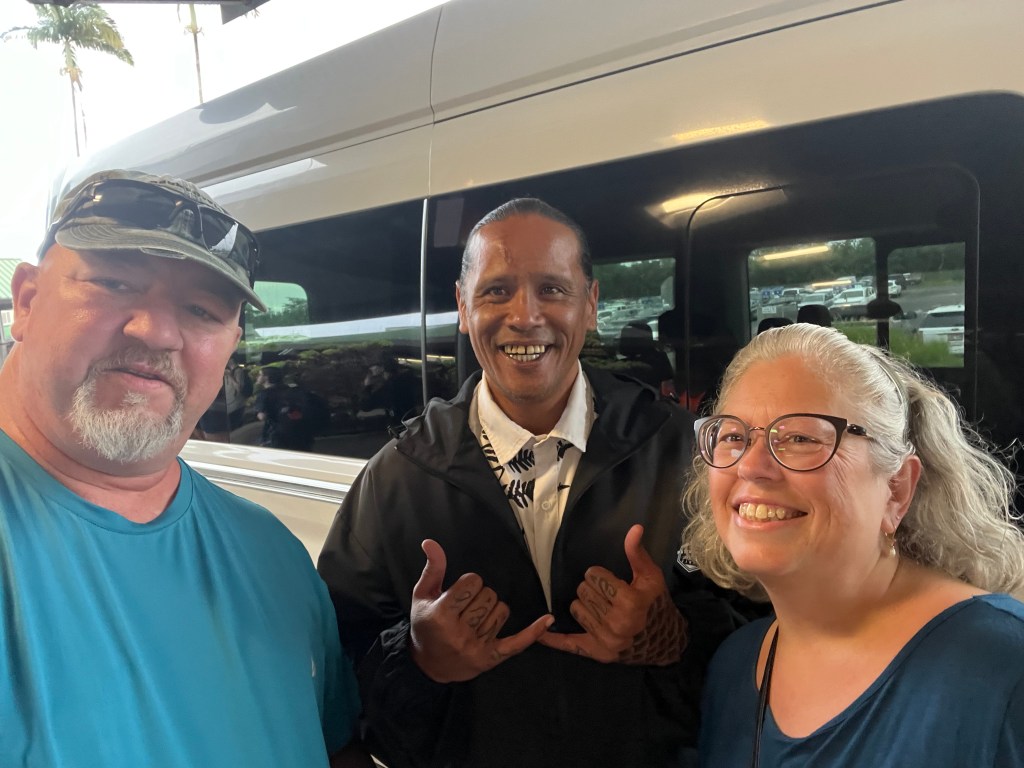
Mel, happy to head home to his Queen!

Volcanic data obtained from www.worldatlas.com

Waikiki – 5-17-24

Robin and I woke up Friday feeling much better for the rest. We went to a coffee shop on the ground floor of Waikiki Banyan. Robin got her usual iced vanilla coffee, I got my usual mocha. Over our breakfast sandwiches, I told her about a dream I’d had involving hitting an annoying person with a pit bull puppy. I asked her what she thought it meant.

She looked at me levelly over her iced coffee and said, “Clearly, it means you’re a psychopathic nut-job.” I nodded my head, sagely, thinking, “Duh! You don’t think I know that?” What I actually said, instead, was, “I see.” Robin is probably right. She usually is, damn it!

The weather was a bit rainy. A storm system had settled over Oahu, in preparation of our visit, I’m sure. Robin had prepped me by describing Hawai’i weather. “It’s 80 degrees, breezy, sometimes windy, but May is the start of the dry season.” She had the 80 degrees thing right, and the breezy, sometimes windy thing right. But over the past few days, Oahu had received a shit-ton of rain. I know that for a fact, because it was in the Weather Channel app. “Forecast for Honolulu, HI, a shit-ton of rain.”

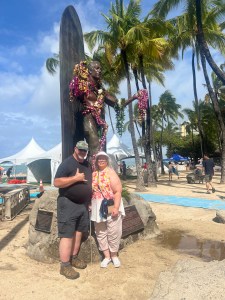
Our condo is a block and a half off of the beach. We walked to the beach and turned right. Our condo sits on Ōhua Avenue. It ends at Kuhio Beach. The next beach west is Waikiki Beach. Along the way, we passed a statue of Prince Kuhio, the beach’s namesake. We also passed an Indian Banyon tree, which looked really cool, and a statue of Duke Paoa Kahanamoku, the grandfather of modern surfing.

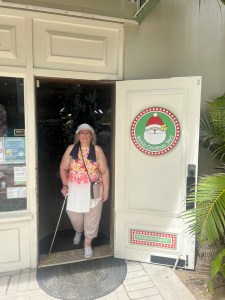
We stopped at a Croc store. Robin wanted to ty out some sandals, as she heard that Crocs are very comfortable, I bought a pair of closed-heeled, closed-toed sandals. They are very comfortable. Then it was off to the Waikiki Christmas Store. Robin purchased an ornament two years ago on her last trip. It had her name, and the names of her two sisters on it. We bought an Ohana (family) ornament that represented our immediate family. There were two Tikis with the names of Robin and myself, four sea turtles for Christian, Jessica and the Devilish Duo Roman and Stevie, and a gecko for Carole.

Our next stop was at The Stones of Life, Na Pohaku Ola Kapeamahu A Kapuni. These represent 4 Tahitian healers who brought their arts to Hawai’i. Next to it was a public restroom and a sandwich shop. We got drinks and sat and watched surfers doing their thing. Water is wet, bruh, and there are waves coming in! Who cares if there is a little rain?

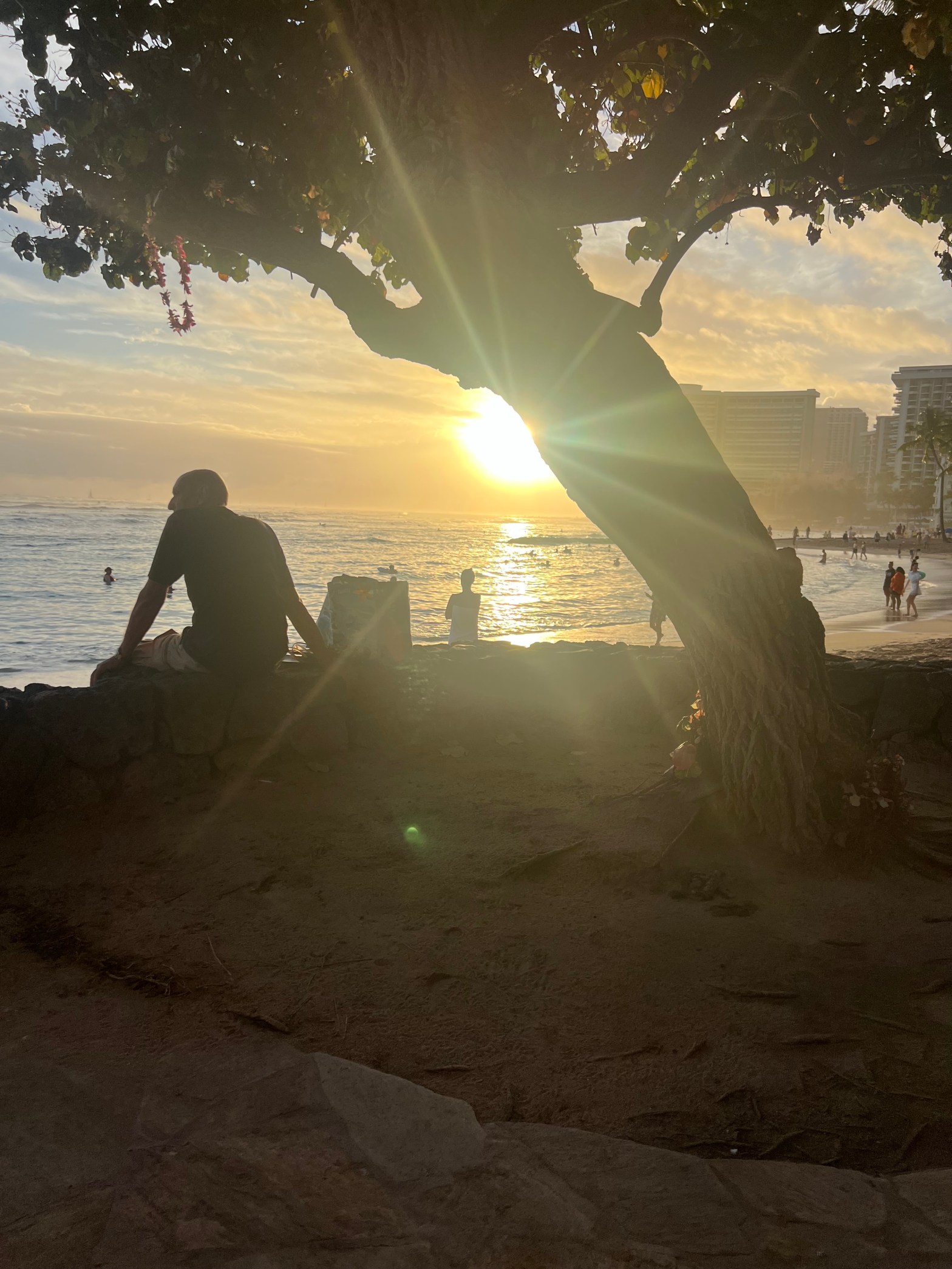
We went back to Waikiki Banyon for some pool time, went up to our condo to shower, then walked back to Waikiki Beach for dinner. We ended up at a Mexican restaurant, had some good food and people watched for a bit. We sat on the sea wall and listened to some music coming from a Hula concert a couple of hundred yards away. We watched the sun set behind some clouds, then a bit of the fireworks display from the Hilton Hotel.

We then headed back to the condo, to settle down for the night.

All in all, not a bad day on paradise.

MEDITATIONS-TRAVEL, PT 2

When we last we had seen our intrepid travelers, they were in Detroit Wayne County Airport, waiting for their first trip in First Class. First up was a breakfast of Mongolian Hash for breakfast at P.F. Chang’s. Then came the waiting, A five-hour layover.

The funniest moment was when a mother and her young son, maybe 3 years old, were on the nearby moving sidewalk. She was holding an even younger girl and suddenly, her son lay down, face-first, on the walkway. He just lay there. The mother looked down, a bemused smile on her face. I motioned to Robin, who looked over and gave a laugh. The mom looked over and shared a smile with Robin that said, “Boys.”

The time finally came for us to board. Robin and I board a bit early, as we both use canes, and we need some extra time to navigate onto the plane. We made it to our seats, which looked nice. They are definitely wider than coach, have more legroom, foot rests, and slightly bigger viewing screens. There was a bundle that had a blanket and a pillow, and a small, fabric bag that had a toothbrush, toothpaste and other small sundries. According to the card, it was handmade by a child laborer in Mexico. Aha! A sweatshop!

There was also a nice set of padded, over-the-ear, noise-cancelling headphones to plug into the viewing screen. We had a menu of the meal choices for the flight, along with a drink menu. Things were definitely looking up!

There was a family sitting in the middle section. Mom, dad and two young children, a boy and a girl. They also had a service dog. It looked like a pit bull puppy, which seemed young for a service dog. It seemed to have a sweet disposition, and was very well trained. However, I made plans on how to kill it if it lost its mind and started biting people’s faces off.

We were on a 767, so there were a lot of people to board. We were getting settled in when an announcement came over the intercom. There was a mechanical issue that needed to be resolved, and the plane would have to be de-planed. There was some audible responses throughout the plane, but Robin and I were like, better to find out before you take off, rather than at 36,000 feet over the Pacific Ocean.

So off the plane we went. We sat back down in the waiting area, and were told it would be a couple of hours. I had to stretch my legs a bit, so Robin stayed with the bags, and I went for a walk. One of my favorite past times is people watching. Airports are great, because you can watch people in stress, and add their behaviors to your threat database. Yes, that’s how my mind actually works.

I turned a corner, and things immediately looked up. A duty-free store! Scotch I’ve never heard of before, and cigars! My mouth literally watered. I wandered up and down the aisle, trying to decide which one I was going to buy. Then somebody walked across my grave. I felt a chill, as if the gates of Hell opened and Lucifer stepped through to say,”You’re mine, bitch!”

I saw it clear as day. I came back from my walk with a bottle of scotch, a box of cigars and a receipt. The Vortex of Death spun up over Robin’s head, and the sweet smell of vanilla filled my nostrils. Next I saw myself standing in front of the Pearly Gates, and St. Peter looks down at his book and starts laughing. “Steve Satterly,” he says, wiping his tears from his eyes, “You are in the wrong place! We don’t take dumbasses up here!”

Needless to say, no scotch or cigars were purchased. I did get a Starbucks Mocha, and got Robin a refresher she likes. When I called to ask her what she wanted, she said they were finished mitigating whatever issue the plan had, and we would be re-boarding shortly. I got the drinks and headed back.

We went through the deja vu moment of re-boarding, and got back to our seats. Robin and I hoped that this didn’t become a vuja de moment. You know, that feeling that what you are going though you will go through again.

The only issue we had before takeoff was the mother with the service dog was having a Karen moment. She was on the cell phone, after the flight attendant told her to put it away. She was explaining that her dog would have to be quarantined at the Honolulu International Airport, and because we were delayed, there might be a problem. She was getting adamant, and I was creating a plan to hit her with the dog. They Delta flight crew got together and, to the dog’s delight, I didn’t have to use him as an improvised weapon. They used the phone the Captain has to call the Honolulu Airport and make the necessary arrangements. The flight crew did an excellent job of problem solving in a tremendous act of customer service, but I really was looking forward to whacking the Karen with her service puppy.

I need to speak with the Captain!

The flight itself had an instant right after we passed over San Francisco. Oddly enough, it involved Karen’s son. Apparently he got sick in the bathroom. We found out when the dreaded intercom announcement was heard, “Is there a doctor on this flight?” I was prepared to jump up and rush to the scene to perform an emergency tracheotomy, but I saw a gentleman come from the Ultra First Class section. Disappointedly, I figure a doctor would be sitting in Ultra First Class, and that my emergency surgery skills would not be needed. When I told Robin, she patted my hand and said, “It’s just as well, dear. You didn’t stay at a Holiday Inn Express last night.” Damn it, she was right. Again.

Why yes, there IS a doctor on board!

It was amusing to see a number of people get into their bags and put masks on. I rolled my eyes. The boy had thrown up all over a restroom. While it may have smelled (For which I had no frame of reference), such a thing is not transmitted via aerosol. The flight crew locked the restroom and left it for the cleaning crew, which was prudent.

The rest of the trip was uneventful, but long. We finally landed in Honolulu, deplaned, and got our bags. We then got our rental car, and drove to the Waikiki Banyon, where our condo was located. Robin and I had been up for 24 hours, and were beyond exhausted. We were only to happy to hit the sack, looking forward to the start of our tropical paradise vacation.

As I slept, I dreamt that St. Peter was laughing at me, for no apparent reason. I’ll have the last laugh when I slap him with a pit bull puppy, outa nowhere.

MEDITATIONS-TRAVEL 5-16-24

Travel is stressful.  You are willfully pulling yourself away from the known, comfortable environs of your home and thrusting yourself into the unknown.​ You subject yourself to the mind-numbing intricacies of a burgeoning bureaucracy, place yourself in a mass of people who are as tired, dazed and sweaty as you are, and put you and your loved ones in imminent danger of falling to the earth, or into an ocean. Man, what fun!

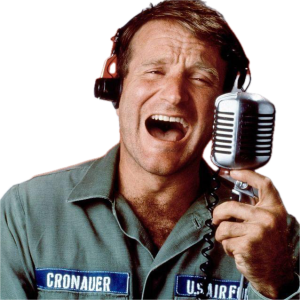
Robin and I got up at 0245. What’s the 0 stand for? In the immortal words of the late Robin Williams in Good Morning Vietnam, “O my God it’s early!” We put the last items in our suitcases, loaded the car, dragged Jessica’s ass out of bed and drove to Indianapolis International Airport.

We arrived at around 0330. General guidance is that travelers get to the airport at least two hours before their flight, to make sure they make it through TSA. Our flight was scheduled to board at 0520. And sure enough, no one was at the Delta counter to check us in. Apparently the Delta counter doesn’t open until 4:15am. We here at Delta are not aware of TSA suggestions to travelers. In fact, Delta Union Spokesperson Squinty McSquintface said, “Come to work 2 hours prior to our first flight to help our customers, are you crazy? That’s fucking early!”

We got my TSA Known Traveler number added to my ticket so I could use the TSA Precheck program and stream-line my access to the TSA security screen. Having slain the check-in baby bureaucratic check-in dragon, we sallied forth to slay the TSA Screening beast of many heads.

Armed with my paper ticket, I waved it at the bored TSA agent who said, “You’re good, boss,’ and waved me through. I dragged my carry on luggage, my leather briefcase and my CPAP machine, and snaked my way through the serpentine barriers that TSA thoughtfully placed to allow travelers to obtain their steps for the day before they’ve departed. I put my things into bins and headed to the metal detectors.

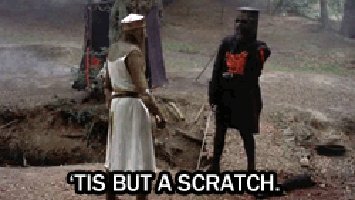
Did I mention it was early? Neither Robin nor I had coffee yet. That detail reared its ugly head. In the TSA Precheck line, you don’t have to take off your belt, or your shoes. But you still have to empty your pockets. “Beep,” said the TSA Precheck Dragon. The TSA Black Knight asked, “Anything in your pockets, boss?” Apparently TSA agents are into irony, and groupthink.

I did, indeed, have items in my pockets. So back to the bin area I went to place those items in a bin. Back to the TSA Precheck Dragon, who dutifully chirped, “Beep.” The TSA Black Knight, who had just defeated me, asked, “Anything in your pockets, boss?” I guess his attention span was worthy of being an extra in 50 First Dates. Sure enough, my iPhone was in another pocket. The third time was a charm, and the TSA Precheck Dragon let me pass, after asking me my name, what my quest was, and what was my favorite color.

My original bins were all patiently waiting for me, then I had to patiently wait for my other two bins. Those came just as Robin finished coming through the regular line. Even a time-saving feature like Pre-Check can be defeated by one idiot with no coffee in him. We walked a ways toward the gates, then I had to turn around and go back to the Pre-Check area to pick up the cane I had forgotten. President Obama once famously said of Joe Biden, “Never underestimate the ability of Joe to fuck things up.” Ha! Ol’ Joe has nothing on me.

All right, let’s call it a draw, then!

The rest of the morning went without a hitch. We flew to Detroit, and had a 5-hour layover. The rest of the trip would be in First Class, so we were looking forward to that leg of the flight, which I will address in the next blog.

MEDITATIONS-ALL SET

Today is our last day at home. Robin and I will have to get up very early tomorrow to go to Indianapolis International Airport. Our first leg is coach, it’s a short trip from Indy to Detroit Metro Wayne County Airport. We have a long layover there, but we will fly first class from Detroit to Honolulu‘s Daniel K Inouyue International Airport. Oh! I forgot to mention the third wheel for this vacation. Ranger!

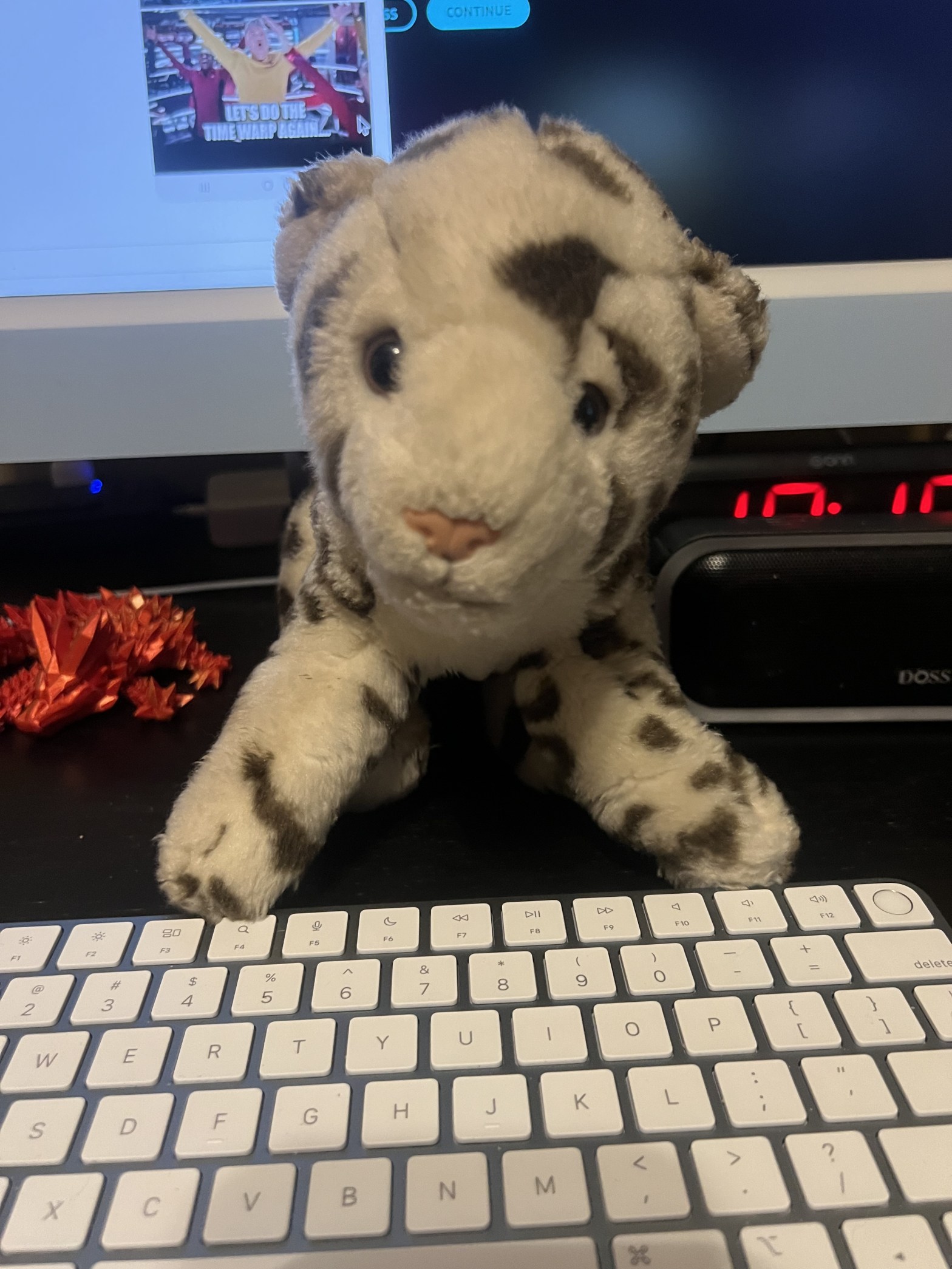
Ranger and I go back a looooonnnng way. He and I have been through dozens of states. I don’t want to name drop…but he’s been with the actor Tom Arnold, and Senators Lugar and Coats, and now he’s going to make his first trip to Hawai’i.

Ranger has been a way for me to stay connected first to my daughters, and now to the Devilish Duo, my grandsons Roman and Stevie. I take pictures of Ranger on the trip, often concocting scenarios that cause the recipients to smile, giggle or laugh. He’s been an effective tool for maintaining familial connections over long distances.When I first mentioned Ranger to Robin, we had our first Vortex of Death appear above her head, and I smelled a very strong scent of vanilla. If you read Day of Rest, you might recall that the scent of vanilla meant that someone was going to die. The scent is significant because I have anosmia, so I don’t have a sense of smell. Robin did not want Ranger coming along.

After some cajoling, and an intervention by Jessica, Robin relented, so Ranger can come along. The scent of vanilla receded, and our preparations continued. It occurred to me to me that I have a guaranteed solution to the troubles in the Middle East. We insert Robin into Gaza, and let the Vortex of Death take care of everything. Plus there will be a very nice scent of vanilla everywhere.

So we are set. All that separates us from a tropical paradise is a few hours of bureaucracy and the joys of public travel. All old hat for me. I just enter into a mindset of, “It’s all good.” Plus, I’ll have Ranger. I hope snow leopards can’t sunburn.

ALOHA!

A few months ago, Robin asked me where I would like to go for my 60th birthday, which is at the end of this month. She thought I would choose to go back to Wales. I was sorely tempted. My sense of Hiraeth is very strong. But…no.

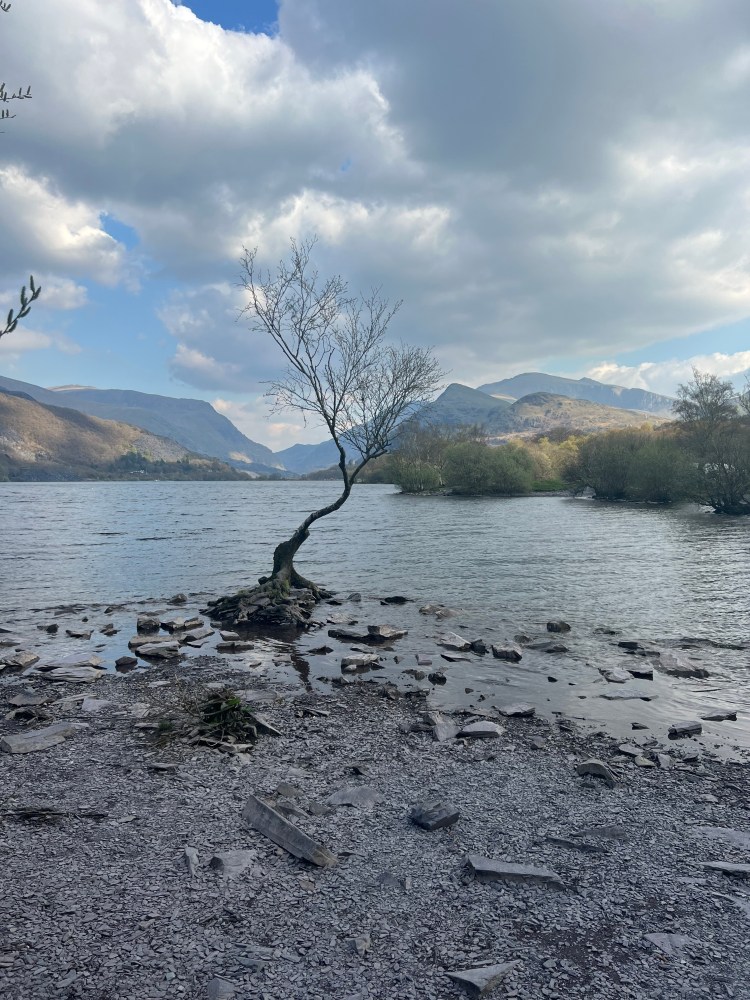
The Lonely Tree on Llyn Padarn, at the base of Yr Wyddfa.

A couple of years ago, Robin traveled with her mother and two sisters to Hawai’i to visit their family there. While she was gone, she sent back pictures of the beauty there, with numerous “wish you were here” comments. So, I decided rather than the moderate, enchanting land of sheep, poetry, pubs, mountains and faeries, I would travel with her to the land of Aloha.

As of the date of this posting, we are nine days and a wake up from our flight to Honolulu. We have a short flight to Detroit, then the long leg to Hawai’i will be in First Class. It’s the first time for either of us to enjoy a first class flight. We’ll do first class on the way back to Minneapolis, then be in coach for the final leg.

Robin found us a condo in Waikiki, just a block from the famous beach. We’re also about a block from a Catholic Church, so we can remain in a state of grace during the trip. Robin seems to think I’ll be sinning during our vacation. I’ll go with my gut and trust her instincts on this.

Our plans are to make a short flight to the Big Island to visit Volcano National Park. We’ll take a day to visit Pearl Harbor, then we’ll travel to the North Shore to spend a day at the Polynesian Cultural Center. Other than that, we’ll be visiting her family when possible, go the beach, do some shopping, get some authentic Hawaiian shaved ice. We’ll drive around and visit other beaches and beautiful places. A good time will be had by all.

Robin will be 60 in a couple of years. I think she has her sights set on a visit to Germany. Her maiden name is Reuter. She studied the German language in high school, and has started refreshing her skills via Duolingo. I just passed the 2-year milestone in Welsh.

Until then, Waikiki Beach, here we come!

Freedom, or Islam?

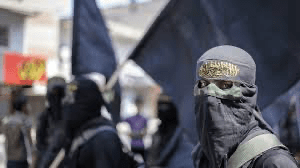
In Who Do You Follow?, I showed you a little of the issues with Islam, especially in the West. Muslims believe that the Quran is the literal word of Allah, and that the later verses abrogate, or supersede the earlier verses. The later verses are more militant, with respect to infidels, or non-believers.

In this blog, I will describe shariah law, and its incompatibilities with the West in general, and specifically our constitutional republic. So we’ll take a look at what shariah law is, the issues with shariah in the West, and finally, why shariah is incompatible with our form of government.

According to the National Center for Constitutional Studies(, there are, broadly, two types of law: Ruler’s Law and People’s Law. The descriptions of each should be self-explanatory. One of the main differences between the two is in the use of force to impose the law.

Under Ruler’s Law, kings or dictators can justify the of force to impose the law, and can have often used religion as justification for doing so. Under People’s Law, starting in Ancient Israel, accepting Jehovah created a powerful, individual call to right actions, without the use of force.

Jehovah created Man with Free Will, including the will to choose to move away from what He wants for us. Thus, our laws impose consequences for the choices selected by the people. Our Founders created our system of government based on natural law, and the Judeo-Christian God. One can disagree with this form of government, or have issues with this form of government, but this is a fact about the nature of our form of governance. It has served to make us the pre-eminent political and cultural force in the world.

Let us contrast this with the doctrine of shariah within Islam. Shariah Law covers the legal, political and military issues faced by Islam. It is a list of compulsory laws that has the use of force at its core, and as you read earlier, is based on the literal word of Allah.

Shariah is an Arabic word meaning “straight path”, or an endless supply of water. (Quran 45:18) “Now We have set you O Prophet on the clear Way of faith. So follow it, and do not follow the desires of those who do not know the truth.” It is used to describe the rules of a lifestyle ordained by Allah. Shariah is held by mainstream Islamic authorities. At issue within Islam is the level, and nature, of enforcement of these laws.
In the West, we typically separate religion from government, and in most cases codify religious tolerance into our laws. Shariah law is the perfect expression of the divine will of Allah, and is considered a complete way of life that. governs the social, political, cultural, military and religious aspects of a Muslim’s life, from the time they’re born until the day they die.

Historically, shariah law has been imposed through jihad, often referred to as ‘holy war‘. At other times shariah is put forth through more stealthy practices called ‘dawa‘ (call to Islam). Regardless of how shariah is implemented, the NCCS points out that it rejects the “fundamental premises of American society and values:”
1. the bedrock proposition that the governed have a right to make law for themselves;
2. the democratic republic governed by the Constitution;
3. freedom of conscience; individual liberty
4. freedom of expression (including the liberty to analyze and criticize shariah);
5. economic liberty (including private property);
6. equal treatment under the law (including that of men and women, and of Muslims and non-Muslims);
7. freedom from cruel and unusual punishments; an unequivocal condemnation of terrorism (i.e., one that is based on a common sense meaning of the term and does not rationalize barbarity as legitimate “resistance”); and
8. an abiding commitment to deflate and resolve political controversies by the ordinary mechanisms of our democratic republic, not wanton violence. The subversion campaign known as “civilization jihad” must not be confused with, or tolerated as, a constitutionally protected form of religious practice. Its ambitions transcend what American law recognizes as the sacrosanct realm of private conscience and belief. It seeks to supplant our Constitution with its own totalitarian framework.(NCCS)

In Article VI of the U.S. Constitution, the Constitution states that it “shall be the supreme law of the land.” In Islam, the Quran is the supreme law over everything. That alone makes our way of life incompatible with shariah, by either direct jihad or dawa. Under the Quran, one must live as a Muslim, live in dhimmitude (a state of being a second-class citizen), or die. Our First Amendment states, Congress shall make no law respecting an establishment of religion, or prohibiting the free exercise thereof…”
It is a certainty that there are Muslims in the United States who fully support our way of life and the freedoms it provides. We should support the rights of anyone to live and practice their faith freely. We cannot support those who seek to impose totalitarian practices, especially those using force or intimidation.

Which do you choose; freedom, or Islam?

As for me and my house…

Who Do You Follow?

In my last post, Man of the West, I laid the groundwork for this post. I ask a simple question. Who do you follow? Today you’ll find out who I follow, and a bit about why. I will also introduce you to what I believe to be an antithetical force to who I follow, and I’ll explain why it’s antithetical.

In Man of the West, I professed my faith as Roman Catholicism. That means I am a Christian, a follower of Jesus Christ. I believe Jesus Christ to be the Son of God. Christianity is based, in part on Judaism. We share the Old Testament in the Bible with the Jewish faith. The Jews believe there will be a Messiah. Christians believe that the Messiah is Jesus Christ.

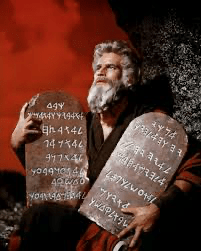
In the Old Testament, both Christians and Jews know of the Ten Commandments. These commandments were given directly to Moses by God, while the Hebrews were escaping bondage in Egypt. They are part of a Covenant between God and the Hebrews, and provide a list of behaviors. They are as follows:
1. I am the LORD your God; you shall not have strange gods before me.
2. You shall not take the name of the LORD your God in vain.
3. Remember to keep holy the LORD’s Day.
4. Honor your father and mother.
5. You shall not kill.
6. You shall not commit adultery.
7. You shall not steal.
8. You shall not bear false witness against your neighbor.
9. You shall not covet your neighbor’s wife.
10. You shall not covet your neighbor’s goods.
(via Catechism of the Catholic Church)

A cursory look at these commandments would indicate that a person who lives by them will be leading a good life. It would also indicate that they are concerning a person’s own behavior, and none of the commandments intrude on others.

Christians go even further. In Matthew 22: 35-40, Jesus gives us the two greatest commandments.
And one of them, a doctor of the Law, putting him to the test, asked
him, “Master, which is the great commandment in the Law?” Jesus
said to him, “‘Thou shalt love the Lord thy God with thy whole heart,
and with thy whole soul, and with thy whole mind.’ This is the
greatest and the first commandment. And the second is like it, ‘Thou
shalt love thy neighbor as thyself.’ On these two commandments
depend the whole Law and the Prophets.”

Again we note that a person who follows these two commandments will lead a good life, and that these two commandments do not impose on others. The Ten Commandments and the Two Great Commandments are based on Love. Love for God, and love for others.

Now, we are human beings. We are fallen and broken. We don’t always live by those commandments, but when we don’t, it’s not due to the commandments themselves, or due to any instruction from the Bible. It’s due to us not doing as we’ve been instructed. This is key. The Bible does not instruct us to impose on others.

Even the instruction in Matthew 28: 19 says, “Therefore go and make disciples of all nations, baptizing them in the name of the Father and of the Son and of the Holy Spirit…” This passage, in the past, has been mis-interpreted to mean via the use of force. The words themselves, and the Commandments, show that the use of force is against God’s commandments.

This is who I follow. Now let’s take a look at the antithesis of that belief, specifically Islam. Please keep in mind the following analysis is based on the cursory research of an infidel, a non-believer.

Islam is a monotheistic religion that began with the prophet Muhammad‘s divine revelations. Islam is divided into three main sects: Sunni, Shia and Muhakkima. These divisions arose after the death of Muhammad.

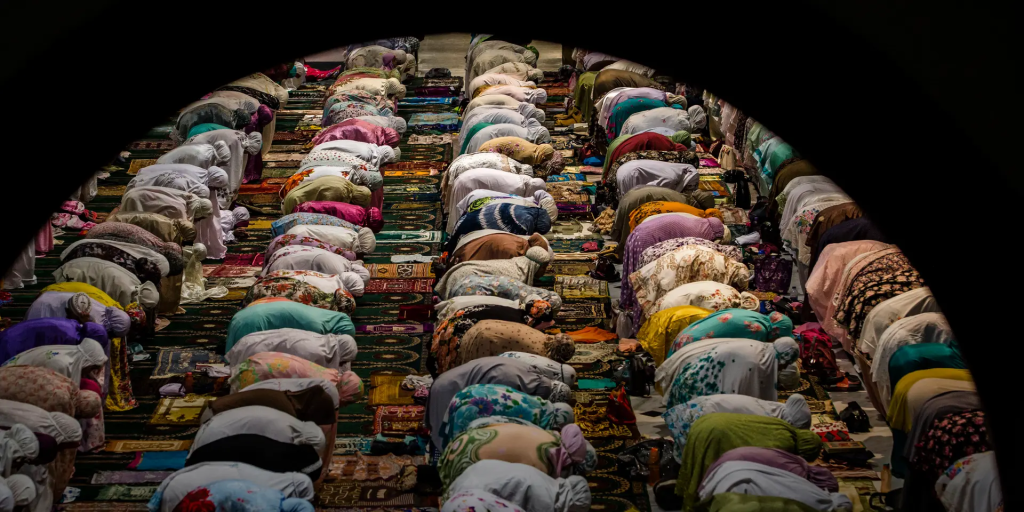
The religious practice of Islam is centered on the Five Pillars of Islam, based upon the sect one is in. The five pillars are the Muslim Creed, called Shahada, prayer, or salah, almsgiving, or Zakat, fasting, or Sawm, during Ramadan, and a pilgrimage to Mecca, called the hajj.

In Islam, Muhammad began receiving divine messages from the Angel Gabriel when he was 40 years old. The messages ended with his death at the age of 62. These messages incorporated parts of the Torah, the Jewish Holy Book, the Psalms and the Gospels from the Christian Bible. Muslims believe the Quran, the Muslim Holy Book, are the literal words of God.

Muslims also rely on hadiths, oral and written interpretations of the words, and the actions, or sunna of Muhammad. And this is where things become problematic. Remember, these are the literal words of God to Muslims.

In the Quran 2:191 it is written, “Kill them wherever you come upon them and drive them out of the places from which they have driven you out.” (quran.com)

In the Quran 3:28 it is written, “Let not believers take disbelievers as allies rather than believers.”

In the Quran 3:85 it is written, “Whoever seeks a way other than Islam, it will never be accepted from them, and in the Hereafter they will be among the losers.”

In the Quran 5:33 it is written, “Indeed, the penalty for those who wage war against Allah and His Messenger and spread mischief in the land is death, crucifixion, cutting off their hands and feet on opposite sides, or exile from the land. This ˹penalty˺ is a disgrace for them in this world, and they will suffer a tremendous punishment in the Hereafter.”

In the Quran 8:12 it is written, “[Remember] when your Lord inspired to the angels, “I am with you, so strengthen those who have believed. I will cast terror into the hearts of those who disbelieved, so strike [them] upon the necks and strike from them every fingertip.”

In the Quran 9:5 it is written, “Fight and slay the unbelievers wherever ye find them, and lie in wait for them in every stratagem of war. But if they repent, and establish regular prayers and practice regular charity, then open the way for them; for Allah is Oft-forgiving, Most Merciful.

In the Quran 9:29 it is written, “Fight those who believe not in Allah nor the Last Day, nor hold that forbidden which hath been forbidden by Allah and His Apostle, nor acknowledge the religion of truth, even if they are of the people of the Book [meaning Christians and Jews], until they pay the jizya [taxes on non-Muslims] with willing submission, and feel themselves subdued.”

In the Quran 9:123 it is written, “O you who have believed, fight against those adjacent to you of the disbelievers and let them find in you harshness. And know that Allāh is with the righteous.”

In the Quran 22:19-22 it is written, “These are two opposing groups that disagree about their Lord: as for the disbelievers, garments of Fire will be cut out for them and boiling water will be poured over their heads, melting whatever is in their bellies, along with their skin. And awaiting them are maces of iron. Whenever they try to escape from Hell—out of anguish—they will be forced back into it, ˹and will be told,˺ “Taste the torment of burning!”

In the Quran 47:4 its written, “So, when you meet (in fight Jihad in Allah’s Cause), those who disbelieve smite at their necks till when you have killed and wounded many of them, then bind a bond firmly (on them, i.e. take them as captives). Thereafter (is the time) either for generosity (i.e. free them without ransom), or ransom (according to what benefits Islam), until the war lays down its burden. Thus [you are ordered by Allah to continue in carrying out Jihad against the disbelievers till they embrace Islam (i.e. are saved from the punishment in the Hell-fire) or at least come under your protection], but if it had been Allah’s Will, He Himself could certainly have punished them (without you). But (He lets you fight), in order to test you, some with others. But those who are killed in the Way of Allah, He will never let their deeds be lost.”

To be clear, there is danger in pulling verses out of a text with out the context. But, given that the Quran is the literal word of Allah, it is hard to see how these can be taken any way but literally. Certainly, there are numerous Muslims who do take them literally.

Here’s what I see. I see my Christian faith calling me to love God, and love my neighbor. It has at its center, free will, given to us by God himself. We can use it to follow him or live in sin. What you don’t find in the Bible, certainly not in the Gospels, are any verses calling for the smiting of unbelievers.

I am not generalizing. There are many Muslims who only seek to live their lives as best they can. They do not seek to bother anyone. But they are not the ones causing trouble, not just here but around the world.

The verses from the Quran trouble me. I feel like I have been placed in the hands of people who may, or may not, literally translate what they believe to be the literal words of Allah.

In my next blog, I will continue this examination by taking a look at shariah, and its incompatibility with the U.S. Constitution.

While you think about what you’ve read, answer this question for yourself. Who do you follow?


A Man of the West

I want to state, unequivocally, that I am a man of the West. I state this not as a matter of pride, nor as a matter of opinion. I state it as a matter of fact. I am building toward writing something that might be dangerous and contentious, but to do that I need to lay some groundwork. I will be using the ideas and thoughts expressed here to build upon and use later, and for the sake of clarity it is important that people understand what I mean when I say certain things. So my goal today is to explain what the West is, contrast it with other constructs, and then explain my opening statement.

In the U.S., the West can evoke images of the cowboy, a rugged individualist, strong when need be, gentle when need be, and an iconic part of our heritage. But that is not what I mean. I refer to the bigger picture, and refer to the cultural heritage shared by nearly half the world.

The West was framed by the Ancient Greeks, the Ancient Romans, and the Ancient Hebrews. From these roots, we developed a monotheistic religion that has shaped our spiritual and cultural roots. Some refer to it as Judeo-Christian, and as far as our religious thinking goes, that is correct. The Ancient Greeks and Romans provided us with our philosophical and governmental roots. Democracy came from Ancient Athens, branched government with checks and balances came from Ancient Sparta, and was refined in Ancient Rome. These ideas spread by conquest, both political and religious.

Consider the people that shaped us from that time period. Moses, Abraham, Elijah, David, Solomon, Jesus, Peter and Paul shaped our spiritual ideas. Plato, Socrates, Aristotle, Augustine, Cicero, Seneca, and Marcus Aurelius helped shape our philosophical and political ideas. These august people created ground-breaking, monumental ideas upon which future ideas were formed.

The conquests mentioned previously spread throughout the Hellenic empire, then the Roman Empire, then to the subsequent empires founded upon those principles. Geographically, I’m referring to Europe, North and South America. This western influence has affected other areas of the world, but when I refer to the West, I am referring to these geographical areas.

The greatest influence, in my opinion, of Western Thought is the concept of rights. This concept was described and explained in Ancient Greece, refined in Ancient Rome, then was combined with Judeo-Christian spirituality through the Catholic Church to create the concept of Natural Rights.

Natural rights are considered fundamental, universal and inalienable, and are not dependent on the laws or customs of any particular culture or government. This is the basis for our Declaration of Independence, and the U.S. Constitution. “We hold these truths to be self-evident, that all Men are created equal, that they are endowed by our Creator with certain, unalienable rights, that among these are life, liberty, and the pursuit of happiness.”

So the West has this common background, history, and a common set of ideals. It’s not about skin color, social class, or education levels. It’s similar to looking at the settings of a house, and being able to say that it is in the suburbs. It stands in stark contrast with the East.

The East was historically referred to as The Orient. It is geographically located in West Asia, Central Asia, East Asia, and Southeast Asia. The dividing line, though, is more cultural than geographical. The subcultures within the East are varied, and include Arab subcultures, Persian subcultures, Indian subcultures, etc. Some of the philosophers who shaped Eastern thought were: Confucius, Sun Tzu, Laozi, Mao Zedong, Parshvanata, Siddhartha Gautama, Mahavira, Bodhodharma, Bhai Gurdas, Miyamoto Musashi, Yi Hwang, and Muhammad.

Historically, the region was considered the “Far East“, and served as the “other” to thinkers in the West. Each region has a history of warfare and conquest. The Persians attempted to absorb the Hellenistic city-states, Alexander the Great moved east from Macedonia, all the way to India. Ghengis Khan ruled a vast portion of the East at one point, and had contact with Europe, Persia and what is now the Middle East.

So, in very general terms, the world is divided into the East and the West. That brings me back to my premise. I am a man of the West. I am Roman Catholic and live in the United States of America. My faith is based on the mono-theistic tenets of Judaism, and the later teachings of Jesus, then Saint Peter and Saint Paul. My country was founded upon these Judeo-Christian beliefs, and upon the concept of Natural Rights. In and of itself, being a man of the West doesn’t make me any better, or worse, than a person of the East. It’s just different.

That difference is something I seek to address, and as I stated earlier, I wanted to clarify some terms before I got into it. I hope you found this interesting, as well as enlightening.

What is to come may be worrisome and create unease. But that is for later.

Design a site like this with WordPress.com
Get started