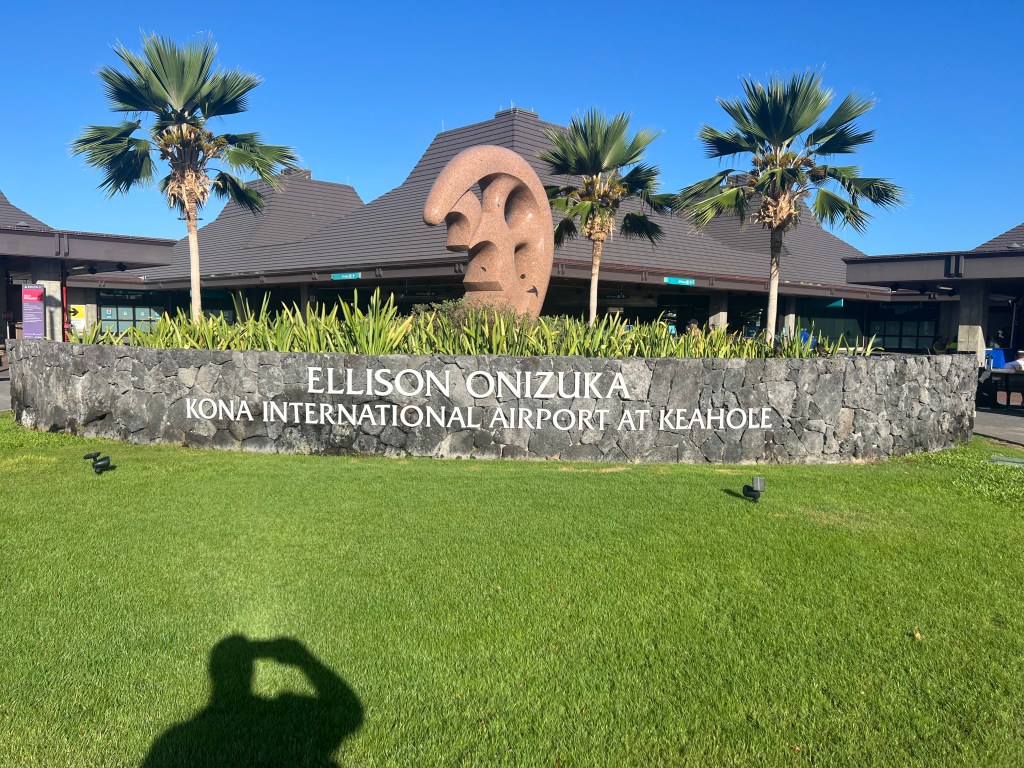
Monday was a great day. One of the main things I wanted to do while in Hawai’i was visit Volcano National Park. This is located on the Big Island, Hawai’i. Robin and I set up a guided tour with Aloha Sunshine Tours. The package we got paid for the flight from Oahu to Kona International Airport on Hawai’i, a guide, entry into the park, and a return flight from Hilo International Airport back to Oahu.
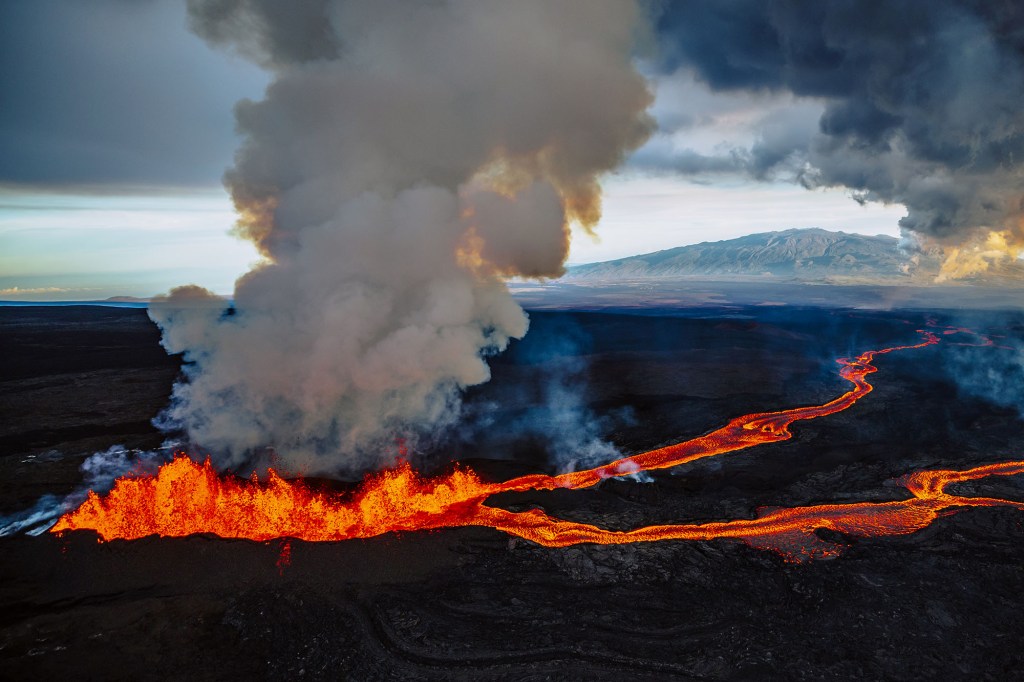
New York Post
Volcanos have always fascinated me. I am mesmerized by lava flows, and awed by the destructive forces behind volcanic eruptions, I had never been close to a live volcano before, so of course we had to go! I even brought a virgin along to sacrifice! (Robin’s note: No he didn’t!)
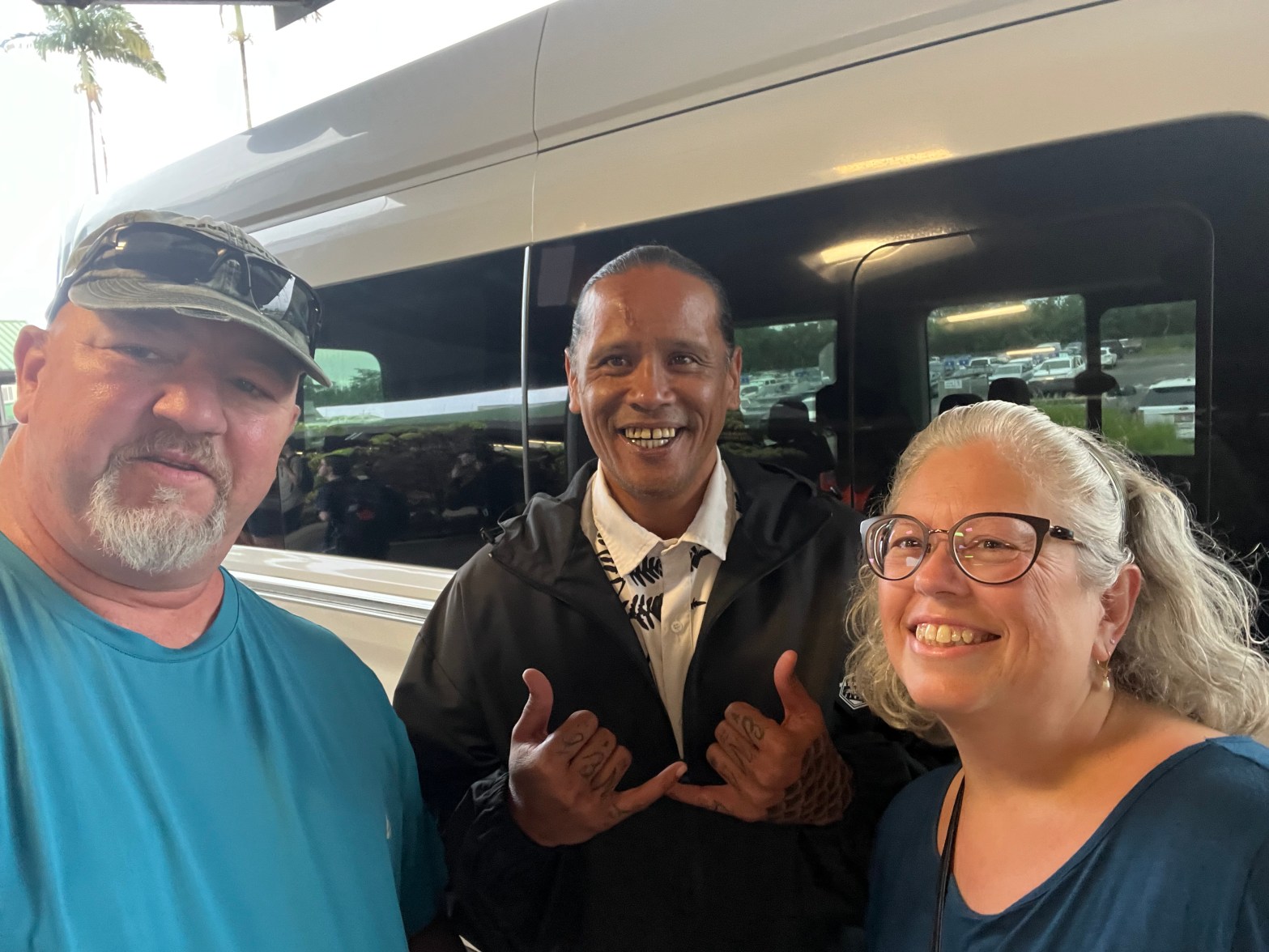
The flight from Honolulu to Kona was under an hour. Kona International Airport was a small and open-air airport, for the most part. We were only going to be there for the day, so we only had a backpack with us. We met our guide, Mel, and he loaded us into his van with two other people, Wayne and Amy.
Kona is on the west side of the island. The plan was to drive down the west coast of the island to Volcano National Park on the south side of the island, then take the short trip from there to Hilo, on the east side of the island. There we would fly back to Honolulu. We were going to visit a coffee farm in the Kona district, see a black-sand beach, and then spend the rest of our time in Volcano National Park.
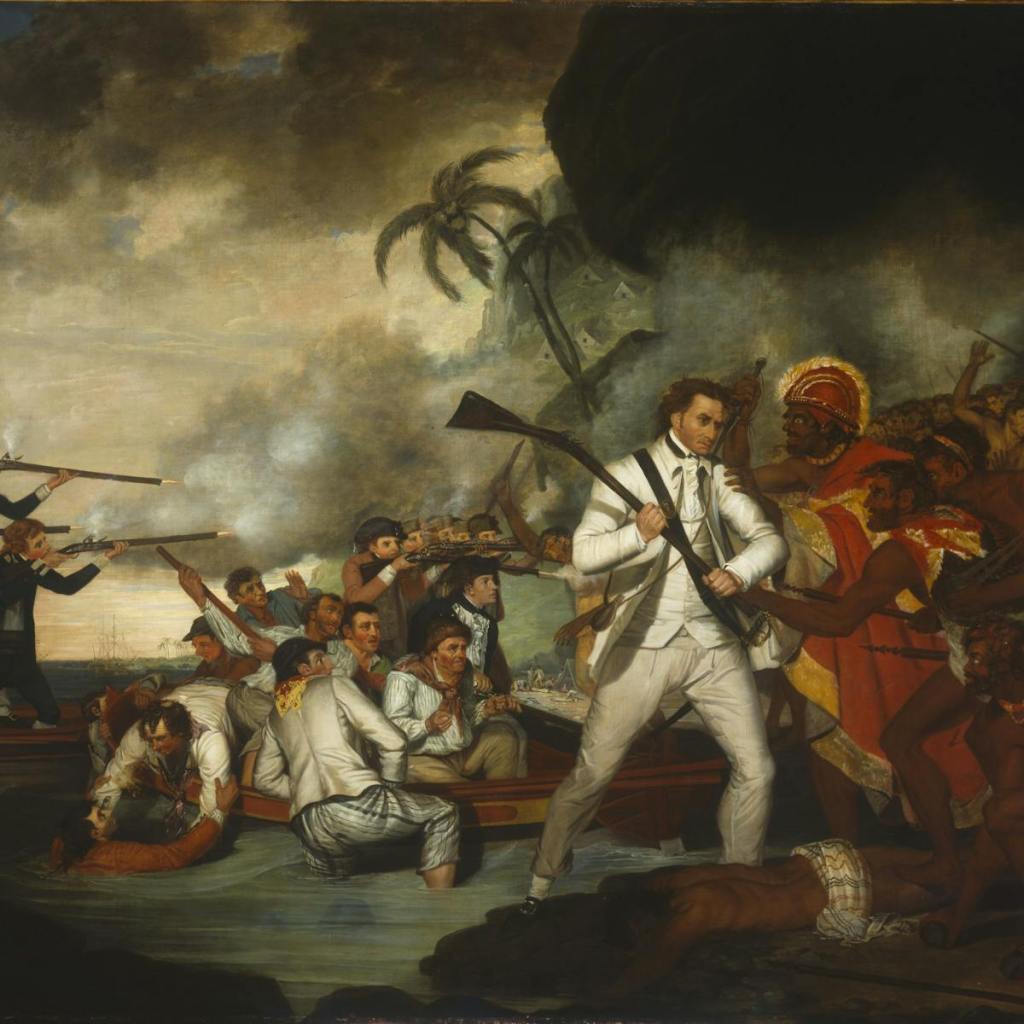
Mel was very knowledgeable about volcanos, and clearly loves his Queen, just like I love my Queen! (Robin’s note: He damn sure better!) He is an aboriginal Hawaiian, and could trace his family back over 200 years. He was constantly talking, explaining what we were seeing whether it pertained to volcanos or the Hawaiian culture and history. He had done a lot of research on Captain Cook, including the events leading to his death at the hands of the Hawaiians. They also killed Captain Crunch, making them cereal…killers. I’ll see myself out later.
Our first stop was at Greenwell Coffee Farm. This is a source of Kona coffee, some of the best coffee in the world (Ka’u is a bit better, IMHO). Mel described the process from plant to store, and how local farmers worked with Greenwell Farm to get their own crops processed and to market. Kona coffee is hand-picked. Using other methods can stunt the growth of the coffee tree. Mel, in describing the roasting process, said that “Charbucks” has to use sugary products in its coffees because they burn the coffee bean. All I know is, if there is a choice, I would pick Kona coffee all day over Charbucks.

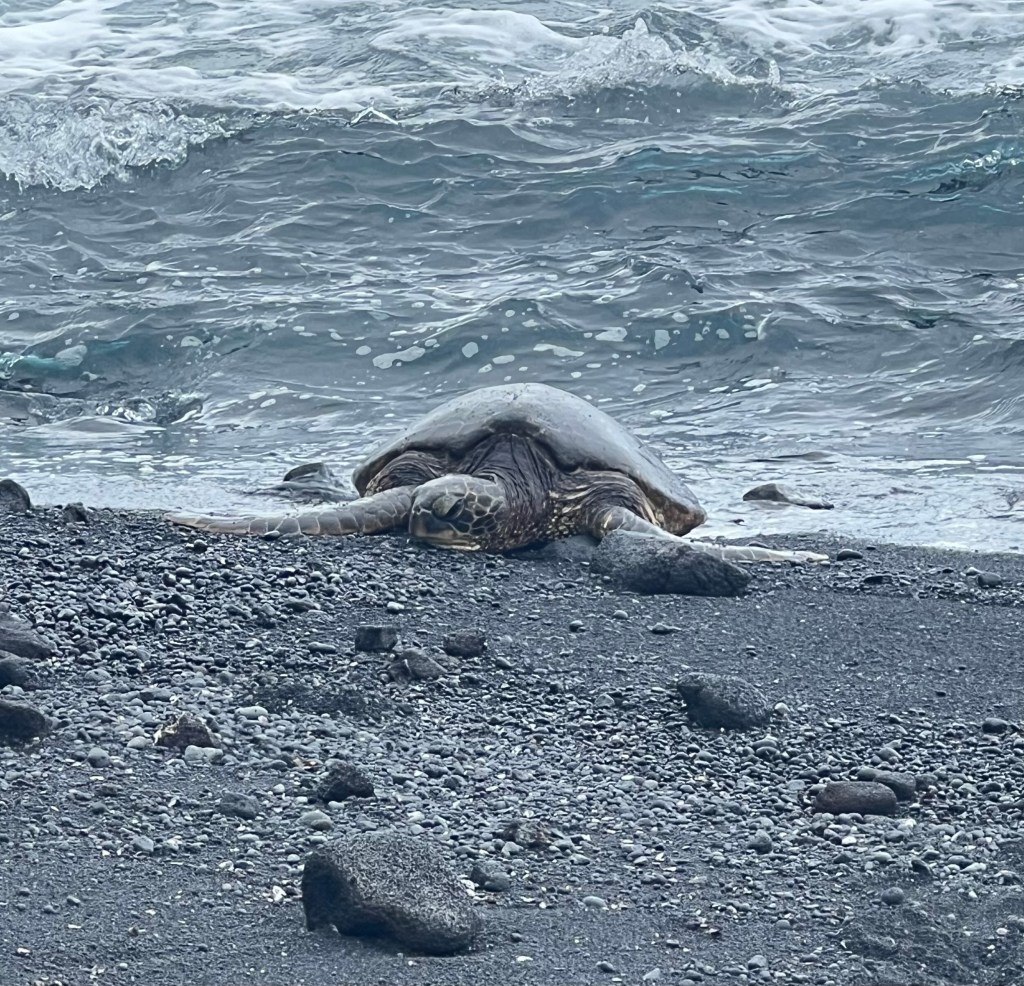
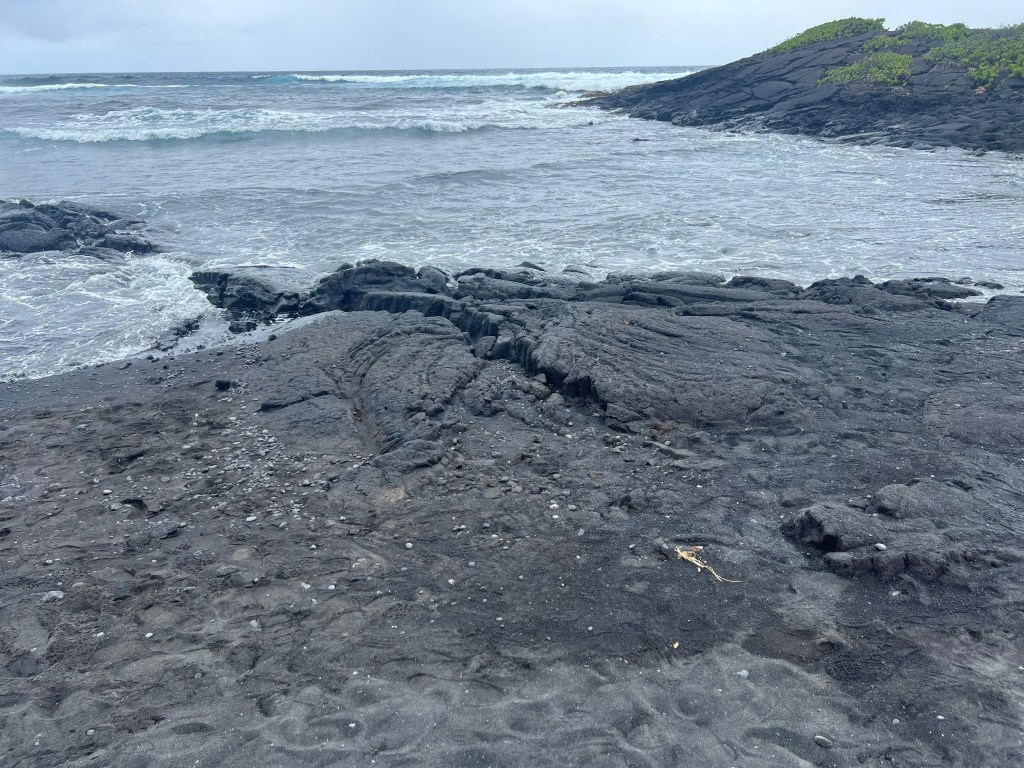
Our next stop was at Punalu’u Black Sand Beach Park. This beach featured, of course, black sand. There is a living reef just offshore, and an area that was walled off to allow Green Sea Turtles to come up on shore to sun themselves, without being accosted by stupid humans. We were fortunate to see one of the turtles, as well as numerous, small, black crabs on the rocks. The sand is course, but soft. There are remnants of lava flows around the beach. It was, all-in-all, pretty damn cool.
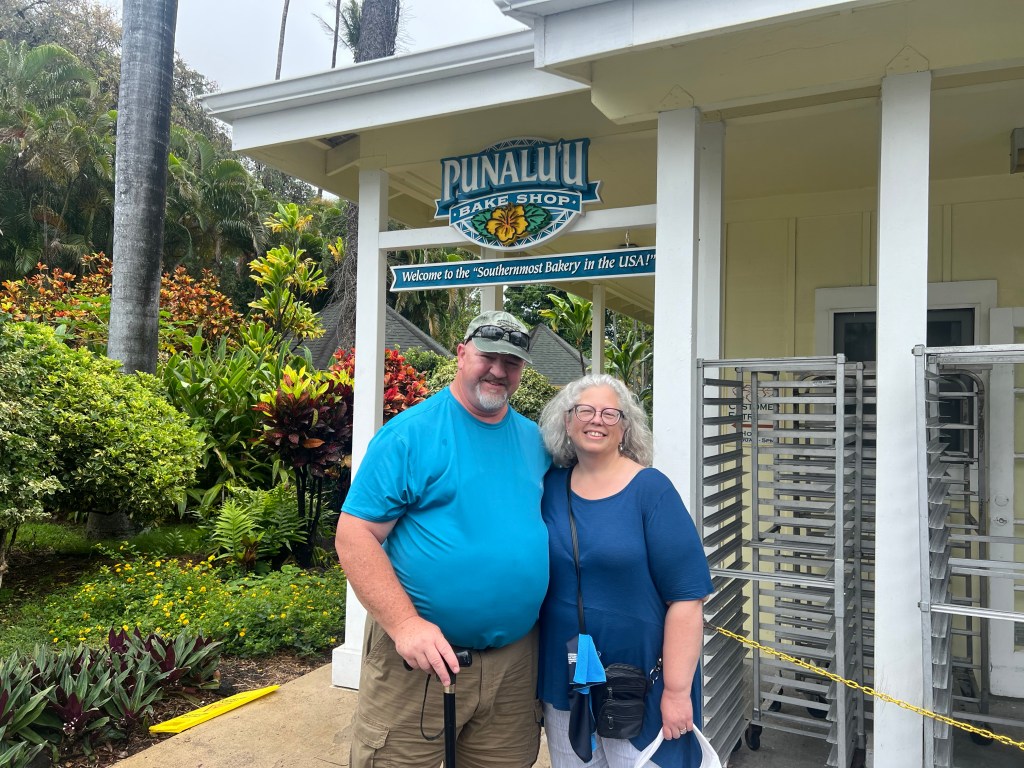
We had lunch in the Punalu’u Bake Shop, the southernmost bakery in the U.S. Their specialty is a Portuguese sweetbread. Think King’s Hawaiian bread, but more tender. With lunch out of the way, it was time to visit the throne of the Hawaiian goddess Pele,
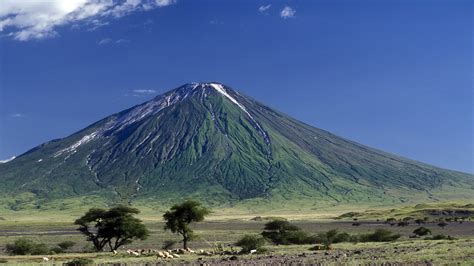
Mel told us that Hawai’i has five active volcanos. Two are dormant, three are active. The largest volcano is Moana Kea. It is, like all the volcanos on the island, a “shield” volcano. Lava pushes up through the caldera, the spreads out, forming a mountain that looks like a shield from a distance. It is 13,803 feet high. However, if you measure from its base on the floor of the ocean, it is 32, 697 feet tall, making it the tallest mountain in the world. It has the distinction of being the only mountain in Hawai’i that gets snow.
The oldest volcano is Kohala. It is on the north side of the island, and is thought by some to be extinct, as it hasn’t erupted in almost 300,000 years.
Hualalai is a “potentially” active volcano on the island’s northwest side. It is 8,270 feet high. It last erupted 200-300 years ago, so vulcanologists believe an eruption will occur within 100 years.
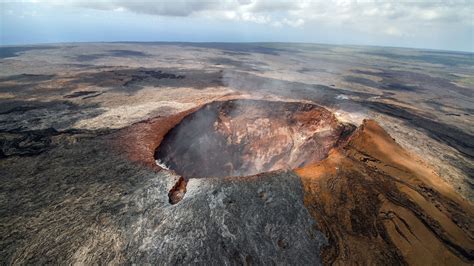
Mauna Loa is in the south-central part of the island, and lies within Volcano National Park. It is 13,678 feet high, and is an active volcano. It makes up 51% of the island’s land mass. It’s so massive that the earth’s crust has been depressed early five miles. Kind of like my side of the mattress. Mauna Loa erupts, on average, once every 6 years.
Then we get to Pele’s home, Kilauea. At 4,091 feet of elevation, it is not as massive as the other volcanos, but it is the youngest. The last eruption was last September, so it is still very active. Mel explained that Kīlauea is part of Mauna Loa, which is part of Mauna Kea. He also told us there is another volcano, Kama’ehuakanaloa, building up from the sea floor 2.5-3 miles off the shore from Kilauea.
We entered the park near the Visitor Center, which is across the road from the Volcano House, an inn near the rim of the caldera, which is a hollow cauldron-shaped crater left over after the magma chamber empties. The caldera in Kilauea is called Kaluapele. We had a chance to get our first glimpse inside Kaluapele from the Volcano House as the side facing Kaluapele was all glass. There wasn’t much of a view at that moment due to rain in the area. Wayne and Amy pointed us to our first steam vent. Rain and ground water gets into these vents from the magma chamber and gets heated to 160 degrees, and comes out as steam at about 120 degrees. You can see these vents all over the caldera. Seeing all the steam rising up out of the ground is truly eerie.

Mel got the four of us back into the van, and we entered Kaluapele. There is a trail along the rim of the inner caldera. We were not sure how much we would be able to see, due to the rain, but it began to lift, and we were able to look down into the inner caldera. Wow.
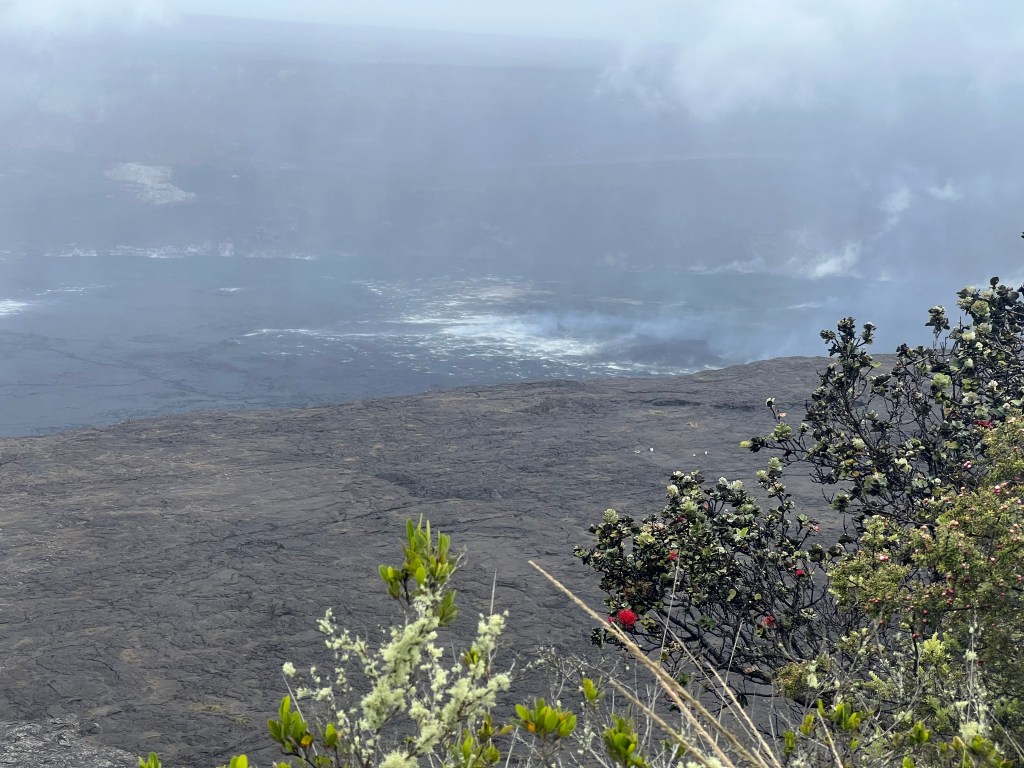
Numerous steam vents sent white clouds up into the sky. A few were colored yellow, indicating the presence of sulfur. Nearby, the Jagger Museum, closed since the 2018 eruption collapsed the caldera, teetered on the edge. Some brave workers were actually in the building removing what could be removed, as they moved the museum to a safer location.
As we walked along the trail on the rim, the clouds began to part, and we could see across Kaluapele, giving us a better grasp of its scale. We got back to the van, and Mel took us on the Chain of Craters road to the sea, a 19-mile journey through eerie, moon-like manscapes and craters.
It is so difficult to put awe-inspiring majesty into mere words. You can look at a picture of the Grand Canyon, and it will never do justice to the awe you feel when you are standing on the rim. You can watch a video of Niagara Falls, but until you stand close enough to feel the spray, you can’t comprehend the power behind those waters. So it is with these lava flows.
Mel showed us miles upon miles of lava flows. Some were marked with roadside signs, but Mel would show us the different colors of the different flows. Faster lava left smooth lava rock. Slow lava left a crumbly lava flow. He showed us pyroclastic craters, where magma was expelled explosively, and remnants of lava tubes. He told us how the Ōhi’a Lehua tree helps bring life to the lava. We learned about Lava Crickets, the first creatures out on the new lava. Mel told us about, then showed us, where trees had lava fall on them from above. The lava flowed down the tree faster than the tree could burn, cooled quickly, and left strange casts of the remains.
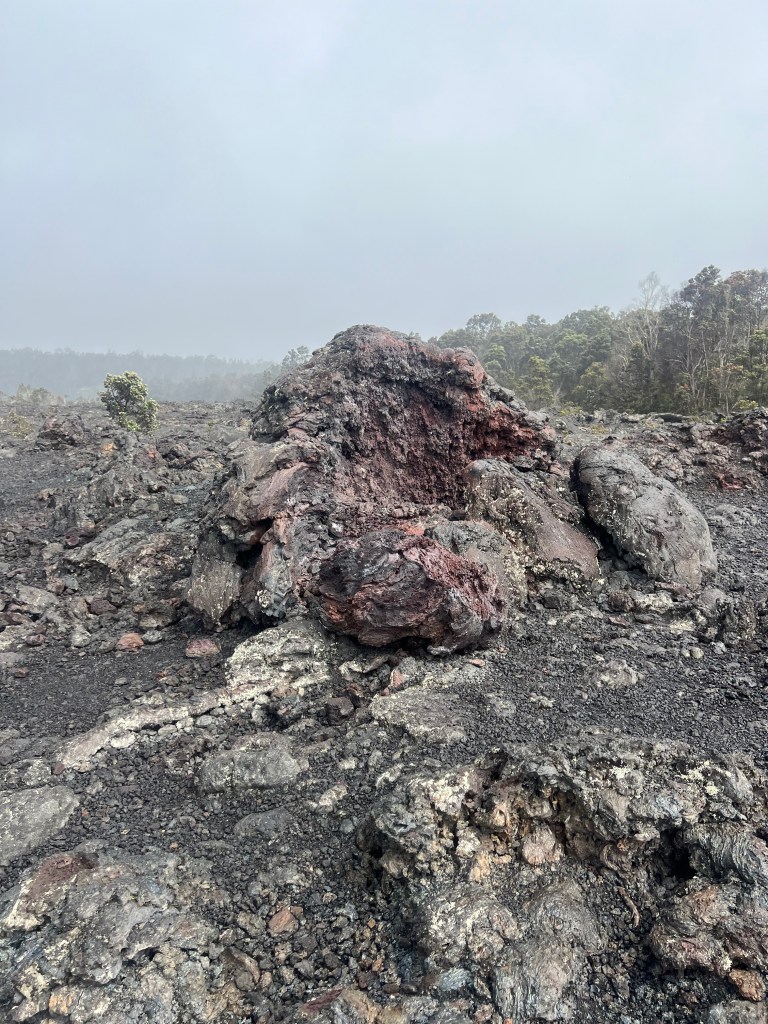
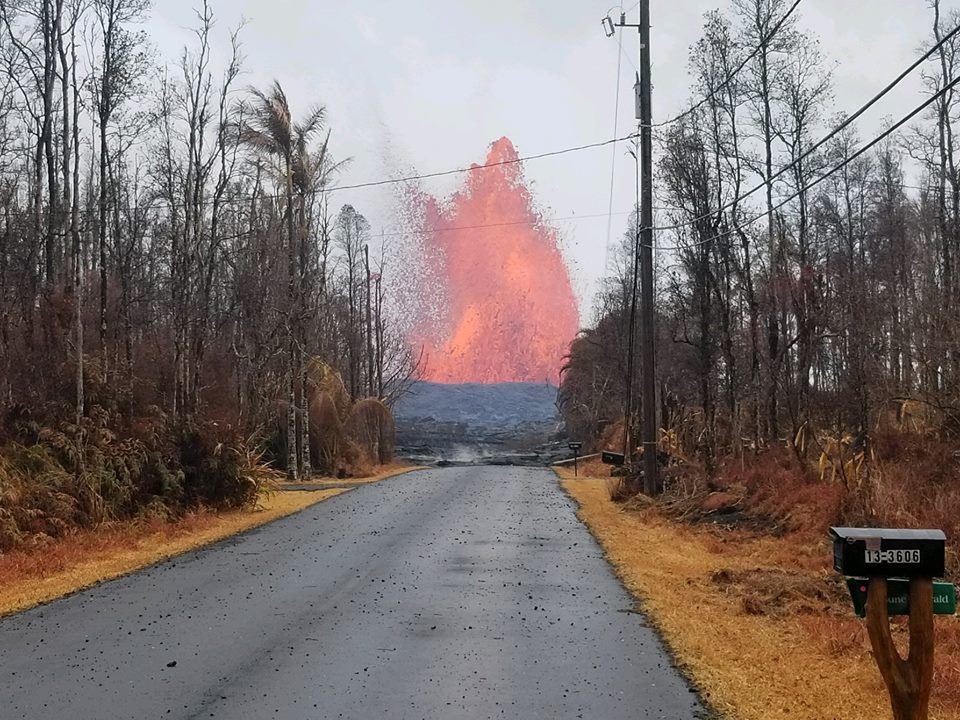
At a couple of spots, he let us out so we could walk on the lava beds. We couldn’t do that too much, as the rains made things slippery, but when we could it was fascinating. There are rocks that seemed denser than their size would indicate, and others in which they were lighter than they appeared. Mel told us this was a product of the heat in which they were created. Rocks in intense heat tend to be heavier, rocks created by cooler temperatures tend to be lighter. Mel also described one eruption that shot a fountain of lava 1,900 feet into the air. The Sears Tower in Chicago is 1,450 feet tall. Yeah.
We found ourselves where the lavas flows meet the sea. The sea there has created cliffs, ranging from 50-100 feet high. The waves smash against these cliffs, and frequently the water made it to the tops of the cliffs. There was an arch at the water line that had been created by the waves. There was a short walk to go see it, but my Crohn’s Disease reared its ugly head, and I spent that time in a toilet.
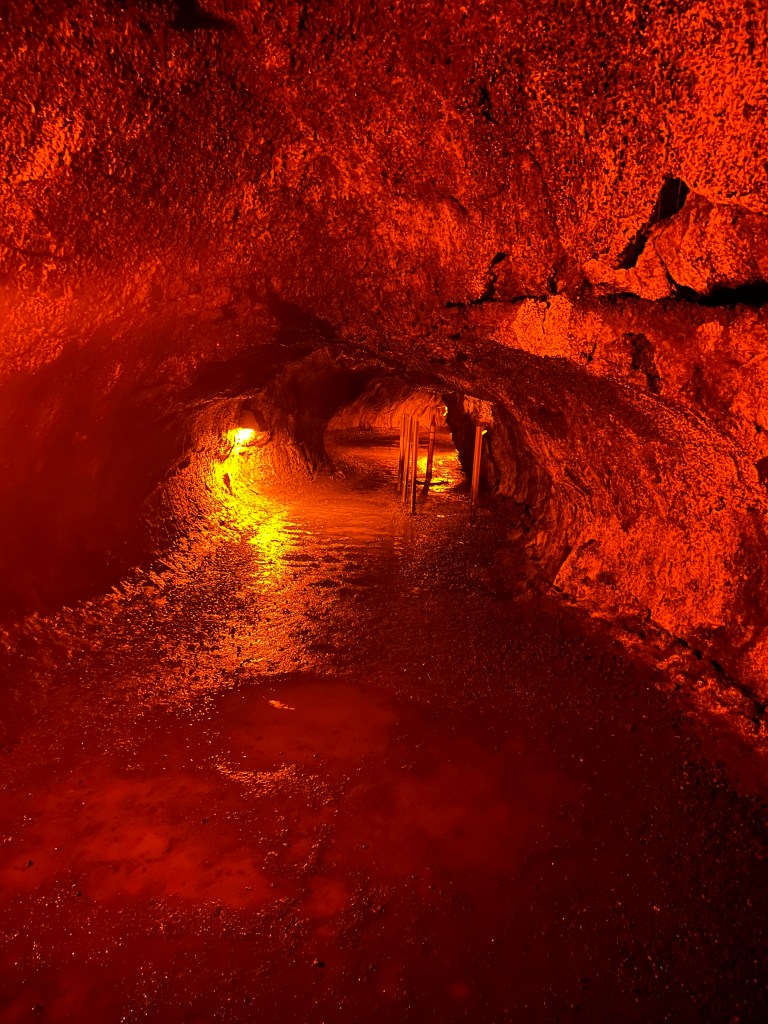
We headed back up the slopes of Kilauea, and made it to Nāhuku, or the Thurston Lava Tube. A lava tube is created by fast moving lava that hardens around the lava. It empties out, and leaves a tube. Thurston was a volcanologist that studied these tubes. A portion of the tube named after him was open to the public.
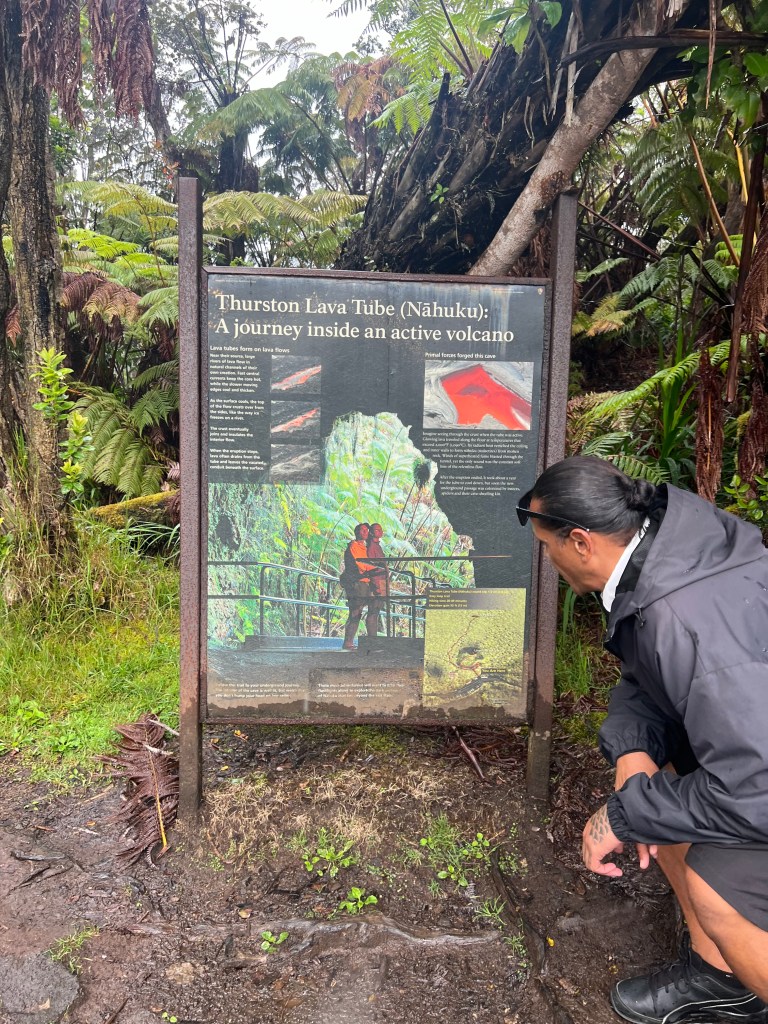
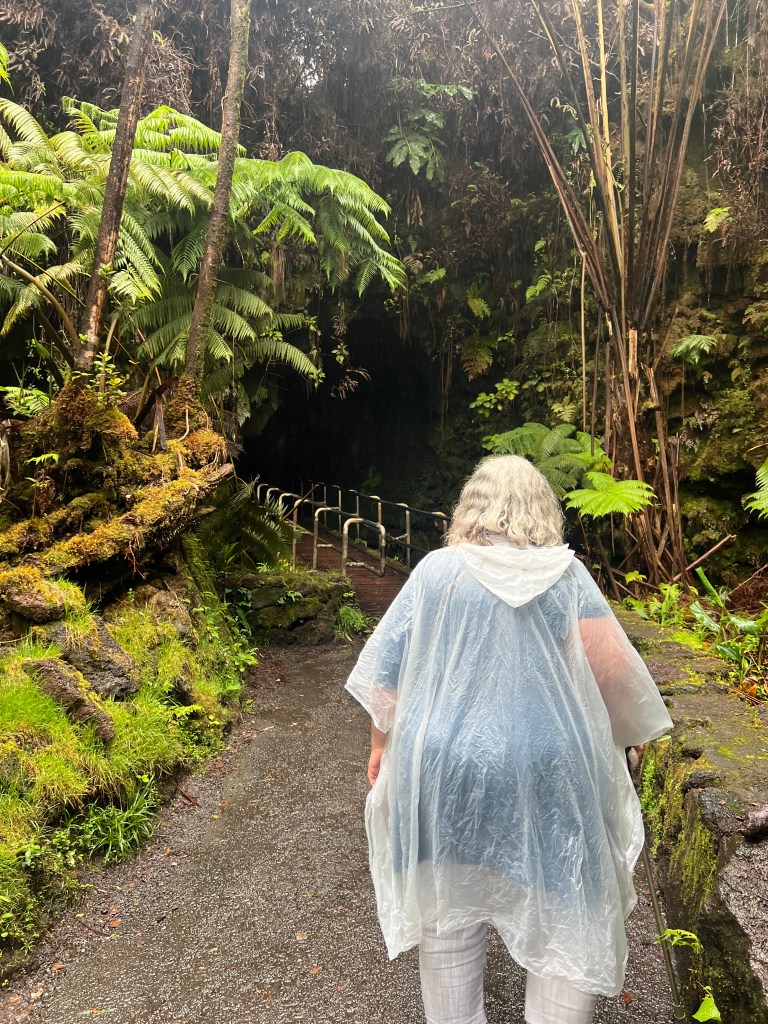
One of the fascinating things about Volcano National Park is the number of different climates. There are deserts, temperate, and rain forest climates all around Mauna Loa and Kilauea. The Thurston Lava Tube is located in a rain forest. There is a short path that descends to the tube, a short bridge, then you are in a freaking lava tube. They had thankfully installed amber-colored lights along the walkway. It made it look like there was still lava in the tube. Mel told us two things after we returned. 1) They have mapped the tube back toward Mauna Loa 25 miles. Let that sink in. 2) It was entirely possible that lava could once again flow down that tube. At least he told us after we got out.
Once out, we got back into the van, and took a short trip to Hilo. There we caught a flight back to Oahu. We slept very well that night.
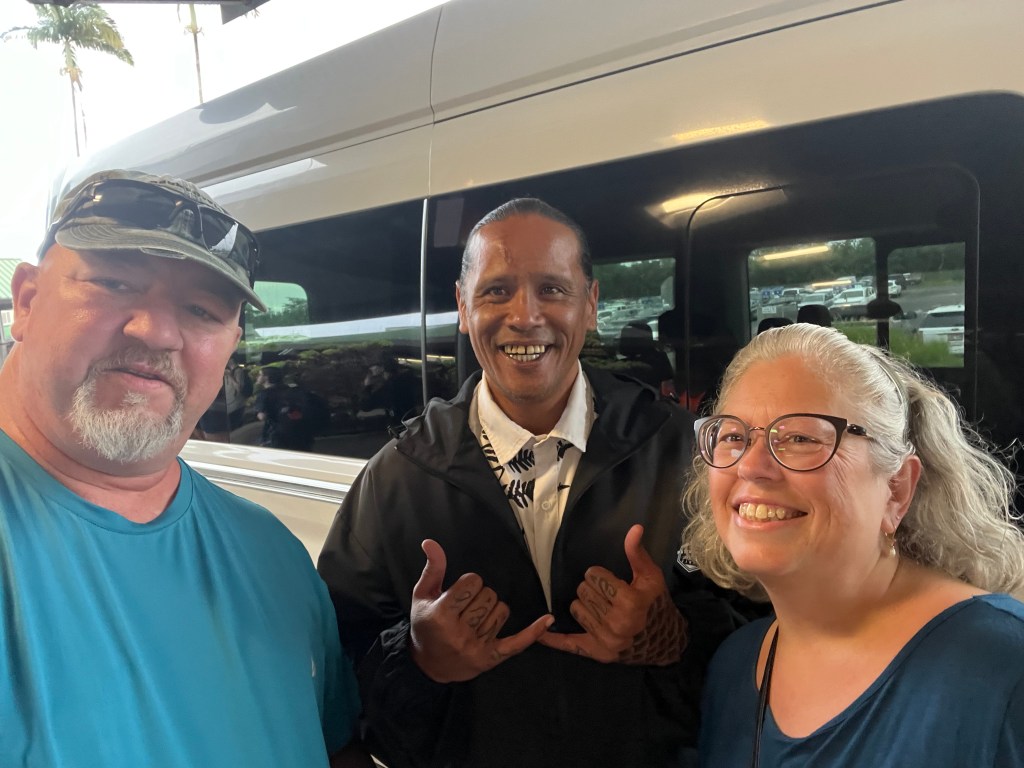
Mel was fantastic. Not only were we able to see some awesome things, we got to experience some real parts of Hawai’i, we learned a lot about Captain Cook, got to sample some awesome Kona coffee, and see an actual sea turtle. We could have spent more time at the park if we had gone by ourselves, but I enjoyed learning from Mel, and it was nice to leave the driving in someone else’s hands.
Mahalo, Mel!
Volcanic data obtained from www.worldatlas.com
 Meditations of a Bald, Fat Guy