
In Identifying Child Molesters Chapter 9 Setting Boundaries to Help Prevent Child Abuse, Dr. Van Dam follows up her excellent profile with some advice on what to do when a concerning person has been identified. This is her last substantive chapter. Chapter 10 is a summary, and I won’t go over that.
So you’ve used the profile provided in Chapter 8, and have identified a person you suspect is a narcissistic sociopath who might be preying on children. Now what? Fret not. Dr. Van Dam provides ideas for each part of the profile, so you can put a strategy for the area of the profile specified by the observed behavior.
A person utilizing grooming behaviors:
– Is exceptionally charming and/or helpful
with
– Engages in peerlike play
– Prefers the company of children
– Roughhouses with and tickles children
– Obtains immediate insider status
and
– Fails to honor clear boundaries
– Goes on the offensive
In response, Dr. Van Dam wants us to remember the following:
Overview of Intervening with a Potential Child Molester
1. Listen to the content. Do not be mesmerized by the delivery.
2. If something looks too good to be true, the price tag is hidden.
3. Children need adult involvement, guidance, direction—not a big playmate.
4. Look out for adults who primarily interact with children, not peers.
5. Do not tolerate wrestling, tickling, massaging, and touching games.
6. Worry when someone is instantly accorded family/insider status.
7. Run when “NO” is ignored.
8. Stand firm. Do not be intimidated.

Gavin de Becker is one of the world’s foremost experts in personal protection. His book The Gift of Fear is a must-read, and Dr. Van Dam uses his advice extensively in this chapter.
Listen to the content. Do not be mesmerized by the delivery.
Overcoming someone’s charm can be difficult, especially when it is being used as a tool to get what the user wants. To counter this, Gavin de Becker tells us, “Think of charm as a verb, not as a trait. It has a motive—to control by attraction. If you tell yourself ‘This person is trying to charm me,’ as opposed to ‘This person is charming,’ you can see around it. Most often you’ll see nothing sinister, but other times you’ll be glad you looked” (de Becker, 1999, p. 67). (Van Dam, Carla. Identifying Child Molesters (pp. 162-163). Taylor and Francis. Kindle Edition.)

That’s a simple one. When you catch yourself thinking of a person being charming, change that to, “I am being charmed,” and you’ll be able to take a more objective view of the person’s behavior. It’s akin to dealing with a car salesman. Good salespeople treat you the way you wish people would treat you. The one issue is that they don’t really mean it. Their behavior is goal-oriented, just like child molester’s. Molesters appear attractive, interesting, and exciting, which can distract from noticing discrepancies.

I used the phrase narcissistic sociopath earlier. Groomers were described by one psychologist as “closet narcissists”. These personality types have little empathy, are interpersonally exploitative, have a sense of entitlement and believe others adore and worship them. (Van Dam, Carla. Identifying Child Molesters (p. 168). Taylor and Francis. Kindle Edition.) Sound like anyone you know? They are hyper-vigilant, and use their personal intensity, smiles and an invasive inquisitiveness to ensnare others.
Dr. Van Dam recommends listening to such a person without looking at them. This removes the use of body language, often used to confound their mark, and can reveal the shallow nature of their interaction. This reduces the groomer’s charm, and they will determine quickly that you are not open to being swayed, and they will move on.
If something looks too good to be true, the price tag is hidden.
DO NOT ACCEPT HELP FROM THOSE WHO SEEMINGLY DO NOT WANT ANYTHING IN RETURN! Our relationships are, normally, transactional in nature. We appreciate thoughtfulness and helpfulness, but true friendships are reciprocal. Thus a relationship in which a person seemingly does not get anything in return for their helpfulness should be thoughtfully considered.

A person who repeatedly offers favor without accepting anything in return is blurring boundaries. It creates an unspoken debt that creates pressure later. Pressure to overlook small discrepancies and signs that invariably pop up in a dishonest relationship. It is hard to establish clear boundaries and expectations after someone has been helpful. This is a type of foot-in-the-door technique used by door-to-door salesmen.
Adults should interact with children as an adult. They’ll correct misbehavior, not participate in it. This interaction should be enriching, not exploitative. If this behavior is noticed, curtail the person’s interactions with children.

Children need adult involvement, guidance, direction—not a big playmate.
All the child groomers described themselves as “being on the child’s wavelength.” (Van Dam, Carla. Identifying Child Molesters (p. 174). Taylor and Francis. Kindle Edition.) Most of them agreed that this behavior should be concerning to adults. For many pedophiles, childhood represents the best off the world, while the adult world represents the worst. Pedophilia isn’t just about sex. It’s about a world where the person was loved, wanted and the world was simpler.

Look out for adults who primarily interact with children, not peers.
In conjunction with the above, groomers prefer the company of their target age over adults. As Dr. Van Dam writes, “Molesters deliberately spend their time in places that provide them with access to their targets.” (Van Dam, Carla. Identifying Child Molesters (p. 180). Taylor and Francis. Kindle Edition.) That means it is up to us to pay attention to the adults that spend time with our children. Do those adults spend time with other adults? What is the nature of their relationships? Do they maintain an adult-child relationship? Do they maintain their professionalism?
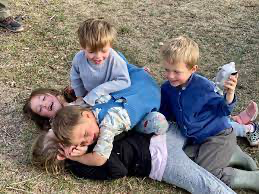
Do not tolerate wrestling, tickling, massaging, and touching games.
This was an emphasis of Dr. Van Dam’s. All of the child molesters interviewed by her roughhoused or tickled their victims. Every one. No non-family member, or employee,should roughhouse or tickle children. It opens an employer to liability should the child be injured, and it serves no pedogogical purpose. Look for children sitting on an adult’s lap, especially if it’s numerous children. If a child is sitting on an adult’s lap, even Santa’s, it’s OK to keep an eye on the hands.
Dr. Van Dam writes, “Much of this touching, aimed at blurring the boundaries, was clearly visible to adults and has been reported again and again by molesters, their victims, and the adults who blindly observed this behavior.” (Van Dam, Carla. Identifying Child Molesters (p. 182). Taylor and Francis. Kindle Edition.) All of the child molesters interviewed said it only takes one touch to desensitize a child. Doing this, often in the presence of the adults, serves to show the child that the touching is approved by the adults.
Worry when someone is instantly accorded family/insider status.
Child groomers are so accomplished with lying that others think their behaviors must be acceptable. Their charm and friendliness allows them rapid access to family situations. Gavin de Becker wrote, “Every type of con relies upon distracting us from the obvious. That’s how a conversation evolves into a crime without the victim knowing until it’s too late” (de Becker, 1999, p. 69). (Van Dam, Carla. Identifying Child Molesters (p. 183). Taylor and Francis. Kindle Edition.) Groomers are very adept at making themselves seen as old friends. De Becker warns us to maintain a bigger picture. The groomer is a stranger who approached you.

Another technique used by groomers is to do things for the adults in charge of their prey. They may buy things, or provide things the parent cannot. This creates a feeling of obligation that the groomer exploits. The parent will have to either accept their error in allowing the groomer access to the child, or they’ll accept the new relationship as is. De Becker describes this technique as “forced teaming”. The groomers will us “we” to get the adults to feel as if they were all in the same boat. De Becker writes, “This forced teaming, one of the most sophisticated manipulations, is the projection of a shared purpose or experience where none exists” (p. 53).” (Van Dam, Carla. Identifying Child Molesters (p. 184). Taylor and Francis. Kindle Edition.)
The bottom line is, when you find someone who has miraculously gained insider status, the relationship should be more closely scrutinized.
Run when “NO” is ignored.
Groomers are good at blurring boundaries. One of the ways you can see this sociopathic behavior is when they ignore attempts to establish boundaries. We set boundaries by using the word ‘NO’. They blur the boundaries by ignoring ‘NO’.
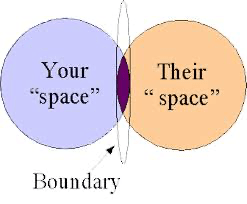
Groomers invade personal space, violate personal rights, and fail to respect other people. This behavior should not be tolerated. Dr. Van Dam writes, “Setting clear boundaries and expecting them to be honored is the very foundation for creating a safe environment for children.” (Van Dam, Carla. Identifying Child Molesters (p. 186). Taylor and Francis. Kindle Edition.) Even if there is a feeling of obligation, or an acceptance of blurred boundaries, it is never too late to go back to normally adhered to boundaries.
If a person does not, or cannot, abide by the rules, then a large red flag has been raised. As de Becker writes, “Declining to hear “no” is a signal that someone is either seeking control or refusing to relinquish it…. The worst response when someone fails to accept “no” is to give ever weakening refusals and then give in. Never relent on “no”… even [with] someone who seems to have the best intentions. And never let him think you’re open to negotiation. (de Becker, 1997, p. 54)” (Van Dam, Carla. Identifying Child Molesters (p. 186). Taylor and Francis. Kindle Edition.) Many of the child molesters interviewed for the book told Dr. Van Dam they purposely violated boundaries to see what the adults would do. If the adults were not tolerant of this, they moved on to another adult.
Stand firm. Do not be intimidated.
Most, if not all, groomers are narcissists. Therefore it can be predicted that when they are thwarted in their efforts, they will go on the offensive. They are master manipulators, and this can become even more pronounced when they are opposed. Sometimes this may involve others. The groomer’s charm can lead others to oppose you, and even blame the victim.

In the case where you are attempting to report the behavior to an authority, it may become necessary to use a “broken record” approach to get them to take your reports seriously. Respectfully, but firmly, reiterate your required principles. Do not be confused by minimization, intimidation, or justification.
What Dr. Van Dam has done with her book is to provide clarity to child molestation, and the efforts of groomers who seek to prey on children. This clarity should be used to build the confidence needed to set and maintain appropriate boundaries. This prevents others from setting agendas, controlling the situation, and ignoring established norms. Your ability to do this models a valuable life skill for your children.

So there it is. Dr. Van Dam has written an excellent work, with usable information for those who seek to protect children from those who, increasingly, seek to prey on our children. Children look to adults to protect and guide them, not see them as sexual objects. Children need wholesome hugs and touches, not sexual caresses. Child sex abuse should not be tolerated. Supporting, minimizing or ignoring grooming behavior that harms the innocent hurts everyone. Stand firm, stay strong, and keep an eye out for groomers!
NEWS DESK
– Kandiyohi County Man Pleads Guilty to Producing Child Pornography
– Columbia County Man Pleads Guilty to Receiving Child Pornography
– Interaction with Undercover Agent in an Online Chatroom for Kids Leads to Prison Sentence for Canton Man
– Omaha Man Convicted of Attempted Coercion and Enticement of a Minor
– Buffalo Man Pleads Guilty To Possession Of Child Pornography
– Local man sentenced for trading child porn via Kik
– Illinois Man Sentenced to 14 Years in Prison For Distributing Child Pornography
– Muskogee County Resident Sentenced For Death Of Toddler
– Martin County Man Sentenced to 60 Years in Prison for Producing and Distributing Child Pornography
– Bartlesville Teenager sentenced for Murder(of a toddler)
– Tse Bonito Man Pleads Guilty to Sexual Abuse of a Minor
– Recidivist Sex Offender Sentenced to 10 Years for Possession of Child Pornography
– Former FBI Contractor Charged with Child Exploitation Offenses
– Albuquerque Man Sentenced to 30 Years in Prison for Enticement of a Minor
– Albion Man Going To Prison For 10 Years For Possession Of Child Pornography
– Lafayette Man Sentenced to 84 Months in Prison for Child Pornography
– Fayette County Man Sentenced to 18 Years in Prison for Child Exploitation Crimes
– Amesbury Man Pleads Guilty to Child Pornography Offenses
– Essex County Man Indicted for Sex Trafficking Minor and Transportation to Engage in Prostitution Offenses
– Shiprock Man Pleads Guilty to Assault Against a Child
– Fort Jennings Man Sentenced for Child Exploitation
– Former tribal councilmember and police officer sentenced to 34 years in prison for sexual abuse of minors
– Former Texas Police Lieutenant Pleads Guilty To Attempting To Entice An 11-Year-Old Child To Engage In Sexual Activity In Florida
– Former Nurse Pleads Guilty to Possession of Child Pornography and Conspiracy to Acquire Controlled Substances
– Baltimore Man Facing Federal Indictment for Sexual Exploitation of a Minor to Produce Child Pornography and for Possession of Child Pornography
– Russell Springs Man Sentenced to 30 Years for Production of Child Pornography
– Gulfport Man Sentenced to 30 Years in Prison for Production of Child Pornography
– Married teacher sexually preyed on student after posting PSA about consent: prosecutors
– Chicago teacher charged with attempted production of child porn after he was found with minor at Miami airport
– German judge sets Afghan refugee who raped, assaulted multiple girls free with no prison time
– Tennessee school’s ‘teacher of the month’ charged in student sex case
 Meditations of a Bald, Fat Guy