Dr. Van Dam takes the reader into the heart of her book in Chapter 6 The Grooming Process: How Do They Do It? By describing the grooming process, she seeks to cut through the minimization, excuses, justifications and assumptions people use to protect themselves from the reality of the idea that an adult sees a child as a sexual object. This concept is so abhorrent, so vile, that normal people protect themselves from in in various ways.

I was an assistant principal at a middle school. There was a P.E. teacher who sexually molested one of my students in the boy’s locker room. He had similarly molested a student in a nearby town years ago. That victim came forward and filed a complaint, then my student came forward. Everything I read from Dr. Van Dam explained how he was able to be a prominent figure in the school community, and used that status to hide his predation.
I think back over my time there, to try to think of where I messed up. What did I miss? I certainly didn’t know then what I know now. I was without the benefit of experience and what little wisdom I’ve been able to accrue. Yet I was a guardian, a protector. I was naturally predisposed to notice something amiss. What did I miss?

I was missing knowledge. Without that knowledge, I was missing the signs of grooming. It is easy to be caught up in the everyday relationships and miss those signs, especially when you are not expecting it. Dr. Van Dam explains that there are concrete things that all groomers do to gain access to children. A process of grooming the predator uses to gain the trust of those around them, and then to molest.
Dr. Van Dam describes the four elements of this grooming process: Sexual attraction to children, justification of interest, grooming of adults and grooming of children. (Van Dam, Carla. Identifying Child Molesters (p. 89). Taylor and Francis. Kindle Edition.) Each of these elements are present in any of these situations. We’ll take a look at the mechanics of each, and how they come together to create the process predators use to groom their prey, and the adults around them.
The previous chapter covered the various research into the sexual attraction to children. Some research indicates that incest occurs because the father or step-father is sexually unsatisfied in their other relationships. “With almost no exceptions the patient, shortly before the incestuous relationship begins, finds himself barred from sexual intercourse with his own wife.” (Van Dam, Carla. Identifying Child Molesters (p. 90). Taylor and Francis. Kindle Edition.) So the hapless father or step-father turns to their defenseless child to alleviate this frustration.

A different study found that all men are aroused by children, but most are in too much denial to act on those urges. There are studies that point to the historical existence of such relationships, which were encouraged and even lauded, in parts of Ancient Greece, for example. The conclusion, of course, “…sexual attraction to youthful individuals of his own sex is present to a greater or lesser degree in every human male, and this makes it possible for every man to have sex with a handsome boy.” (Van Dam, Carla. Identifying Child Molesters (p. 90). Taylor and Francis. Kindle Edition.)
A third of child molesters were victims themselves. A study in 1980 suggested that an adverse incident could be reversed, and lead to addictive behavior. The emotions associated with the adverse event caused a release of endorphins, and the person became addicted to the endorphin release. A study in 1990 suggested that the trauma of sexual abuse as a child could be expressed in deviant sexual behavior as an adult. Regardless of the theory, a predator finds a child sexually attractive, and seeks to find a way to satisfy the urges that go with the attraction.
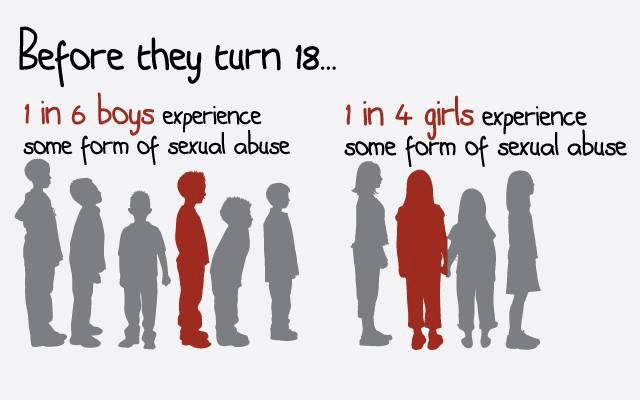
The second phase in the grooming process is justifying their interest. To do this, a person engages in a process of neutralization. Neutralization involves denial of injury, denial of victimization, condemnation of dissension and a more enlightened viewpoint. In the denial of injury, a person will seek to replace the empirical evidence of the harm done to a child with anecdotal evidence, and often even fantasy. The Rene Guyon Society assert that children who are denied sex with adults suffer drug abuse, suicide and obesity. The North America Man-Boy Love Association (NAMBLA) had published materials with supposed letters from children talking about the benefits they’ve received from their sexual relationships with adults.

Denial of victimization refers to the concept that the victim deserved the abuse, or brought on the offending behavior. This puts the child as a willing partner. This is an elaborate way to blame the victim. This usually revolves around consent. Groups like NAMBLA and the Rene Guyon Society assert that children are capable of consenting to sex.
Condemnation of dissension is what it sounds like. The predator condemns the protectors. The protectors are the ones who are damaging the children by making a big deal out of the adult-child sexual relationship. Thus the protectors are the real abusers by inserting their morality, guilt and shame into the situation.

A more enlightened viewpoint is what the predator has. They are providing sexual liberalization of children, to free them from the oppression of a sexually repressed society. This has come with the increased accessibility to pornography, and an accompanying decline of social norms and standards. People with sexual deviancies are able to normalize their deviance by interacting with others who think, and act, as they do. Add in the sexualization of children in movies, television and streaming services (Cuties, anyone?), and it’s small wonder that child predators feel normalized.
Prior to preying on children, the child molester will groom the adult community. The predator actively engages in “image management”, whereby they create an image of themselves they want to project, and then work to establish that image in the community. This aspect of the process is consistent among groomers. As one child molester noted,
I would obviously have met his family several times…. I would have been invited to
supper at his home and would have charmed the hell out of his parent(s) and they
would be pleased the way their son responded to me and so obviously liked me. I am
clean cut, very intelligent and personable and the parent(s) would feel that I was a
“good” influence on their boy. (Cook, 1989, p. 7) (Van Dam, Carla. Identifying Child
Molesters (pp. 96-97). Taylor and Francis. Kindle Edition.)

Child molesters gain two things from this practice; victims, and protection. Once they have gained the trust of the adults, the predator is given unfettered access to children, and the time to molest. An established predator is shielded from innuendos and accusations due to their standing in the community. Who are you going to believe, a twelve-year old victim, or a well-respected youth minister?
One example Dr. Van Dam used really stuck out in my mind. She wrote about a woman whose boyfriend admitted to her that he was a sexual predator, but he “seemed safe”. In her own words,
I’d been sexually molested when I was a kid, and what my boyfriend did, is he told
me right up front “We can’t see each other anymore unless you go to this group
therapy thing because I’m a sex offender.” I thought, “How safe can you get?” If he
was going to molest my kids, he wouldn’t have told me he was a sex offender. Right?
I mean, this has got to be the safest guy on the block. (Van Dam, Carla. Identifying
Child Molesters (p. 99). Taylor and Francis. Kindle Edition.)
It’s easy to read this and render justice for her thinking, but this is similar to the thinking most people used when a child predator begins the grooming process. Groomers are teachers, babysitters, youth ministers, anyplace where they can have access to their victims.
Child predators participate in the development of name recognition, just like artists, politicians, comedians and other public figures. This is an advertising technique, and can be quite effective. They use a technique called ‘foot-in-the-door’. Her example was of a man who showed up, uninvited, at a birthday party, and began passing out candy. Asking the person, who the children are enthusiastically crowding around, to leave is socially difficult. Once that small concession is made, it is the basis for larger concessions.
The self-perception theory is a psychological theory that asserts that people infer their attitudes by their behavior. The parents at the party, seeing themselves accepting the stranger at their party, helps them establish the idea that he is acceptable. This is followed by cognitive dissonance (the discomfort a person feels when their behavior does not align with their values or beliefs), leads the parents to accept the stranger’s behaviors. This acceptance by the parents also sends a powerful message to the child. They seed that their parents accepted the stranger, who is now no longer a stranger.

Human beings tend to conform. They often “go along to get along”, and find it difficult to go against public opinion by speaking out. A predator uses this to their advantage. The grooming of adults creates a public opinion, that will quell the minor complaints parents might have about the predator’s behaviors. Once an attitude has been formed, human beings find it difficult to change. They engage in confirmation bias, only seeing information that confirms their existing view. We can see this being played out in real time in our politic discussions today.

The last part of the process is grooming the child. There are five stages of the grooming process: Identifying a vulnerable child, engage with the child in peer-like involvement, desensitizing the child to touching, isolating the child and making the child feel responsible. It is here where the matter is critical. Failure to recognize this process results in the victimization of the child. It is crunch-time.
Predators usually go after the easiest prey. Wolves, lion, cheetahs, etc. will go after the young or sick. Child predators are no different. Not only is it easier to manipulate and prey on vulnerable children, they are less likely to report the abuse, or to be believed if they report. A child predator testified to the U.S. Senate in 1985,
I showed them affection and the attention they thought they were not getting
anywhere else. Almost without exception, every child I have molested was lonely and
longing for attention…. Their desire to be loved, their trust of adults, their normal
sexual playfulness and their inquisitive minds made them perfect victims. (West
Vancouver Policemen’s Association [WVPA], 1986, p. 131) (Van Dam, Carla. Identifying
Child Molesters (p. 104). Taylor and Francis. Kindle Edition.)
Children who are pre-verbal, are unable to speak, are especially susceptible, as are children in single-parent families. Children have a desire to be noticed, valued, loved and cherished. Predators use this to manipulate the child. This leads to peer-like involvement.
Sexual predators will be observed engaging with children as a peer, not as an adult. This can take the form of wrestling, tickling, having sleepovers and playing video games. Here observant adults can see adults acting child-like or preferring to be around children rather than other adults. It is not normal for an adult to prefer children over other adults.
Once the prey has been identified, and the predator has engaged in peer-like involvement, then the predator can begin desensitizing the victim to touching. The predator seeks to blur the line between appropriate and inappropriate touching. This is a gradual process that often has very visible signs. These can include tickling, wrestling and rough-housing.
With the victim, they will often begin with an apparent accidental touch. They gauge the child’s reaction to the touch, and may often accompany the touch with increasingly sexual talk and/or sexual imagery. Some predators will even see if they can do this in view of other adults.

Isolating the child helps to ensure secrecy for the predator. This can be done with a simple, “This is our little secret,” or it can be as complex as having the child lie about the incident. Having told the first lie, the child is now under pressure to tell other lies to support the first one. This helps create a sense of isolation, where the only contact in which the child can be open and themselves is with the predator.
Making the child feel responsible is the culmination of this cruel process. Victims will often blame themselves for the abuse, and the predator certainly uses this to their advantage. The predator plays up the feelings of shame and guilt felt by the victim.
This has been a fairly long blog post, but it is an important one. We’ve gone over the four elements of the grooming process; Sexual attraction to children, justification of interest, grooming of adults and grooming of children. In justification of interest, we went over neutralization, which involves denial of injury, denial of victimization, condemnation of dissension and a more enlightened viewpoint. There are five steps to the grooming process: Identifying a vulnerable child, Engage with the child in peer-like involvement, desensitizing the child to touching, isolating the child and making the child feel responsible.
As I think back on the situation I personally faced, there were things I heard about the teacher, that should have given me pause. If I had access to this information then, the outcome might have been different. Sometimes, even people who think behavior is wrong may not say anything. In the next chapter, Dr. Van Dam will describe how people can turn a blind eye to the behaviors they are noticing.
NEWSDESK
– Former Coach from Pecos Sentenced to 30 Years in Prison for Sextortion Scheme
– St. Charles County Man Sentenced to 12 Years on Child Pornography Charges
– Heron man sentenced to three years in prison for kidnapping son, fleeing to Costa Rica
– Federal jury convicts Anaconda man of attempted coercion, possession of child pornography
– Farley Man Sentenced for Sexually Assaulting Minor Victim to Produce, Distribute Child Pornography
– Federal Judge Sentences Belleville Man to 21+ Years in Prison for Producing, Distributing Explicit Images of Minors
– Félix Verdejo-Sánchez Found Guilty of Kidnapping Resulting in Death, and Intentionally Killing an Unborn Child
– Monmouth County Man Sentenced to 20 Years in Prison for Producing Child Pornography
– 30 Years for Coercion and Enticement of a Minor
– Operation Cross Country XIII Leads to Identification/Location of Adolescent Victims
– Mount Pleasant Man Sentenced To Federal Prison For Child Exploitation Charges
– Norwalk Man Pleads Guilty to Child Pornography Offense
– Schenectady Man Pleads Guilty to Sexual Exploitation of a Child
– Johnstown Resident Indicted on Child Sexual Exploitation Charges
– Carlsbad Woman Sentenced to 30 Years in Prison for Production of Child Porn
– New Haven Man Sentenced to 10 Years for Child Pornography Offense
– Greensburg Man Sentenced to 25 Years in Federal Prison for Sexually Exploiting an 11-Year-Old Girl Via Kik and Snapchat
– Former Omaha Police Officer Sentenced to 36 Years for Production and Possession of Child Pornography
– Sisseton Man Convicted of Abusive Sexual Contact
– Retired pastor kidnapped, killed another pastor’s young daughter on walk to Bible camp: DA
– Maryland dad arrested after six-week-old baby found with broken bones: police
– Michigan man allegedly preyed on young girls on amusement park pool: police
– Nevada private school teacher accused of having 4-year sexual relationship with student: report
 Meditations of a Bald, Fat Guy